



Vol.50. Juny 31. 2026
What is happening in East Asian Maritime Security? The Research Institute for Peace and Security (RIPS) publishes the biweekly newsletter, the information on maritime security relevant to East Asia and Japan's territory.
Monthly Column
FOIP 3.0 and the Operationalization of Japan's Maritime Statecraft
by Dr. Astha Chadha
Associate Professor, College of Asia Pacific Studies, Ritsumeikan Asia Pacific University
Indo-Pacific through the Japanese normative framework and multi-domain deterrence
In May 2026, marking a decade since Japan officially codified its regional foreign policy vision, Prime Minister Sanae Takaichi articulated the updated iteration of Japanese Free and Open Indo-Pacific (FOIP) strategy during her foreign policy address at Vietnam National University in Hanoi. This was the second upgrade of FOIP since Prime Minister Shinzo Abe’s 2016 address at the Sixth Tokyo International Conference on African Development (TICAD) in Nairobi.[1] Thie first upgrade had been announced by the former Prime Minister Fumio Kishida in March 2023 at the Indian Council of World Affairs (ICWA) in New Delhi.[2] While Kishida’s FOIP 2.0 centralized India in the Japanese grand strategy, emphasizing inclusive dialogue, multi-layered connectivity, and co-creation with the Global South, escalating gray-zone coercion and shifting power balances necessitated a further evolution, Takaichi’s FOIP 3.0 can be understood as both, a strategic shift to elevate FOIP from a normative vision into an operational security framework for multi-domain deterrence, as well as a vision aimed at promoting continuity of Abe’s vision for guarding the rule-based international order. The FOIP upgrades, hence, reflect Japanese policy response to the constantly evolving frictions in the Indo-Pacific, wherein an analysis of maritime security challenges unveils the multi-layered dimensions of threats perceived by Japan as quintessential and existential to its own security and its self-perception as a regional security co-provider with like-minded partners.
The contemporary Indo-Pacific maritime security environment presents a set of challenges that traditional diplomatic declarations and non-military economic aid can no longer address effectively. Concerns over East Asian maritime security have continued to propel Japanese FOIP towards greater security cooperation with like-minded partners while simultaneously re-capacitating Japan to safeguard its own maritime neighborhood. For instance, PM Abe had noted two survival-threatening scenarios for Japan, namely, crises in the Strait of Hormuz crisis and the Korean Peninsula, followed by PM Kishida equating Ukraine’s security situation with a future East Asian crisis. A decade after Abe and only a year after Kishida stepped down, PM Takaichi evoked potential crisis on Taiwan Strait as a trigger for Japan, stating “If battleships are used and a naval blockade involves the use of force, I believe that would, by any measure, constitute a situation that could be deemed a threat to Japan’s survival.”[3]
Japan and its regional partners face a changing security matrix characterized by gray-zone coercion, maritime incursions, vulnerability of critical undersea infrastructure, disruptions in sea lanes of communication, fragile supply chains and shifting regional dynamics centralized by the US relations with China, Russia, and India. In this context, Takaichi’s FOIP 3.0 represents a structural transition in Japanese statecraft as it transcends beyond a normative framing mechanism for Japanese maritime security vision, into an active security strategy that uses defense hardware transfers via Official Security Assistance (OSA), technological co-development, and seabed-to-space connectivity to build regional deterrence and foster partner state strategic autonomy. This shift is important since rather than viewing maritime security solely through the lens of civilian coast guard enforcement or development assistance (ODA) as was prioritized over the past decade, Japan’s FOIP 3.0 aims to directly equip partner military forces with physical surveillance and defense hardware. This shift integrates economic security, digital network resilience, and hard defense transfers into a coherent strategy designed to resist coercion.
[1] Ministry of Foreign Affairs of Japan. (2016). Address by Prime Minister Shinzo Abe at the Opening Session of the Sixth Tokyo International Conference on African Development (TICAD VI). Ministry of Foreign Affairs of Japan. https://www.mofa.go.jp/afr/af2/page4e_000496.html
[2] Prime Minister’s Office of Japan. (2023). Policy Speech by Prime Minister KISHIDA Fumio at the Indian Council of World Affairs (ICWA) [Provisional translation]. Cabinet Public Affairs Office, Cabinet Secretariat. https://japan.kantei.go.jp/101_kishida/statement/202303/_00013.html
[3] The Japan Times. (2025). Takaichi’s Taiwan tumult: A closer look at the Japanese leader’s contentious remarks. https://www.japantimes.co.jp/news/2025/12/03/japan/explainer/explainer-japan-existential-crisis/
Evolution of FOIP amid maritime security concerns: From Abe to Takaichi
The conceptual origin of Japan’s Free and Open Indo-Pacific (FOIP) vision lies in Prime Minister Shinzo Abe’s address to the Indian Parliament in August 2007, titled “Confluence of the Two Seas.” Abe posited that the Indian and Pacific Oceans were undergoing a dynamic coupling, forming a broader geographic space governed by freedom, open sea lanes, and mutual economic dynamism. While this represented the early conceptualization of what would become the FOIP, it required clear geopolitical framing, normative foundation to appeal to multiple partners and a roadmap for diplomatic coalition-building for specific objectives. The Free and Open Indo-Pacific only got its form in August 2016 when PM Abe pitched FOIP as a conceptual connector for rapidly growing Asian continent with potential-filled Africa across the Pacific and Indian Oceans, with emphasis on freedom of navigation, peaceful dispute resolution, and institutionalization framework for Japan-U.S.-Australia-India Quad dialogue to serve as a diplomatic anchor in the region.[4] As regional polarization deepened following Russia’s invasion of Ukraine and the intensification of the US-China systemic competition, PM Kishida’s FOIP 2.0 expanded FOIP by linking the Indo-Pacific with the Euro-Atlantic strategic spheres, as PM Kishida hinted at “Ukraine today is East Asia tomorrow”.[5] FOIP 2.0 continued to emphasize inclusivity through dialogue and equal partnership but aimed at Japanese Global South engagement across Southeast Asia, South Asia (the Bay of Bengal Industrial Value Chain), Pacific Island states, and Africa. Tokyo had by then already created a space for itself as an alternative infrastructure provider to the Global South, including joint projects with New Delhi across small states in the Indian Ocean region, by pledging over USD 75 billion in public and private investment across the Indo-Pacific by 2030 to finance quality infrastructure, clean energy, and regional connectivity.
With the adoption of Japan’s National Security Strategy (NSS) and the establishment of Official Security Assistance (OSA), PM Takaichi’s FOIP 3.0 maintained Kishida’s focus on economic connectivity but further incorporated hard defense transfers and cross-domain deterrence to directly reinforce regional maritime capabilities. Under FOIP 3.0 MOFA’s FY2026 initial budget increased the OSA funding from JPY8.1 billion in FY2025 to JPY18.1 billion. It marked the transition from Japanese ODA’s non-lethal civilian Coast Guard capacity-building to directly equipping partner militaries (for example naval forces in the Philippines, Malaysia, Indonesia, Thailand, and Cambodia) with patrol craft, surveillance radars, and boathouse facilities. By extending security operations beyond surface maritime routes to cover subsea communication cables, satellite-based earth observation (greater than 100 km orbit), and cyber-resilient maritime domain awareness networks, FOIP 3.0 promoted operational deterrence, hard capability building, and sovereign defense empowerment in maritime domain.
[4] Chadha, A. (2020). India’s Foreign Policy towards Japan: Special Partnership Amid Regional Transformation. Ritsumeikan Journal of Asia Pacific Studies, 38(1), 19–37. https://doi.org/https://doi.org/10.34409/rjaps.38.1_19.
[5] Prime Minister’s Office of Japan. (2024). Speech by Prime Minister Kishida at the Opening Plenary Session of the Summit on Peace in Ukraine [Provisional translation]. Cabinet Public Affairs Office, Cabinet Secretariat. https://japan.kantei.go.jp/101_kishida/statement/202406/15speech.html
Japan’s Core Maritime Security Imperatives & Threat Perception
As an island nation lacking significant domestic energy resources and agricultural self-sufficiency, Japan’s national survival is intrinsically tied to the security of sea lines of communication (SLOCs). Over 99% of Japan's trade by volume relies on maritime transit, with crucial energy supplies, specifically crude oil and liquefied natural gas (LNG) originating from the Middle East, transiting through vulnerable maritime chokepoints including the Strait of Hormuz, the Malacca Strait, the South China Sea, and the Taiwan Strait. Japanese NSS emphasizes that any disruption to these maritime routes directly threatens economic viability, industrial capacity, and supply chain continuity. Takaichi’s articulation of a crisis in Taiwan Strait creating security concern for Japanese territorial sovereignty find space in her FOIP 3.0, wherein securing open SLOCs is no longer a commercial interest, but a foundational pillar of national defense. Consequently, maintaining a rules-based, free, and open maritime order serves as a prerequisite for preserving Japanese sovereignty. The primary operational challenge facing Japanese maritime law enforcement and defense forces is the proliferation of the gray-zone coercive actions that fall below the threshold of open military conflict to incrementally alter the status quo. These include, according to the official MOFA records, constant and systematic intrusions by armed China Coast Guard (CCG) vessels into Japanese territorial waters surrounding the Senkaku Islands[6]. These intrusions are executed to establish a persistent physical presence and challenge Japan’s administrative jurisdiction. For the Takaichi administration, a cross-strait conflict or blockade along the Taiwan Strait directly compromises Japan’s southwestern maritime baseline, thus centralizing peace and stability across the Taiwan Strait as explicitly Japanese concerns and tied to the security of Japan’s Southwestern region.
Thus, to counter gray-zone coercion, FOIP 3.0 integrates continuous Maritime Domain Awareness (MDA) and rapid-response capabilities, ensuring a seamless operational bridge between civilian law enforcement (Japan Coast Guard) and military deterrence (Maritime Self-Defense Force). North Korea’s expanding ballistic missile capabilities and clandestine maritime activities present a direct physical threat to maritime navigation, international law, and regional stability. Repeated launches of intercontinental ballistic missiles and short-range ballistic missiles which frequently land inside Japan’s Exclusive Economic Zone (EEZ), particularly off the coast of the Sea of Japan, pose grave hazards to commercial maritime shipping and civil aviation. Moreover, to bypass strict United Nations Security Council Resolutions, North Korean maritime networks engage in illicit ship-to-ship transfers at sea to procure refined petroleum products and export commodities. Under FOIP 3.0, Japan aims to continue to actively coordinate multinational maritime surveillance operations (involving aircraft and warships from Australia, Canada, France, New Zealand, the UK, and the US) based at JMSDF bases to monitor, detect, and deter North Korea's illegal maritime networks.
A cornerstone of FOIP 3.0 is the operational coupling between internal military restructuring and external security capacity-building. Under the National Defense Strategy, Japan had sought to actively reinforce its Southwestern region. This includes deploying surface-to-ship guided missiles (Type 12 SSM upgrades), establishing anti-aircraft units, and integrating counterstrike capabilities to deny enemy forces anti-access/area-denial (A2/AD) advantages along Japan;s strategic maritime territory.[7] Tokyo’s internal fortification is complemented externally by exporting coastal surveillance hardware, military patrol craft, and radar systems to Southeast Asian nations bordering the South China Sea. By equipping frontline ASEAN partners with the physical assets needed to monitor and enforce their own maritime jurisdiction, Japan aims to build a continuous surveillance and defense corridor across the Western Pacific and South China Sea, deterring unilateral coercion across the entire regional maritime theater.
[6] Sato, Y. & Chadha, A. (2022). Understanding the Senkaku/ Diaoyu Islands Dispute: Diplomatic, Legal, and Strategic Contexts. In M. de Souza, Karalekas, D., Coutaz, G. (Eds.), Asian Territorial and Maritime Disputes: A Critical Introduction (pp. 48–64). E-International Relations. https://www.e-ir.info/publication/asian-territorial-and-maritime-disputes-a-critical-introduction/
[7] Ministry of Foreign Affairs of Japan. (2022). Adoption of the new “National Security Strategy (NSS)”(Statement by Foreign Minister HAYASHI Yoshimasa). Ministry of Foreign Affairs of Japan. https://www.mofa.go.jp/press/release/press4e_003192.html
Security assistance and cooperation: Reemphasizing ASEAN centrality
A central pillar of FOIP 3.0 is respecting ASEAN Centrality and aligning Japanese foreign policy with the ASEAN Outlook on the Indo-Pacific (AOIP). PM Takaichi’s decision to deliver her FOIP 3.0 in Hanoi underscores Tokyo’s commitment to recenter Southeast Asia as the geographical and strategic core of the Indo-Pacific as conflicts and unrest continue to brew across the Middle-East, Eastern Europe and in South Asia. By offering direct defense hardware, surveillance systems, and capacity-building assistance without ideological conditions, Tokyo provides Southeast Asian nations with the physical means to enforce their own maritime jurisdiction under UNCLOS, resist external coercion, and preserve regional equilibrium.
On July 19, 2026, in Phnom Penh, Japanese Ambassador to Cambodia Ueno Atsushi and Cambodian Deputy PM and Minister of National Defense General TEA Seiha formally signed and exchanged notes for a JPY500 million (c. USD 3 million) grant under Japan’s OSA FY2026 program.[8] This agreement marked the first time Cambodia received defense hardware under Tokyo’s dedicated OSA security framework in an assistance package including the following:
・ provision of newly constructed rigid-hulled patrol vessels designed to enhance coastal surveillance, search-and-rescue (SAR) operations, and maritime law enforcement along its 443 km coastline in the Gulf of Thailand;
・ tactical military communications equipment engineered to establish secure command-and-control networks; and
・ linking the hardware transfer directly with the Japanese Ground SDF communication practitioners exchange program, that supports establishing the Royal Cambodian Army’s first Communications School.
This FY2026 OSA agreement is particularly central to understanding how FOIP 3.0 aims to operate in countries through maritime security partnerships, like Cambodia that have historically maintained close diplomatic and economic ties with Beijing, highlighted by Chinese infrastructure support at Ream Naval Base along the Gulf of Thailand. Providing Japanese defense hardware directly to the Cambodian Navy offers Phnom Penh a viable alternative for defense capacity-building, helping prevent strategic over-reliance on a single power. Demonstrating that Japan’s security assistance is not restricted to the traditional treaty ally, FOIP 3.0 extends security capabilities across all ASEAN member states to maintain a balanced, stable regional maritime order. The Cambodia agreement is part of a broader Japanese initiative to establish an integrated MDA framework across Southeast Asia’s vital sea lanes. Previously under the OSA during FOIP 2.0, Japan had provided coastal radar systems to the Philippine Navy to monitor the West Philippine Sea and Luzon Strait, coastal radar systems to Djibouti, patrol boats to Bangladesh, Fiji, and Indonesia; as well as unmanned aerial vehicles (UAVs) to Malaysia, Sri Lanka, and Tonga. By expanding on these operations and linking these national defense systems into a collective network, FOIP 3.0 enhances regional visibility, protects maritime trade routes, and supports collective regional stability, marking a continuity from Kishida’s FOIP 2.0.
Additionally, FOIP 3.0 explicitly aims to extend reliable maritime surveillance systems operated by the JCG to address maritime security challenges for Philippines, Malaysia, Vietnam, and Indonesia etc., such as MDA issues, illegal fishing, and capacity deficits in port security by leveraging Japan’s satellite data and information analysis. Economic resilience being a key pillar of the FOIP 3.0 necessitates infrastructure development infused with advanced technology for economic and strategic resilience across ASEAN. FOIP Digital Corridor Concept provides security for financial and digital backbone assets, especially the undersea fiber-optic cables and satellite communication networks. ASEAN also remains key to Japan’s Partnership On Wide Energy and Resources Resilience (POWERR Asia) initiative for stabilizing the Indo-Pacific against Middle Eastern geopolitical volatility and energy trade volatility in the Strait of Hormuz. Through a USD 10 billion financial commitment, POWERR Asia amins to shield ASEAN states from unreliable fuel procurement by expanding strategic energy stockpiles. The FOIP 3.0 by December 2026, also aims to commissioning “Patrol Vessel for International Cooperation and Training” within the JCG to build a Coast Guard Capacity-Building Support Unit for the Promotion of FOIP, collaborate with foreign coast guard agencies and promote capacity-building support to Indo-Pacific nations through joint exercises.
[8] Ministry of Foreign Affairs of Japan. (2026). Signing and Exchange of Notes for Official Security Assistance (OSA) FY 2026 project to the Kingdom of Cambodia. Ministry of Foreign Affairs of Japan. https://www.mofa.go.jp/press/release/pressite_000001_02528.html
Japan-India alignment and cooperation under FOIP 3.0
In the Abe-led FOIP, the maritime security architecture of the Indo-Pacific relied heavily on the strategic alignment between Tokyo and New Delhi and maintained the momentum under Kishida’s FOIP even as India and Japan differed drastically over New Delhi’s Russia engagement. That vision has continued and deepened under FOIP 3.0 and presented at the 16th Japan-India Annual Summit in June 2026 in New Delhi, coinciding with the deliberate joint naval exercises between JMSDF and Indian Navy.[9] PM Takaichi and PM Modi reaffirmed that Japan and India serve as indispensable anchors for regional stability, freedom of navigation, and economic security, emphasizing the convergence between Japan’s FOIP 3.0 and India’s MAHASAGAR (Mutual and Holistic Advancement for Security and Growth across Regions) initiative, which is an upgrade from its own SAGAR doctrine for Indo-Pacific security.[10] By aligning these operational concepts, Tokyo and New Delhi expanded their Special Strategic and Global Partnership from joint exercises and Reciprocal Provision of Supplies and Services (ACSA) toward co-development of defense technologies and joint supply chain resilience. PM Takaichi’s address noted that India’s MAHASAGAR “views the oceans as a shared space supporting regional stability and growth and seeks to help countries in the Indian Ocean region safeguard their sovereignty and maritime interests through their own efforts. This initiative is fully aligned with the principles of the updated FOIP.”[11] While India-Japan relations have flourished under previous Abe and Kishida administrations, FOIP 3.0’s alignment with India on “safeguarding nations’ own sovereignty” through strategic autonomy is the key to ensuring a stable and continued India-Japan anchoring in the region.[12]
A major milestone in the bilateral defense industrial integration under FOIP 3.0 and MAHASAGAR confluence is the formal agreement on the transfer and co-development of the Unified Complex Radio Antenna (UNICORN / NORA-50) system.[13] Building on the Memorandum of Implementation (MoI) signed for UNICORN fitment on Indian Navy warships, this initiative marks Japan's first major defense technology transfer and co-development project with India. Traditional warship superstructures featured multiple exposed antennas that emit distinct electromagnetic signatures and reflect radar waves, but the UNICORN system encloses TACAN (Tactical Air Navigation) and multi-frequency communications antennas inside a single composite mast made of Fibre Reinforced Plastic (FRP). This design significantly lowers the ship’s radar cross-section, enhancing warship stealth and operational survivability in contested environments. The composite mast also eliminates mutual electromagnetic interference between closely packed sensors, providing clear MDA and signal clarity during high-intensity electronic warfare operations.
Designed and field-tested on Japan MSDF Mogami-class stealth frigates, exporting and co-producing this system with Bharat Electronics Limited (BEL) in India also integrates Japanese technology with India’s domestic defense production capacity. While the diplomatic and political groundwork for UNICORN took place under Prime Minister Fumio Kishida during the September 2022 India–Japan 2+2 Ministerial Meeting in Tokyo, followed by November 2024 signing of India- Japan MoI to adapt UNICORN for future Indian Navy warships.[14] However, the formal defense-industrial agreement transitioning UNICORN from a technical memorandum into an active joint-manufacturing program between BEL and Japanese industrial partners was officially signed and announced on July 2, 2026, during PM Takaichi's official state visit to New Delhi accompanied by several Japanese industrial business leaders. Thus, UNICORN serves as a clear bridge showing strategic continuity and operational escalation across Japanese administrations with Kishida's FOIP 2.0 establishing the regulatory and diplomatic opening via the November 2024 MoI, and Takaichi's FOIP 3.0 operationalizing the project during the July 2026 Summit, executing Japan's first-ever military hardware co-development contract and embedding defense-industrial ties directly into its FOIP framework.
Furthermore, recognizing the interlinkages between maritime operational capacity and economic resilience amid the ongoing Iran conflict and blockading of the Strait of Hormuz, PM Takaichi and PM Modi adopted the Japan-India Joint Declaration on Economic Security Cooperation. Under Japan’s POWERR Asia framework and the Ministry of Economy, Trade and Industry’s (METI) agreement with India's Ministry of Petroleum and Natural Gas, established joint initiatives for strategic oil stockpiling, crude reserve coordination, and securing maritime energy transport routes from the Indian Ocean to East Asia. The declaration also committed to expanding Japanese corporate participation in the India Semiconductor Mission 2.0, facilitating joint R&D, design, and manufacturing to counter non-market trade practices and arbitrary export restrictions. It also etsbalished cooperative mechanisms to secure critical mineral processing, joint subsea fiber-optic cable deployment, 5G Open RAN architectures, and clean hydrogen/ammonia production facilities in India’s Odisha. This cooperation on economic security architecture ensures that SLOCs through the Indian Ocean and the South China Sea remain resilient against supply chain disruptions, arbitrary blockades, and non-kinetic pressure.
[9] Ministry of Foreign Affairs of Japan. (2026). Japan-India Leaders’ Meeting and Luncheon. Ministry of Foreign Affairs of Japan. https://www.mofa.go.jp/s_sa/sw/in/pageite_000001_01706.html
[10] Chadha, A. (2025). MAHASAGAR’s reach: India’s New Maritime Doctrine and South China Sea Security. YL Blog #117. Pacific Forum. https://pacforum.org/publications/yl-blog-117-mahasagars-reach-indias-new-maritime-doctrine-and-south-china-sea-security/
[11] Prime Minister’s Office of Japan. (2026). Visit to India (2) [Provisional translation]. Cabinet Public Affairs Office, Cabinet Secretariat. https://japan.kantei.go.jp/105/actions/202607/02india2.html
[12] Chadha (2025). India in Japan’s Indo-Pacific vision, India’s World. https://indiasworld.in/india-in-japans-indo-pacific-vision-synergies-divergences-and-the-future-of-the-india-japan-partnership/
[13] Japan Ministry of Defense. (2026). Japan-India Defense Political Dialogue [Provisional translation]. Japan Ministry of Defense. https://www.mod.go.jp/en/article/2026/07/5906945ee3255d112ee1d21d253ef85e3ba70f23.html
[14] Japan Ministry of Defense. (2024). Joint Statement Third Japan-India 2+2 Foreign and Defence Ministerial Meeting [Provisional translation]. Japan Ministry of Defense. https://www.mod.go.jp/en/images/e1307911ccc68914be9c56b13f5f71d1ac65ce94.pdf
The US-Japan alliance and the changing dynamics of Indo-Pacific: a critical view
The U.S.-Japan security alliance remains the cornerstone of Tokyo’s strategic posture, yet Japanese FOIP has been upgraded to operate under the assumption that US attention, fiscal resources, and military deployments are subject to shifting domestic political priorities and competing global crises. The contemporary dynamic between the US and its Indo-Pacific partners, including ASEAN, India, Australia, Taiwan, and Japan is defined by a mutual desire for deterrence alongside growing structural anxieties over long-term American commitment. Washington’s grand strategy faces severe overextension as it simultaneously navigates acute security crises in the Middle East and Eastern Europe. Consequently, Indo-Pacific partners are increasingly wary of a strategic bandwidth deficit where the US may lack the fiscal capacity or political will to manage multiple high-intensity flashpoints simultaneously, especially under the current administration’s transactional approach towards its partners and rivals alike. Furthermore, structural shifts within the US Strategic Framework for the Indo-Pacific highlighted by the symbolic reversion of USINDOPACOM back to USPACOM underscore an American preference for burden-sharing, while signaling the distance between India and US over security issues of critical concern in New Delhi’s strategic neighborhood, as well as differences India’s own vision for regional energy and economic security. Hence, rather than acting as a unilateral security guarantor, Washington is actively pushing regional allies to anchor their own immediate neighborhoods. This evolution has raised doubts over the feasibility and capacity to deliver of the traditional hub-and-spoke alliance model, wherein now Indo-Pacific partners are actively seeking robust, indigenous capabilities to counter gray-zone coercion and regional revisionism. Japan's primary strategic anxiety centers on the threat of abandonment or operational paralysis, specifically, the fear that US forces might face domestic political constraints or become heavily entangled in a parallel global crisis during a cross-strait conflict or a Taiwan Strait naval blockade.
FOIP 3.0 directly resolves these anxieties by transforming Japan from a junior partner into a proactive security coordinator with like-minded partners like Australia, India and ASEAN. It systematically addresses Washington’s resource constraints and Japan’s fear of abandonment through two distinct mechanisms. One, autonomous defense upgrades wherein by revising its National Security Strategy (NSS) to deploy Type 12 surface-to-ship guided missiles and establish counterstrike capabilities in its Southwestern region, Japan reduces its immediate operational dependence on the US military during the opening phases of a maritime crisis. Second, FOIP 3.0 continues to build a creates a multi-layered security architecture founded on strategic autonomy across Indo-Pacific by equipping frontline ASEAN militaries with maritime hardware through OSA, securing the largest post-war defense export contract for supplying eleven upgraded Mogami-class frigates to the Australian Navy, and integrating high-end defense manufacturing with India (such as the UNICORN mast program). FOIP 3.0 ambitiously aims at a resilient web of regional partnerships is already in place to maintain cross-domain deterrence and uphold the rules-based order, but does not explicitly elucidate to what extent it can deliver in the region in the event of a constrained or restricted American presence.
Hence, while the transition to FOIP 3.0 under Takaichi administration demonstrates a significant pragmatic evolution in Japanese statecraft, its operational success in mitigating Indo-Pacific maritime security threats remains constrained by critical structural and diplomatic hurdles, inherited from previous iterations of FOIP. On one hand, the shift from purely normative diplomatic declarations to hard-edged security instruments, such as expanding OSA budgets for ASEAN militaries and launching the UNICORN defense co-development program with India, marks an aspirational and proactive attempt to build regional deterrence. However, this strategy faces distinct limitations too. Tokyo’s reliance on modest grant packages, like the JPY 500 million agreement with Cambodia, may offer a diplomatic alternative but lacks the financial scale to meaningfully decouple regional partners from deeply entrenched Chinese economic and infrastructure dependencies. Furthermore, by actively arming partner militaries and explicitly framing East Asian security issues as a survival-threatening scenario, FOIP 3.0 hints at Japan’s continued recognition of and response to the China challenge, evokes negative diplomatic response from Beijing amid rising instances of grey-zone tactics. These risk accelerating regional polarization and triggering security dilemmas that could inadvertently destabilize the very SLOCs FOIP 3.0 seeks to protect.
Consequently, while FOIP 3.0 successfully assumes greater localized burden-sharing by Tokyo for regional security, its ultimate efficacy will depend on whether Japan can balance its ambitious hard-security mandates with the delicate, diplomatic realities of its Global South partners that increasingly seek to walk the fine line amid US-China rivalry, take autonomous foreign policy decisions regarding ongoing conflicts, centralize their own security reckoning, seek domestic capacity-building, emphasize strategic autonomy, deride foreign non-interference and voice sovereignty concerns.
Views expressed or implied in this article are solely those of the author. They must not be construed as representing the views and positions of RIPS or any other organizations.
Statistical Data and Analysis (as of July 31)
China has repeatedly taken actions that escalate conflicts with neighboring countries. The Chinese Navy conducted live-fire drills within Japan's Exclusive Economic Zone near Okinotorishima Island. In the South China Sea, incidents occurred where Chinese Coast Guard personnel, armed with batons, assaulted Philippine Navy personnel, and Chinese Coast Guard vessels fired water cannons at Philippine government ships. Countries outside the immediate disputes have also condemned these actions by China. On the margins of the ASEAN Foreign Ministers' Meeting, foreign ministers from ASEAN and various nations gathered in Manila to hold a range of discussions, but the gap in positions between China and these countries remains wide.
Under these circumstances, the United States is advancing initiatives related to maritime security. It has deployed naval vessels to Southeast Asia and started constructing a type of transport ship it had not possessed for many years.
Additionally, the U.S. is making progress on efforts regarding the Northern Sea Route. While the U.S. has historically lagged behind Russia in Arctic development, it has begun procuring new icebreakers and strengthening coastal surveillance in the Arctic region. Regarding this route, China is also advancing its utilization of the Northern Sea Route, having announced the launch of its first regular maritime transport service using the Arctic route. Russia is also constructing new icebreakers, aiming for year-round utilization of the Northern Sea Route.
[Statistical Data as of June 30]
The Japan Coast Guard (JCG) daily updates the statistical data on the number of China Coast Guard vessels entering in the contiguous zone around the Senkaku Islands and intruding into Japanese territorial waters. The below is from the website of the JCG.
https://www.kaiho.mlit.go.jp/mission/senkaku/senkaku.html
| July | Contiguous zone |
Territorial Waters |
July | Contiguous zone |
Territorial Waters |
|
|---|---|---|---|---|---|---|
| 15 | 4 | 24 | 4 | |||
| 16 | 4 | 25 | 2 | |||
| 17 | 4 | 26 | 4 | |||
| 18 | 4 | 27 | 4 | |||
| 19 | 4 | 28 | 4 | |||
| 20 | 4 | 29 | 4 | |||
| 21 | 4 | 30 | 4 | |||
| 22 | 4 | 31 | ||||
| 23 | 4 | 4 |
Topics
| Date | Topics |
|---|---|
| 7/9 |
For a long time, Japan has maintained a policy of strategic ambiguity regarding the Taiwan issue. However, this ambiguity is eroding as China intensifies its military coercion. Following Prime Minister Takaichi's remarks in the Diet last November regarding a possible Taiwan contingency, China reacted strongly, attempting to isolate Japan through military intimidation and economic coercion. Nevertheless, these actions have triggered a backlash in Japanese public opinion and may prompt a revision of Japan's long-standing policies. Taipei Timeshttps://www.taipeitimes.com/News/editorials/archives/2026/07/09/2003860438 |
| 7/14 |
At the ASEAN-Russia Commemorative Summit held in June 2026, the participating parties reviewed the progress of their dialogue partnership and set goals for the next five years. For ASEAN, this summit was an opportunity to demonstrate its centrality, strategic autonomy, and capability to engage with a major power amid intensifying geopolitical competition. For Russia, hosting Southeast Asian leaders provided a critical opportunity to demonstrate that it is not internationally isolated. On the other hand, the reinforcement of the ASEAN-Russia partnership faces limitations due to the poor outlook of Russia’s economic situation. Yusof Ishak Institutehttps://www.iseas.edu.sg/articles-commentaries/iseas-perspective/2026-50-the-asean-russia-commemorative-summit-symbolism-aspirations-and-niche-cooperation-by-ian-storey |
| 7/15 |
On July 15, JMSDF confirmed one Russian Slava class cruiser (hull number 011) sailing northeast in the waters 110km southwest of Tsushima Island (Nagasaki Prefecture). This vessel sailed northeast through the Tsushima Strait and navigated to the Japan Sea. 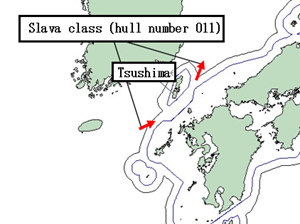 https://www.mod.go.jp/js/pdf/2026/p20260715_02.pdf |
| 7/15 |
On July 15, Ms. Annegret Kramp-Karrenbauer, Chairperson of the Konrad-Adenauer-Stiftung and former Defense Minister of the Federal Republic of Germany, paid a courtesy call on the Parliamentary Vice-Minister for Foreign Affairs of Japan in Tokyo. The Parliamentary Vice-Minister stated that it is important for Japan to deepen cooperation with Germany under the current international situation. They discussed regional and international issues, including the updated Free and Open Indo-Pacific (FOIP) and the security situation in the region. Ministry of Foreign Affairs of Japanhttps://www.mofa.go.jp/erp/erp_2/de/pageite_000001_00002.html |
| 7/15 |
On July 13, a Japan-Vietnam Defense Ministerial Meeting was held in Tokyo. Japan’s Minister of Defense stated that Vietnam is a vital partner for maintaining peace and stability in the Indo-Pacific region, and emphasized the need to further strengthen their Comprehensive Strategic Partnership. Vietnam’s Minister of National Defence agreed, and both officials discussed regional security issues, including the situations in the East China and South China Seas. Furthermore, they reaffirmed the importance of respecting freedom of navigation and overflight. Ministry of Defense of Japanhttps://www.mod.go.jp/en/article/2026/07/a65d30ef2c72dfa84319bf3d3da6c3cdf30b9a96.html |
| 7/15 |
U.S. Coast Guard vessels have been deployed to Singapore and the Philippines to counter China’s pressure in the western Pacific. These ships previously conducted maritime security missions in the Middle East but were relocated amid rising tensions between the U.S. and Iran. New Nationhttps://www.newsnationnow.com/us-news/military/coast-guard-cutters-pacific-china-tensions/ |
| 7/15 |
Chinese shipping company Sealegend Shipping announced that it will launch a regular container shipping service between China and Europe via the Arctic this summer. While previous Arctic container services were operated only as demonstrations or charters, this will mark the first weekly scheduled service. gCaptainhttps://gcaptain.com/china-launches-first-scheduled-weekly-arctic-container-service-to-europe/ |
| 7/15 |
The U.S. Coast Guard awarded contracts to shipyards in Louisiana and Finland to build six new Arctic Security Cutter icebreakers. Due to the effects of climate change, many countries are becoming increasingly interested in Arctic waters, but the U.S. Coast Guard currently has only three icebreakers. The six new vessels are scheduled to be delivered by 2031, with five more expected to follow eventually. Stars and Stripeshttps://www.stripes.com/branches/coast_guard/2026-07-15/bollinger%C2%A0new-arctic-security-cutters-22273292.html |
| 7/15 |
According to an analysis by a Taiwanese expert, the submarine-launched ballistic missile fired by China on July 6 might have been a JL-2 or a JL-3. This missile was likely launched by a Type 094 strategic nuclear submarine, and the final impact area was probably located in the waters between Nauru and Tonga in the South Pacific. The Taiwanese expert explained that the JL-2 has a range of over 7,400 km and the JL-3 has a range of over 10,000 km. The JL-3 is believed to be equipped with multiple independently targetable reentry vehicle (MIRV) technology. He also stated that the possibility of a nuclear attack against Taiwan by China is considered to be low, but the growth of China’s nuclear capability might affect foreign countries' attitudes toward a Taiwan Strait contingency. Pacific Forumhttps://pacforum.org/publications/the-pilot-47-chinas-submarine-launched-missile-test-and-the-future-of-indo-pacific-deterrence/?utm_source=MASTERLIST&utm_campaign=cf2cca4b3b-The_Pilot_Pacific_Forum_Policy_Briefs_COPY_47&utm_medium=email&utm_term=0_f6adb86dc8-cf2cca4b3b-566074856 |
| 7/15 |
Although the People's Liberation Army Navy has dramatically expanded its capabilities in recent years, this growth is driven by top-down directives from the leadership rather than an increase in the Navy's institutional influence. The Navy's bureaucratic leverage within the PLA is limited, forcing it to acquiesce to Central Military Commission policies that diminish its autonomy and capacity, such as transferring naval aircraft to the Air Force and patrol ships to the Coast Guard. U.S. Naval War Collegehttps://digital-commons.usnwc.edu/cgi/viewcontent.cgi?article=1056&context=cmsi-maritime-reportsl |
| 7/16 |
On July 16, JMSDF confirmed four Chinese and Russian Naval Vessels, one Chinese Renhai class destroyer (hull number 103), one Chinese Luyang Ⅲ class destroyer (hull number 124), one Chinese Fuchi class replenishment oiler (hull number 903) and one Russian Steregushchiy class frigate (hull number 343), sailing south in the waters 90km southwest of Kume Island (Okinawa Prefecture). These vessels then proceeded through the waters between Okinawa Island and Miyako Island (Okinawa Prefecture) into the Pacific Ocean. 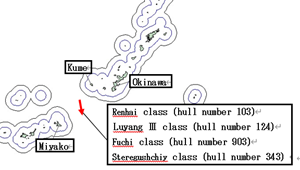 https://www.mod.go.jp/js/pdf/2026/p20260716_02.pdf |
| 7/16 |
On July 16, Japan and New Zealand exchanged diplomatic notes to bring their Acquisition and Cross-Servicing Agreement (ACSA) into force. Following this exchange, the agreement will take effect on August 15. Japan’s Ministry of Foreign Affairs stated that the agreement will further strengthen the defense cooperation between the two countries and contribute to global peace and security, as well as Japan’s own security. Ministry of Foregin Affairs of Japanhttps://www.mofa.go.jp/press/release/pressite_000001_02526.html |
| 7/16 |
On July 16, a Japan-Greece Foreign Ministers' Meeting was held in Tokyo. During the meeting, Japan’s Foreign Minister expressed a desire to cooperate more closely with Greece, a strategic partner, to realize the updated "Free and Open Indo-Pacific (FOIP)". In response, the Greek Foreign Minister stated that Japan’s efforts, including those related to the updated FOIP, are vital for promoting shared values between the two nations. The two ministers also concurred on strengthening bilateral relations in areas such as security and defense. Ministry of Foreign Affairs of Japanhttps://www.mofa.go.jp/press/release/pressite_000001_02527.html |
| 7/16 |
On July 16, a seminar on U.S.-China-Taiwan relations was held by the Department of China Affairs of the Democratic Progressive Party in Taipei. During the event, the director of National Sun Yat-sen University's Institute of China and Asia-Pacific Studies noted that the U.S. is seeking to hold multinational military exercises around Taiwan with regional partners to deter Chinese military pressure. He warned that Beijing could respond to this with large-scale drills and gray-zone tactics. Focus Taiwanhttps://focustaiwan.tw/politics/202607160015 |
| 7/16 |
On July 16, New Zealand and Fiji renewed a five-year partnership called the “Duavata Partnership”, which outlines shared priorities from 2026 to 2030. In the area of peace and security, both countries expressed their commitment to cooperate in areas such as policing, immigration, cybersecurity and maritime security. Ministry of Foreign Affairs and Trade of New Zealandhttps://www.mfat.govt.nz/en/countries-and-regions/australia-and-pacific/fiji/new-zealand-high-commission/duavata-partnership The Fiji Times https://www.fijitimes.com.fj/new-zealand-fiji-renew-five-year-partnership/ |
| 7/16 |
On July 16, Papua New Guinea's Foreign Minister announced the decision to close the Taiwan representative office in the country. While China welcomed the decision, Taiwan strongly objected. Taiwan's foreign ministry stated that it will continue its normal operations and plans to hold discussions with the Papua New Guinean government regarding the representative office. Nikkei Asiahttps://asia.nikkei.com/politics/international-relations/taiwan-tensions/papua-new-guinea-says-it-will-shut-taiwan-s-office-winning-china-s-praise |
| 7/16 |
On July 13, the U.S. Navy awarded a contract to manage the construction of the McClung-class Medium Landing Ships (LSMs) to TOTE Services LLC. The first delivery of a McClung-class vessel is scheduled for the autumn of 2029. With this delivery, the U.S. Navy will possess a self-beaching vessel that can deliver Marines, vehicles, and supplies directly onto unimproved shorelines without any pier infrastructure. The U.S. Navy has not seriously fielded this type of vessel since the end of World War II. Tech Timeshttps://www.techtimes.com/articles/320788/20260716/marine-corps-gets-its-pacific-island-logistics-ship-after-22b-navy-contract-award.htm |
| 7/17 |
In an interview on July 10, the Commander of the French Pacific Command stated that France was given prior notice about China’s recent SLBM test launch and regarded the launch as a demonstration of the credibility of nuclear deterrence. He also emphasized that France has its own independent assessment of the regional security environment while coordinating closely with allies and partners, and noted that France is expanding defense cooperation with Japan in many fields. Naval Newshttps://www.navalnews.com/interviews/2026/07/france-advance-notice-china-slbm-launch/ |
| 7/17 |
The Australian landing ship dock HMAS Choules has sailed from the Philippines to participate in Exercise Pacific Partnership. This vessel will be used as a command-and-control platform, carrying multinational military personnel to various locations throughout the Indo-Pacific region. This exercise is an annual humanitarian assistance and disaster relief preparedness mission led by the U.S. and conducted throughout the Indo-Pacific. Australian Goverment Defencehttps://www.defence.gov.au/news-events/news/2026-07-17/defence-partners-set-sail-pacific |
| 7/17 |
Over the past decade, Russia has transformed the Arctic into a strategic stronghold, while the United States has fallen behind in this competition. As the strategic importance of the Arctic grows due to changing weather conditions, opening new shipping routes and enabling access to resources, satellite imagery analysis increasingly reveals that Russia is expanding its military and commercial presence, while the U.S. is striving to rebuild its capabilities in response. Business Insiderhttps://www.businessinsider.com/satellite-images-how-russia-winning-race-arctic-united-states-behind-2026-7 |
| 7/17 |
The U.S. Coast Guard has resumed monitoring Chinese research vessels transiting through U.S. and international waters via the Bering Sea. A Chinese maritime research vessel was confirmed to have passed through the U.S. Exclusive Economic Zone (EEZ) and over the U.S. extended continental shelf in the Bering Sea, heading toward the Arctic Ocean. The U.S. Coast Guard also reported spotting another research vessel bound for the Arctic via the Bering Sea. The Maritime Executivehttps://maritime-executive.com/article/uscg-resumes-monitoring-of-chinese-research-vessels-entering-the-arctic The United States Governmen https://www.war.gov/News/News-Stories/Article/Article/4550235/coast-guard-monitors-chinese-vessels-in-the-arctic/ |
| 7/17 |
China criticizes Japan's defense policy by linking it to historical issues through the term "new type of militarism." China attempts to position Japan as a defeated nation and enemy state from World War II, characterizing it as a challenger to the post-war international order. Instead of getting entangled in historical disputes, Japan should deepen its cooperation with other nations through transparent defense policies. The Japan Timeshttps://www.japantimes.co.jp/commentary/2026/07/17/japan/beijing-history-war/ |
| 7/17 |
The Philippines accused the Chinese state-run newspaper China Daily of being racist as it posted an AI-generated video that depicts the Philippines as a monkey controlled by the U.S. and Japan. The number of collisions in the South China Sea between the two countries has been rising in recent years. BBC Worldhttps://www.bbc.com/news/articles/cj632307934o |
| 7/20 |
Taiwan’s Defense Minister stated that he has not set a deadline for the delivery of the country’s first domestically-produced submarine. The minister explained to the parliament that safety and quality are being prioritized as the vessel currently undergoes screening and testing. Focus Taiwan (Japanese)https://japan.focustaiwan.tw/politics/202607200006 |
| 7/20 |
The U.S. Navy has initiated the long-delayed site selection process for a fifth naval shipyard. While more than 60% of the U.S. fleet is stationed in the Pacific, the region has far fewer shipyards compared to the Atlantic, creating a strategic mismatch. Although Pentagon analysts point out that West Coast shipyards lack price competitiveness compared to their East Coast counterparts, experts emphasize that developing shipyard capacity on the West Coast is an urgent priority to maintain the operational efficiency of both the Pacific Fleet and the Coast Guard. Forbeshttps://www.forbes.com/sites/craighooper/2026/07/20/pentagon-bias-for-east-coast-threatens-us-navy-needs-in-pacific/ |
| 7/21 |
The Korea Coast Guard announced that it plans to hold a concert on Takeshima Island (Shimane Prefecture) on July 22. South Korea controls the island, but the Japanese government maintains the island is an inherent part of Japan's territory. Trainees from the Coast Guard Academy and members of the Coast Guard band are scheduled to participate in the concert. NHK Worldhttps://www3.nhk.or.jp/nhkworld/en/news/20260721_04/ |
| 7/21 |
On July 21, the Minister for Foreign Affairs of Japan paid a courtesy call on the President of the Philippines in Manila. During the courtesy call, Japan’s Foreign Minister stated Japan’s intention to strengthen the bilateral relationship based on the Comprehensive Strategic Partnership. He also expressed Japan’s desire to advance cooperation between the two countries in the areas of security and economy. The Philippine President concurred with this point. Ministry of Foreign Affairs of Japanhttps://www.mofa.go.jp/s_sa/sea2/ph/pageite_000001_01732.html |
| 7/21 |
On July 21, exchange of views between the Japanese Foreign Minister and the U.S. Secretary of State was held in Manila. They discussed the situation in Iran as well as issues related to the Indo-Pacific. They also confirmed that they would maintain close communication to respond to international issues. Ministry of Foreign Affairs of Japanhttps://www.mofa.go.jp/na/na1/us/pageite_000001_01733.html |
| 7/21 |
On July 21, a Japan-Italy Defense Ministerial Meeting was held in Farnborough. Both ministers reaffirmed their continued cooperation for the success of the “Global Combat Air Programme” (GCAP). They also reaffirmed their recognition that the security of the Euro-Atlantic and the Indo-Pacific is inseparable. Ministry of Foreign Affairs of Japanhttps://www.mod.go.jp/en/article/2026/07/1a4cae0b041329847bde1e21cc1e4402d6847824.html |
| 7/21 |
On July 19, JMSDF confirmed four Chinese and Russian Naval Vessels, one Chinese Renhai class destroyer (hull number 103), one Chinese Luyang Ⅲ class destroyer (hull number 124), one Chinese Fuchi class replenishment oiler (hull number 903) and one Russian Steregushchiy class frigate (hull number 343), sailing northeast in the waters 330km southwest of Okinotorishima Island (Tokyo Metropolis). Then JMSDF confirmed one Chinese Luyang Ⅲ class destroyer (hull number 124) conducted live-fire training in the waters 180km southwest of Okinotorishima Island. 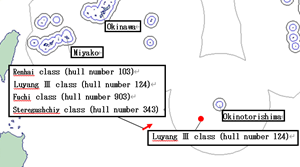 https://www.mod.go.jp/js/pdf/2026/p20260721_01.pdf |
| 7/21 |
On July 18, the JMSDF confirmed one Chinese Dongdiao class intelligence collection ship (hull number 796) sailing northeast in waters 90km south of Miyako Island (Okinawa Prefecture). On July 19, this vessel sailed northwest through the waters between Okinawa Island and Miyako Island into the East China Sea. 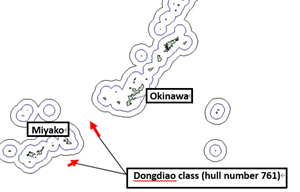 https://www.mod.go.jp/js/pdf/2026/p20260721_03.pdf |
| 7/21 |
On July 19, the JMSDF confirmed one Russian one Improved Kilo class submarine and one Igor Belousov class submarine rescue ship sailing south in waters 50km north of Iriomotejima Island (Okinawa Prefecture). These vessels sailed southwest through waters between Yonagunijima Island (Okinawa Prefecture) and Iriomotejima Island and navigated to the Pacific Ocean. 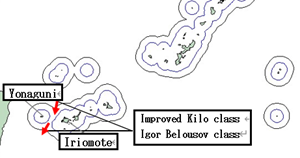 https://www.mod.go.jp/js/pdf/2026/p20260721_04.pdf |
| 7/21 |
On July 20, the JMSDF confirmed two Russian Tarantul-III class corvettes (hull number 921 and 924) and Amga class missile support ship sailing east in waters 60km northwest of Rebun Island (Hokkaido Prefecture). JMSDF also confirmed these vessels sailed east through the Soya Strait. 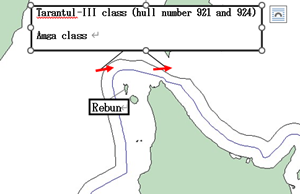 https://www.mod.go.jp/js/pdf/2026/p20260721_05.pdf |
| 7/21 |
On July 21, JMSDF confirmed four Chinese and Russian Naval Vessels, one Chinese Renhai class destroyer (hull number 103), one Chinese Luyang Ⅲ class destroyer (hull number 124), one Chinese Fuchi class replenishment oiler (hull number 903) and one Russian Steregushchiy class frigate (hull number 343), sailing northeast in the waters 170km southeast of Minami-Ioto Island (Tokyo Metropolis). These vessels sailed north in the waters220km east of Ioto Island (Tokyo Metropolis). 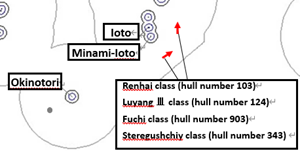 https://www.mod.go.jp/js/pdf/2026/p20260721_06.pdf |
| 7/21 |
On July 21, the Japan Joint Staff confirmed four Russian aircrafts flying east from the continent through the Sea of Japan. These aircrafts flew to the area off the coast of Okushiri Island (Hokkaido Prefecture), then turned north. These aircrafts flew to the area off the coast of Cape Kamui (Hokkaido Prefecture), then turned west and flew toward the continent. The JASDF scrambled fighter jets in response to this Russian aircraft. 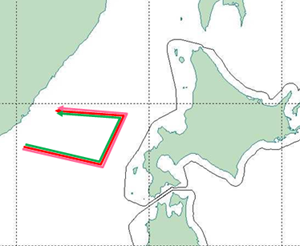 https://www.mod.go.jp/js/pdf/2026/p20260722_01.pdf |
| 7/21 |
According to the JCG, a Chinese maritime survey vessel was seen deploying what appeared to be a wire into the water within Japan’s EEZ near Senkaku Islands on July 21. A JCG patrol vessel demanded that the ship immediately cease its activities, stating that conducting research without the Japanese government’s approval is impermissible. Yomiuri Shimbun Online (Japanese)https://www.yomiuri.co.jp/national/20260721-GYT1T00224/ |
| 7/21 |
The military of the Philippines stated that one of its members was hit by the China Coast Guard with a wooden baton and injured, condemning the behavior of the Chinese coast guard. Meanwhile, China released video footage and argued that the Philippine personnel ignored warnings and attacked first. NHK Worldhttps://www3.nhk.or.jp/nhkworld/en/news/20260721_01/ |
| 7/21 |
The U.S. condemned the behavior of the Chinese coast guard in the South China Sea as dangerous and aggressive. The U.S. Secretary of State is scheduled to visit Manila this week to meet with his ASEAN counterparts, while the Chinese Foreign Minister will also visit the city around the same time. CNBChttps://www.cnbc.com/2026/07/21/china-philippines-south-china-sea-disputes-sailor-injured-.html |
| 7/21 |
On July 21, the Chinese Foreign Ministry summoned the Philippine Ambassador to China to lodge a serious protest over the South China Sea collision which happened the previous day. On the same day, the President of the Philippines also summoned China's ambassador to the Philippines. A spokesperson for the Presidential Office noted that the meeting was held to discuss national security but did not provide details. NHK Worldhttps://www3.nhk.or.jp/nhkworld/en/news/20260722_03/ |
| 7/21 |
On July 21, a Chinese Foreign Ministry spokesperson stated that the live-fire exercise conducted inside Japan’s exclusive economic zone (EEZ) southwest of Okinotorishima Island was consistent with international law. He argued that the maritime feature is a rock rather than an island, thereby rejecting Japan’s jurisdiction over the surrounding waters. In response, Tokyo lodged a protest with Beijing through diplomatic channels. NHK Worldhttps://www3.nhk.or.jp/nhkworld/en/news/20260721_17/ |
| 7/21 |
During the Rim of the Pacific (RIMPAC) 2026 exercise, personnel from each country conducted training missions with allies and partners. The objective of the exercise was to strengthen relationships, improve interoperability among participating nations, and enhance cooperation at the tactical level. These countries are further deepening their partnerships through various training programs. USNI Newshttps://news.usni.org/2026/07/21/multinational-crews-fly-on-u-s-navy-poseidons-for-rimpac |
| 7/21 |
The Philippine Foreign Minister stated that she raised the collision between the Philippines and China in the South China Sea at the ASEAN Foreign Ministers’ Meeting, but the other ministers offered no particular reaction. Philippine News Agencyhttps://www.pna.gov.ph/articles/1279981 |
| 7/21 |
Australian Foreign Minister Penny Wong expressed concern over destabilizing and high-risk actions in the region, referring to China’s recent ballistic missile test and an incident in the South China Sea where a Philippine Navy sailor was beaten by China Coast Guard personnel. During her visit to Manila, Minister Wong also announced assistance to enhance the drone capabilities of the Philippine Coast Guard. Philippine News Agencyhttps://www.pna.gov.ph/articles/1280027 https://www.pna.gov.ph/articles/1279937 |
| 7/21 |
On July 20, the Ministry of National Defense (MND) of Taiwan detected that a Chinese military helicopter and drone were crossing the Taiwan Strait Median Line. Since Nancy Pelosi’s visit to Taiwan in 2022, the MND has detected Chinese military helicopters operating near Taiwan. But this time, the helicopter conducted an operation in Taiwan’s designated no-fly zone for a long time, and an expert indicated that this is a new form of gray-zone operation. Focus Taiwanhttps://focustaiwan.tw/politics/202607210024 |
| 7/21 |
According to the JCG, a Chinese maritime survey vessel was seen deploying what appeared to be a wire into the water within Japan’s EEZ near Senkaku Islands on July 21. A JCG patrol vessel demanded that the ship immediately cease its activities, stating that conducting research without the Japanese government’s approval is impermissible. Yomiuri Shimbun Online (Japanese)https://www.yomiuri.co.jp/national/20260721-GYT1T00224/ |
| 7/21 |
Even a decade after the 2016 Permanent Court of Arbitration ruling challenged the legal basis of China’s claims, tensions in the South China Sea remain unresolved. Since the early 2010s, China has sought to reinforce its territorial sovereignty through island-building activities, drawing reactions from neighboring countries and external powers. China’s actions in the South China Sea can be understood not merely as an effort to assert its territorial sovereignty, but as an endeavor to reshape the maritime order. Through these initiatives, China is actively seeking to re-interpret the United Nations Convention on the Law of the Sea (UNCLOS). 9 DASHLINEhttps://www.9dashline.com/article/artificial-islands-real-power-reshaping-maritime-order-in-the-south-china-sea |
| 7/22 |
On July 22, the Japan-Australia-India-U.S. (Quad) Foreign Ministers’ Meeting was held in Manila. The four ministers confirmed that they would promote cooperation to realize a “Free and Open Indo-Pacific (FOIP)”, particularly in the areas of maritime and transnational security, economic prosperity and security, critical and emerging technologies, and humanitarian assistance and disaster relief. They also held candid discussions and concurred on maintaining close coordination within this framework. Ministry of Foreign Affairs of Japanhttps://www.mofa.go.jp/fp/nsp/pageite_000001_01736.html |
| 7/22 |
On July 22, an ASEAN-Japan Foreign Ministers’ Meeting was held in Manila. Japan’s Foreign Minister emphasized that a “Free and Open Indo-Pacific (FOIP)” aims to maintain and strengthen the international order, and stated Japan’s commitment to promote the "ASEAN Outlook on the Indo-Pacific (AOIP),” which shares fundamental principles with the FOIP. At the meeting, the ministers exchanged views on regional and international situations, including issues related to the East China Sea and the South China Sea. Ministry of Foreign Affairs of Japanhttps://www.mofa.go.jp/a_o/rp/pageite_000001_00005.html |
| 7/22 |
On July 22, a Japan-U.S.-ROK Foreign Ministers’ Meeting was held in Manila. The three ministers reaffirmed the importance of strengthening solidarity and strategic coordination among the three countries. They also exchanged views on regional situations, including unilateral attempts to change the status quo by force or coercion, and on ways of engagement toward Southeast Asian countries. Ministry of Foreign Affairs of Japanhttps://www.mofa.go.jp/a_o/na2/pageite_000001_00006.html |
| 7/22 |
On July 22, the Mekong-Japan Foreign Ministers’ Meeting was held in Manila. Japan’s Foreign Minister emphasized that the Mekong region is important for realizing an updated Free and Open Indo-Pacific. He expressed Japan’s commitment to deepening Mekong-Japan cooperation, including in the security domain, while ministers from the Mekong region voiced their support and appreciation for Japan's continued engagement. Ministry of Foreign Affairs of Japanhttps://www.mofa.go.jp/s_sa/sea1/pageite_000001_01742.html (Reference) https://www.mofa.go.jp/mofaj/files/101063877.pdf |
| 7/22 |
On July 22, a Japan-France Defense Ministerial Meeting was held in Paris. Both ministers welcomed the advancement of defense cooperation between the two countries and reaffirmed that the security of the Euro-Atlantic and the Indo-Pacific is inseparable. Ministry of Defense of Japanhttps://www.mod.go.jp/en/article/2026/07/c050220c7f2443db1f6a534a893fc629043f6094.html |
| 7/22 |
On July 22, the Defense Minister of Japan held a meeting with the Secretary General of NATO in Brussels. They exchanged views on the regional security environment and reaffirmed that the security of the Euro-Atlantic and the Indo-Pacific is inseparable. Ministry of Defense of Japanhttps://www.mod.go.jp/en/article/2026/07/c741ce50254811fcd3b2670f3ad2949f475cdcbd.html |
| 7/22 |
On July 22, the JMSDF confirmed one Russian Balzam class intelligence collection ship (hull number 80) sailing northeast in the waters 50km west of Rebun Island (Hokkaido Prefecture). This vessel then sailed east through the Soya Strait. 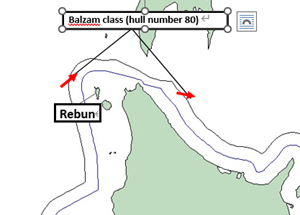 https://www.mod.go.jp/en/article/2026/07/c741ce50254811fcd3b2670f3ad2949f475cdcbd.html |
| 7/22 |
On July 22, a Japan-France Defense Ministerial Meeting was held in Paris. Both ministers welcomed the advancement of defense cooperation between the two countries and reaffirmed that the security of the Euro-Atlantic and the Indo-Pacific is inseparable. Ministry of Foreign Affairs of Japanhttps://www.mod.go.jp/js/pdf/2026/p20260722_02.pdf |
| 7/22 |
Canada’s Foreign Minister stated that Canada is concerned about the collision between the Philippines and China in the South China Sea. She also noted that Canada does not agree with using intimidation as a means of addressing disputes, reaffirmed Canada's support for resolving maritime disputes under UNCLOS, and reiterated Canada’s longstanding support for a “Free and Open Indo-Pacific.” Reuters (Japanese)https://japantoday.com/category/world/canada-fm-urges-middle-east-de-escalation-calls-south-china-sea-confrontation-%27troubling%271?comment-order=popular |
| 7/22 |
On July 22, the Secretary of State of the U.S. and the Minister of Foreign Affairs of China held a meeting in Manila. They discussed a visit to the U.S. this September by the Chinese President and voiced concern about international issues, including the war in Iran and tensions in the South China Sea. At the meeting, the U.S. Secretary of State expressed concern that the deployment of Chinese coast guard vessels to waters near Taiwan is undermining regional stability. The meeting lasted about 90 minutes and topics such as trade, Taiwan, and areas for potential cooperation were discussed. Nikkei Asiahttps://asia.nikkei.com/politics/international-relations/us-china-tensions/rubio-discusses-chinese-president-s-us-visit-in-meeting-with-wang-yi Taipei Times https://www.taipeitimes.com/News/front/archives/2026/07/24/2003861284 |
| 7/22 |
The essence of contemporary Chinese multilateral diplomacy is not the external destruction of the international order through military force, but rather infiltrating it from within and redefining it to its own advantage. As a result, the liberal international order is losing its coherence and universality, shifting toward a "post-liberal" order that prioritizes national sovereignty, economic development, and regime stability. In response to this internal infiltration by China, the U.S. Trump administration has adopted a strategy of reduced engagement. However, under this strategy, the U.S. risks losing its voice within these international institutions and diminishing its influence over other nations. As U.S.-China confrontation deepens, it is appropriate for Japan to basically align with the U.S. stance; yet, existing frameworks still possess utility, and blindly following the U.S. is not advisable. Japan must respond calmly in light of its own national interests. IFIMEShttps://www.ifimes.org/en/researches/combating-sino-centric-multilateralism-the-hard-boiled-realism-required-for-japans-multilateral-diplomacy/5938 |
| 7/23 |
On July 23, Japan and the Philippines exchanged diplomatic notes to bring their Acquisition and Cross-Servicing Agreement (ACSA) into force. Following this exchange, the agreement will take effect on August 22. Japan’s Ministry of Foreign Affairs stated that the agreement will further strengthen the defense cooperation between the two countries and contribute to global peace and security, as well as Japan’s own security. Ministry of Foreign Affairs of Japanhttps://www.mofa.go.jp/press/release/pressite_000001_02533.html |
| 7/23 |
On July 22, a China-Philippines Foreign Ministers’ Meeting was held in Manila. Both ministers traded protests over the maritime collision between the two countries in the South China Sea. According to the Philippine Foreign Minister, they also discussed “the importance of keeping communication lines open, managing tensions, and pursuing practical ways forward.” Reutershttps://www.reuters.com/world/china/philippine-chinese-foreign-ministers-trade-protests-over-south-china-sea-2026-07-22/ Philippine News Agency https://www.pna.gov.ph/articles/1280065 |
| 7/23 |
On July 23, the Secretary of State of the U.S. held a meeting with the President of the Philippines in Manila. They reaffirmed their shared commitment to a “Free and Open Indo-Pacific” and underscored the importance of upholding freedom of navigation and overflight in the South China Sea. They also noted the recent tenth anniversary of the July 2016 South China Sea Arbitration Award, which addressed maritime disputes between the Philippines and China. The United States Governmenthttps://asean.usmission.gov/secretary-rubios-meeting-with-philippine-president-marcos/ |
| 7/23 |
On July 23, the 27th ASEAN Plus Three Foreign Ministers’ Meeting was held in Manila. Japan’s Foreign Minister stated that Japan supports the "ASEAN Outlook on the Indo-Pacific (AOIP)," which shares general directions with Japan's "Free and Open Indo-Pacific (FOIP)." He also emphasized the importance of cooperation among the ASEAN Plus Three countries to deal with common challenges. The ministers discussed promoting cooperation within the ASEAN Plus Three framework and exchanged views on regional and international situations. China’s Foreign Minister did not attend this meeting to prioritize joining the foreign ministers’ meeting of the Shanghai Cooperation Organization, possibly to avoid criticism from other countries about the collision in the South China Sea. Ministry of Foreign Affairs of Japanhttps://www.mofa.go.jp/a_o/rp/pageite_000001_00006.html Jiji Press News (Japanese) https://www.jiji.com/jc/article?k=2026072300933&g=int |
| 7/23 |
On July 23, a Japan-UK Foreign Ministers’ Meeting was held in Manila. The ministers shared the view that the security of the Euro-Atlantic and the Indo-Pacific is inseparable, and agreed to promote cooperation in the security, economic, and economic security fields. They also exchanged views on the international situation, including developments in the Indo-Pacific. Ministry of Foreign Affairs of Japanhttps://www.mofa.go.jp/erp/erp_1/gb/pageite_000001_01743.html |
| 7/23 |
On July 23, the 33rd ASEAN Regional Forum (ARF) Foreign Ministers’ Meeting was held in Manila. Regarding maritime security, Japan’s Foreign Minister stated that “unilateral attempts to change the status quo by force or coercion are unacceptable anywhere in the world, including in the East China Sea and the South China Sea”. Many participants expressed their stances on the situation in the South China Sea, emphasizing the importance of freedom of navigation and overflight, as well as the peaceful settlement of disputes in accordance with international law. Ministry of Foreign Affairs of Japanhttps://www.mofa.go.jp/a_o/rp/pageite_000001_00007.html |
| 7/23 |
On July 23, a Japan-Solomon Islands Summit Meeting was held in Tokyo. The Prime Minister of Japan stated Japan’s intention to promote cooperation with Solomon Islands—a country that shares universal values such as freedom, democracy, the rule of law, and human rights—under the vision of the Free and Open Indo-Pacific. In response, the Prime Minister of Solomon Islands expressed his desire to further strengthen bilateral relations. The two leaders also exchanged views on regional matters in the Indo-Pacific Ministry of Foreign Affairs of Japanhttps://www.mofa.go.jp/a_o/rp/pageite_000001_01745.html |
| 7/23 |
On July 23, a Japan-Philippines Foreign Ministers' Meeting was held in Manila. Japan’s Foreign Minister expressed Japan’s intention to strengthen the bilateral relationship, emphasizing the importance of realizing a revitalized "Free and Open Indo-Pacific (FOIP)." The two ministers also exchanged views on regional and international issues, including the situation in the South China Sea, and reaffirmed their commitment to close cooperation. Ministry of Foreign Affairs of Japanhttps://www.mofa.go.jp/s_sa/sea2/ph/pageite_000001_01747.html |
| 7/23 |
On July 23, according to the JCG, four Chinese government vessels entered Japan’s territorial waters off the Senkaku Islands in the East China Sea. Their hull numbers are 1302, 1301, 1304 and 1305. This was the first confirmed entry of Chinese government ships into the area since July 7. NHK News (Japanese)https://news.web.nhk/newsweb/na/na-k10015184291000 Yaeyama Nippo (Japanese) https://www.yaeyama-nippo.co.jp/article/32077 |
| 7/23 |
On July 23, according to the JCG, four Chinese government vessels entered Japan’s territorial waters off the Senkaku Islands in the East China Sea. Their hull numbers are 1302, 1301, 1304 and 1305. This was the first confirmed entry of Chinese government ships into the area since July 7. NHK News (Japanese)https://news.web.nhk/newsweb/na/na-k10015184291000 Yaeyama Nippo (Japanese) https://www.yaeyama-nippo.co.jp/article/32077 |
| 7/23 |
On July 23, the Philippine Coast Guard announced that a China Coast Guard vessel fired a water cannon at a Philippine government vessel. No injuries were reported. Meanwhile, the China Coast Guard stated that using the water cannon was a lawful and legitimate measure to drive away the Philippine vessels. NHK Worldhttps://www3.nhk.or.jp/nhkworld/en/news/20260723_18/ |
| 7/23 |
On July 23, Taiwan's Coast Guard Administration condemned the latest Chinese maritime survey in Taiwan’s EEZ as a violation of Taiwan's sovereignty. This survey, conducted from July 17 to 23, marks the second time China has dispatched a maritime survey vessel into waters east of Taiwan since June. Focus Taiwanhttps://focustaiwan.tw/politics/202607230023 |
| 7/23 |
Japan’s Foreign Minister had a brief conversation with China’s Foreign Minister in Manila on July 22. This marks their first exchange since the Prime Minister of Japan’s remark in the Diet last November regarding a possible Taiwan contingency. He stated that they discussed bilateral relations but did not reveal the details. The Chinese side denied that the meeting and conversation took place. Chinese side did not admit the meeting and conversation. Japan’s Foreign Minister also noted that he had a short conversation with Russia’s Foreign Minister at a dinner, during which they touched upon bilateral relations and regional situations. NHK Worldhttps://www3.nhk.or.jp/nhkworld/en/news/20260723_14/ Kyodo News (Japanese) https://news.jp/i/1453714277868470571?c=302675738515047521?c=302675738515047521 |
| 7/23 |
On July 23, Taiwan's Coast Guard Administration condemned the latest Chinese maritime survey in Taiwan’s EEZ as a violation of Taiwan's sovereignty. This survey, conducted from July 17 to 23, marks the second time China has dispatched a maritime survey vessel into waters east of Taiwan since June. Focus Taiwanhttps://focustaiwan.tw/politics/202607230023 |
| 7/23 |
On July 23, China started two-day long military live-fire exercises in parts of the Taiwan Strait. This exercise was launched just a day after the meeting between the U.S. Secretary of State and China’s Foreign Minister in Manila, where issues related to Taiwan were discussed. Reuters (The Strait Times)https://www.straitstimes.com/asia/east-asia/china-begins-two-days-of-live-fire-drills-in-taiwan-strait Strat News Global https://stratnewsglobal.com/world-news/china-launches-live-fire-drills-near-taiwan-after-rubio-wang-talks/ |
| 7/23 |
On July 22, the Russian Pacific Fleet announced that a military exercise involving the Bal and Bastion anti-ship missile systems was being conducted by its coastal defense units. According to the announcement by the fleet, the exercise was intended to maintain the ability to defend the Kuril Islands (the Chisima Islands and the Northern Territories) and other areas; further details were not released. Since Bal and Bastion are deployed on Etorofu and Kunashiri islands, this exercise may have been conducted in the Northern Territories of Japan. Yomiuri Shimbun Online (Japanese)https://www.yomiuri.co.jp/world/20260723-GYT1T00107/ |
| 7/23 |
On July 23, the Defence Ministers of New Zealand and Papua New Guinea signed a Statement of Intent on Defence Cooperation 2026-2029. Under this agreement, both countries will deepen military cooperation, including training, exercises, and personnel exchanges. New Zealand’s Defence Minister also reaffirmed the country’s commitment to Pacific regional cooperation during the meeting. Island Businesshttps://islandsbusiness.com/news-break/new-zealand-and-png-sign-defence-pact-to-boost-military-ties/ |
| 7/23 |
The U.S. Navy and its allied forces sank two decommissioned vessels in a live-fire exercise at the Rim of the Pacific (RIMPAC) 2026. RIMPAC 2026 has been underway since June, with 30 surface vessels, five submarines, and 30,000 personnel participating. The U.S. has equipped advanced weapon systems with new capabilities to counter China’s pressure and demonstrated its strength at RIMPAC. Allied and partner countries also have used RIMPAC to conduct live-fire training. Naval Newshttps://www.navalnews.com/naval-news/2026/07/rimpac-2026-sinkex-allied-anti-ship-missile-strikes/ |
| 7/23 |
On July 23, a spokesperson for the Ministry of Foreign Affairs of Vietnam stated that Vietnam calls on China and the Philippines to exercise self-restraint in the South China Sea. She also emphasized the necessity of creating a conducive environment for negotiations over a code of conduct (COC) in the South China Sea and maintaining peace and stability in the region. VN Expresshttps://e.vnexpress.net/news/news/vietnam-calls-on-china-philippines-to-exercise-restraint-in-east-sea-5100983.html |
| 7/23 |
Japan still hosts the United Nations Command-Rear (UNC-Rear) from the Korean War, and leveraging this mechanism could allow various nations to respond flexibly in the event of a Taiwan contingency. On the other hand, this framework could be weakened by shifts in the South Korean government’s policies toward the U.S. and China, changes in U.S. strategy, or the conclusion of a peace treaty between North and South Korea. Therefore, the Taiwanese government needs to recognize that developments on the Korean Peninsula directly affect Taiwan's security. Tapei Timeshttps://www.taipeitimes.com/News/editorials/archives/2026/07/23/2003861209 |
| 7/24 |
The Philippine Foreign Secretary stated that ASEAN and China have made progress in the negotiations over a code of conduct (COC) in the South China Sea. She also noted that all participants in the negotiations intend to reach a conclusion by the end of this year, despite the recent collisions between the Philippines and China. However, an expert countered that concluding the talks this year remains difficult because the Philippines wants the COC to be legally binding, a status China is reluctant to accept. Meanwhile, the U.S. ambassador to ASEAN noted that while the U.S. respects the negotiation process, it hopes the final agreement will not be harmful to U.S. interests. Philippine News Agencyhttps://www.pna.gov.ph/articles/1280188 Inquire https://globalnation.inquirer.net/332365/asean-china-target-year-end-scs-code-of-conduct-experts-see-hurdles |
| 7/24 |
On July 24, a Chinese Coast Guard vessel fired a water cannon at government vessels of the Philippines near a disputed shoal in the South China Sea, just as it had done the previous day. The Philippines again condemned the dangerous and unprofessional actions of the Chinese Coast Guard. Asahi Shimbunhttps://www.asahi.com/ajw/articles/16753201 |
| 7/24 |
A China Coast Guard vessel again blasted Philippine vessels with water cannons. A CNN crew was on board one of the Philippine vessels. This marks the third water cannon incident this week. The Philippine Coast Guard condemned China’s actions, while the Chinese side refuted the allegations. CNNhttps://edition.cnn.com/2026/07/24/asia/china-philippines-south-china-sea-scarborough-intl-hnk |
| 7/24 |
On July 22, the President of the U.S. and the President of the Philippines held a telephone meeting. The U.S. President assured that he would raise the concerns of the Philippines over the disputes between the Philippines and China in the South China Sea during his upcoming meeting with the President of China. They also exchanged views on current global, economic, and security issues. Philippine News Agencyhttps://www.pna.gov.ph/articles/1280186 |
| 7/24 |
"The Australian Foreign Minister indicated the possibility of expanding joint naval patrols in the South China Sea following a “destabilizing” test launch of a ballistic missile by China. She expressed concerns about China's actions during an Australia-China Foreign Ministers' meeting in Manila. While many Pacific countries condemned the Chinese missile launch, the Pacific Islands Forum Secretariat issued no response, reportedly because some member states, such as Kiribati and Nauru, may hold a negative or hesitant stance. Island Businesshttps://islandsbusiness.com/news-break/australia-considers-joint-sea-patrols-forum-remains-silent-on-china-missile-tests/ |
| 7/24 |
On July 24, the Japan Agency for Marine-Earth Science and Technology (JAMSTEC) announced that 54% of the rare earth elements extracted from the seabed offshore of Minamitorishima Island were heavy and medium rare earths, which are used in electric vehicle (EV) motors and other high-tech products. JAMSTEC conducted test drilling and collected 50 tons of mud from the area in January and February. JAMSTEC is also planning to start full-scale testing in February 2027. Jiji Press Newshttps://jen.jiji.com/jc/i?g=eco&k=2026072401100 |
| 7/24 |
Australia has decided to allocate an additional US$3.2 billion to modernize its domestic shipbuilding infrastructure to advance the nuclear-powered submarine project under the AUKUS agreement. Canberra positions this investment as a step toward technological self-reliance, aiming to build, operate, and maintain nuclear submarines domestically in the future. Under the current AUKUS agreement, Australia will initially acquire three U.S.-made nuclear submarines, with plans to co-build a new class of nuclear submarines with the UK starting in the early 2040s. VIETNAM.VNhttps://www.vietnam.vn/en/australia-bo-sung-3-2-ty-usd-phat-trien-du-an-tau-ngam-hat-nhan-aukus |
| 7/24 |
A senior U.S. Defense Department official testified before Congress that submarines play a decisive role in countering Chinese pressure in the Pacific, warning that the lack of submarine production capacity is a critical issue. He also noted that the current build rate for Virginia-class submarines is about 1.1 to 1.2 per year, whereas 2.0 to 2.33 are required to fulfill the AUKUS Pillar One agreement. Another expert stated that submarine construction is becoming even more challenging due to difficulties in retaining workers. Under the AUKUS Pillar One agreement, Australia is scheduled to acquire at least three submarines from the U.S. starting in 2032, but whether the timeline can be met remains a concern. The Sydney Morning Heraldhttps://www.smh.com.au/world/north-america/billions-of-dollars-are-failing-to-lift-production-of-aukus-submarines-20260723-p60hq7.html |
| 7/24 |
Monthly Statistics on Scrambles(June) The Japan Joint Staff released its monthly statistics on scrambles. In June, the Japan Air Self Defense Force (JASDF) conducted 67 scrambles. The most scrambles were against Chinese aircraft (47 times), followed by Russian aircraft (20 times). Japan Joint Staffhttps://www.mod.go.jp/js/pdf/2026/p20260724_05.pdf |
| 7/24 |
Statistics on Scrambles Conducted Through the First Quarter of Fiscal Year 2026 The Japan Joint Staff released its statistics on scrambles conducted through the First quarter of FY2026 (April 1 to June 30, 2026). The total number of scrambles during this period was 181. During the same period in FY2025 (April 1 to June 30, 2025), the total number of scrambles was 157. Including estimates, approximately 77% of the scrambles were in response to Chinese aircraft, approximately 23% to Russian aircraft. During the same period, cases indicating active operations by Chinese and Russian aircraft were observed, including: – flights by Russian IL-20 intelligence gathering aircraft over the Sea of Japan and the Pacific; – flights by Chinese Y-9 intelligence gathering aircraft over the East China Sea ; – long-range joint flights by Chinese H-6 bombers and Russian Tu-95 bombers; Japan Joint Staffhttps://www.mod.go.jp/js/pdf/2026/p20260724_06.pdf |
| 7/24 |
On July 24, the Japan Joint Staff confirmed one Russian IL-20 intelligence gathering aircraft flying from the continent through the Sea of Okhotsk toward the Pacific Ocean. The aircraft flew south to the area off the coast of Miyagi Prefecture, then turned back and flew through the Sea of Okhotsk toward the Sea of Japan. The aircraft passed through Japan's airspace over the Northern Territories in the process. The JASDF scrambled fighter jets in response to this Russian aircraft. 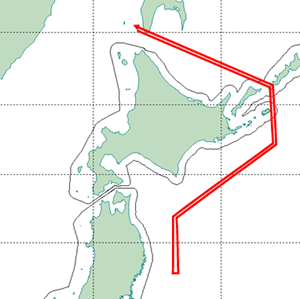 https://www.mod.go.jp/js/pdf/2026/p20260724_08.pdf Jiji Press News (Japanese) https://www.jiji.com/jc/article?k=2026072401250&g=soc |
| 7/24 |
On July 24, the High Representative of the EU for Foreign Affairs and Security Policy stated that the EU supports efforts by ASEAN and China to conclude a legally binding code of conduct in the disputed South China Sea. She also noted that disputes must be settled through dialogue, not coercion. Attending the EU-Philippine foreign ministers’ meeting, she signed a joint statement with her counterpart to upgrade EU-Philippine relations to an enhanced partnership aimed at establishing forward-looking cooperation across multiple domains. Yeni Safak Englishhttps://en.yenisafak.com/world/eu-backs-asean-china-south-china-sea-code-3721189 |
| 7/24 |
The Australian frigate HMAS Perth departed from Fleet Base West to conduct the Australian Defence Force’s fifth Regional Presence Deployment of 2026. HMAS Perth will participate in joint exercises with partner countries and make port visits. She will also conduct patrols in regional waters and exercise the right of freedom of navigation and overflight in international waters and airspace. Australia’s Chief of Joint Operations stated that Australia’s presence in the region has strengthened relationships with allied and partner countries and contributed to collective security and regional stability. Australian Government Defencehttps://www.defence.gov.au/news-events/releases/2026-07-24/hmas-perth-sails-2026-regional-presence-deployment |
| 7/25 |
On July 24, a Japan-U.S.-Philippines Multilateral Exercise was held in the South China Sea. Japan Self-Defense Forces, the United States Navy, the Philippine Navy, the Philippine Air Force and the Philippine Coast Guard conducted a multilateral exercise as a Maritime Cooperative Activity to support Free and Open Indo-Pacific. Japan Joint Staffhttps://www.mod.go.jp/js/pdf/2026/p20260725_02e.pdf |
| 7/25 |
On July 23, JMSDF confirmed one Chinese Renhai class destroyer (hull number 103) sailing northeast in the waters 220km northeast of Cape Inubosaki (Chiba Prefecture). On July 23, JMSDF also confirmed one Chinese Luyang Ⅲ class destroyer (hull number 124), one Chinese Fuchi class replenishment oiler (hull number 903) and one Russian Steregushchiy class frigate (hull number 343), sailing northeast in the waters southeast of Cape Inubosaki. On July 25, these vessels sailed northeast in the waters 300km southeast of Cape Nosappu (Hokkaido Prefecture). 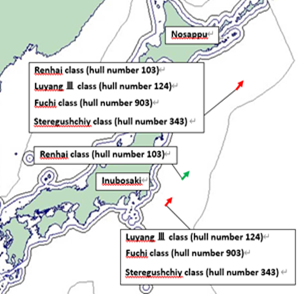 https://www.mod.go.jp/js/pdf/2026/p20260725_04.pdf |
| 7/25 |
Taiwan’s President attended the commissioning ceremony of the Taiwanese Navy’s Tuo Chiang-class corvette, the Dan Chiang. At the ceremony, the president stated that building military vessels domestically is crucial for strengthening defense autonomy. He also emphasized the importance of boosting military resilience, as vessels built in Taiwan can be maintained and repaired without foreign assistance. This corvette features low radar observability and an advanced combat system capable of launching long-range supersonic missiles. Tapei Timeshttps://www.taipeitimes.com/News/front/archives/2026/07/25/2003861343 |
| 7/25 |
Over the past two decades, China has undergone a massive naval modernization, becoming the world's largest navy by number of hulls. However, only about 150 to 170 of these vessels are considered blue-water combat-capable, and they do not yet possess the capabilities of the U.S. military. Furthermore, amid a shrinking and aging population, the military faces personnel shortages, lacks experience in large-scale joint operations, and questions remain regarding its joint operational capabilities. While it is true that China has significantly expanded its naval power and is expected to continue doing so, it remains uncertain whether it can achieve a coherent and resilient naval capability. International Ocean Informationhttps://oceanaffairs.substack.com/p/vol-39-chinas-maritime-power-en |
| 7/27 |
On July 24, the JMSDF confirmed one Russian Steregushchiy class frigate sailing east in the waters 60km northwest of Rebun Island (Hokkaido Prefecture). This vessel then sailed east through the Soya Strait. 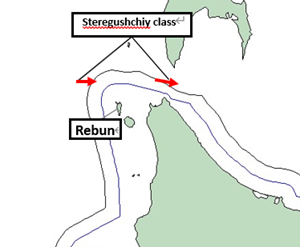 https://www.mod.go.jp/js/pdf/2026/p20260727_01.pdf |
| 7/27 |
On July 25, the JMSDF confirmed that one Chinese Jiangkai-II class frigate (hull number 546) and Fuchi class replenishment oiler (hull number 902) sailing northwest in waters 180km east of Miyako Island (OKinawa Prefecture). These vessels then proceeded through the waters between Okinawa Island and Miyako Island into the East China Sea. On June 25, the JMSDF also confirmed the Jiangkai-II class frigate (hull number 546) turned back in the waters 80km southwest of Kume Island (Okinawa Prefecture), and sailed south through the waters between Okinawa Island and Miyako Island to the Pacific Ocean. 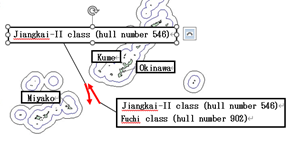 https://www.mod.go.jp/js/pdf/2026/p20260727_02.pdf |
| 7/27 |
On July 27, the Japan Joint Staff confirmed one Russian IL-20 intelligence gathering aircraft flying from the continent over the Sea of Japan. The aircraft flew to the area off the coast of Shimane Prefecture, then turned back and flew toward the continent. The JASDF scrambled fighter jets in response to this Russian aircraft. 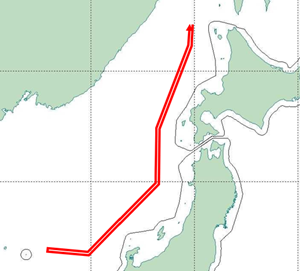 https://www.mod.go.jp/js/pdf/2026/p20260727_03.pdf |
| 7/27 |
Satellite imagery has confirmed that a nuclear-powered submarine is under construction at a shipyard in Shanghai. Experts point out that the submarine could possess advanced stealth capabilities. Unlike existing models, this submarine features a smaller sail, which may reduce water resistance and noise, potentially allowing it to navigate at higher speeds. China is expanding its nuclear forces, including its capacity to build nuclear-powered submarines. The Asahi Shimbunhttps://www.asahi.com/ajw/articles/16749679 |
| 7/27 |
While cargo ships are currently restricted to navigating the Northern Sea Route for only about five months during spring and summer, Russia is working toward a goal of making it operational year-round. The Governor of Arkhangelsk region stated that Russia will advance the use of the Northern Sea Route by modernizing ports and launching the operations of large-scale icebreakers within the next five years. To promote the route's utilization, Russia is expanding its cooperation with China, India, and the United Arab Emirates. Vietnam VNhttps://www.vietnam.vn/en/tuyen-duong-bien-phuong-bac-lo-trinh-moi-ket-noi-chau-a-va-chau-au |
| 7/28 |
The USS George Washington Carrier Strike Group is operating in the South China Sea as tensions between the Philippines and China escalate. A clash resulted in injuries to a Philippine Navy sailor, and China Coast Guard vessels used water cannons against Philippine government vessels. The U.S. Ambassador to the Philippines stated that the Carrier Strike Group possesses advanced capabilities to safeguard freedom of navigation and overflight in the South China Sea. Navy Tiemshttps://www.navytimes.com/news/your-navy/2026/07/27/uss-george-washington-operating-in-south-china-sea-as-china-philippines-tension-escalates/ |
| 7/28 |
According to a State Department fact sheet released on July 22, the U.S. pledged funding to the Philippines to expand a coast guard base in the South China Sea. The Philippine Coast Guard is outmatched by the China Coast Guard in terms of both fleet quality and size. Furthermore, the lack of infrastructure in the disputed region exacerbates the situation for the Philippines. USNI Newshttps://news.usni.org/2026/07/28/u-s-to-fund-philippine-coast-guard-base-expansion-near-south-china-sea |
| 7/28 |
Taiwan's military joint operations chief announced on July 28 that the upcoming Han Kuang military exercise, set to begin on August 5, will utilize a continuous scenario format to reflect realistic battlefield conditions. The exercise encompasses computer-assisted command simulations, combat readiness drills, and joint defense operations. It will also feature tests on relocating weapon production lines and converting civilian factories for military use. Taiwan Newshttps://www.taiwannews.com.tw/news/6409459 Devdiscourse https://www.devdiscourse.com/article/law-order/3956150-taiwans-defense-drills-preparing-for-covert-conflict |
| 7/28 |
Taiwan's military joint operations chief announced on July 28 that the upcoming Han Kuang military exercise, set to begin on August 5, will utilize a continuous scenario format to reflect realistic battlefield conditions. The exercise encompasses computer-assisted command simulations, combat readiness drills, and joint defense operations. It will also feature tests on relocating weapon production lines and converting civilian factories for military use. Taiwan Newshttps://www.taiwannews.com.tw/news/6409459 Devdiscourse https://www.devdiscourse.com/article/law-order/3956150-taiwans-defense-drills-preparing-for-covert-conflict |
| 7/28 |
Chinese military authorities announced that they rescued 47 crew members from a Vietnamese-flagged cargo ship that sank in the South China Sea on July 24. Fifteen crew members still remain missing. The cargo ship sank in a contested area of the South China Sea, where it had been engaged in island-building operations to assert Vietnam's sovereignty against China's territorial claims. The News York Timeshttps://www.nytimes.com/2026/07/27/world/asia/vietnam-south-china-sea-ship-sink.html |
| 7/28 |
The Chinese Navy possesses a massive fleet that is more than double the size of the Japan Maritime Self-Defense Force (JMSDF). From this perspective, the naval competition between Japan and China may appear to be already settled. However, naval capability cannot be measured by size alone. The JMSDF holds an advantage in terms of average tonnage per combat vessel and maintains high-performance platforms, such as Aegis-equipped destroyers, effectively countering the quantitatively superior Chinese Navy. The JMSDF possesses particularly high capabilities in anti-submarine warfare (ASW), a field in which China is considered to be lagging behind. China has no experience in conducting full-scale amphibious operations, and due to a shortage of general officers caused by corruption issues, its capability to handle actual combat remains unproven. On the other hand, concerns persist over Japan’s lack of capability to endure a war of attrition, as it possesses only a limited stockpile of ammunition. Neither Japan nor China has experienced modern naval combat, and both countries lack expertise on how to maintain logistics and morale during hostilities. In a clash between the two sides, the advantage will likely belong to the side that adapts faster, rather than the side with a greater number of vessels. The U.S. Navy is the only naval force with sufficient combat experience in the East Asian region. For Japan, the critical factor lies in how much knowledge and expertise it can acquire from the United States. 9 DASHLINEhttps://www.9dashline.com/article/two-navies-no-war-the-untested-balance-in-the-east-china-sea |
| 7/29 |
On July 27, JMSDF confirmed four Chinese and Russian Naval Vessels, one Chinese Renhai class destroyer (hull number 103), one Chinese Luyang Ⅲ class destroyer (hull number 124), one Chinese Fuchi class replenishment oiler (hull number 903) and one Russian Steregushchiy class frigate (hull number 343), sailing west in the waters 70km northeast of Cape Soya (Hokkaido Prefecture). JMSDF also confirmed these vessels sailed west through the Soya Strait. 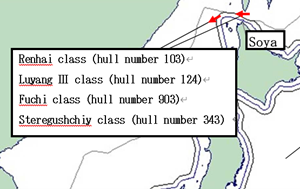 https://www.mod.go.jp/js/pdf/2026/p20260729_01.pdf |
| 7/29 |
On July 27, the JMSDF confirmed one Russian Steregushchiy class frigate (hull number 335) sailing west in waters 130km northeast of Cape Soya (Hokkaido Prefecture). JMSDF also confirmed this vessel sailed west through the Soya Strait. 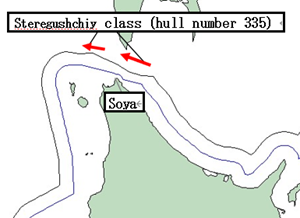 https://www.mod.go.jp/js/pdf/2026/p20260729_02.pdf |
| 7/29 |
The American Institute in Taiwan (AIT) posted on social media for the first time a photograph of Taiwanese and U.S. coast guard vessels operating side by side. AIT also stated that the coast guards of both countries are coordinating to deal with shared concerns, such as disaster relief, marine resources, and drug trafficking. Newsweekhttps://www.newsweek.com/us-taiwan-coast-guards-train-together-rare-public-maneuvers-12253946 |
| 7/29 |
The claim by Chinese scholars at a Jinan University symposium that the Philippines' Batanes Islands legally belong to China could trigger further sovereignty conflicts in the South China Sea. While the Philippine Defense Secretary strongly condemned the assertion, the Chinese government has yet to issue an official response. Situated in the waters between Taiwan and Luzon, the Batanes Islands hold high strategic significance for both the U.S. and the Philippines. United Press Internationalhttps://www.upi.com/Voices/2026/07/29/South-China-Sea-Philippines-Batanes-Islands-sovereignty/1731785349706/ |
| 7/29 |
On July 29, the House of Representatives of the Philippines adopted a resolution commemorating the 10th anniversary of the 2016 arbitral award. The resolution reaffirms the Philippines’ commitment to the rule of law, the UN Convention on the Law of the Sea, and the peaceful settlement of disputes. ABC CBNhttps://www.abs-cbn.com/news/nation/2026/7/29/vp-duterte-s-defense-sees-no-need-to-question-ex-bank-execs-1616 |
| 7/30 |
China’s state news agency announced that the joint maritime patrol by the Chinese and Russian Navies concluded on July 29. According to the agency, the patrol was part of the annual military cooperation plan between the two countries and not related to the current international and regional situation. The Chinese and Russian vessels sailed through important waterways in East Asia during the patrol, and one of the Chinese vessels conducted a live-fire exercise in Japan’s EEZ at one point during that period. Reuters (Baird Maritime)https://www.bairdmaritime.com/security/naval/china-and-russia-wrap-up-two-week-joint-naval-patrol |
| 7/30 |
The Sakhalin Regional Branch of the Russian Geographical Society announced that it will give a name to an unmanned island in the Northern Territories of Japan, which were illegally occupied by Russia. The branch explained that it will name the island after a famous spy, Sorge, who conducted information-gathering in Tokyo before the end of the Second World War and was executed by Japan. This action is regarded as an appeal to assert effective control over the Northern Territories to the international community. Sankei Shimbun (Japanese)https://www.sankei.com/article/20260730-QBJOMPOZGZL4VMNIVPDRXS2MP4/ |
| 7/30 |
On July 29, China released footage showing a YJ-20 hypersonic anti-ship ballistic missile being fired from a Type 052D destroyer. China possesses a much larger fleet of Type 052D destroyers compared to the larger Type 055 class, which was previously the only platform seen test-firing the missile. Integrating the YJ-20 onto the more numerous Type 052D fleet significantly boosts the People’s Liberation Army Navy's anti-access/area-denial (A2/AD) capabilities across the Western Pacific. War Zonehttps://www.twz.com/sea/china-fires-yj-20-hypersonic-anti-ship-missile-from-smaller-destroyer |
| 7/30 |
On July 30, the JMSDF confirmed that a Chinese Jiangkai-II class frigate (hull number 546) and a Renhai class destroyer (hull number 101) sailing northwest in waters 100km northeast of Miyako Island (Okinawa Prefecture). These vessels then proceeded through the waters between Okinawa Island and Miyako Island into the East China Sea. 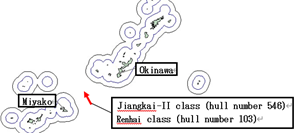 https://www.mod.go.jp/js/pdf/2026/p20260730_01.pdf |
| 7/30 |
On July 29, the JMSDF conducted a test launch of a Tomahawk missile from the Aegis destroyer Chokai with the support of the U.S. Navy in the Pacific Ocean. The Japanese Ministry of Defense announced that the test launch demonstrates steady progress in introducing the Tomahawk and that it will continue working toward the early implementation of standoff defense capabilities. The range of the Tomahawk is about 1,600 km, and the ministry plans to purchase 400 of them by March 2028. Ministry of Defense of Japan (Japanese)https://www.mod.go.jp/j/press/news/2026/07/30a.html NHK World https://www3.nhk.or.jp/nhkworld/en/news/20260731_01/ |
| 7/31 |
From July 20 to 31, two China Coast Guard (CCG) vessels, with hull numbers 6501 and 6305, sailed east through the Tsugaru Strait into the Pacific Ocean. The CCG conducts annual maritime patrols in the Northern Pacific Ocean around the summer season. According to AIS data, these vessels sailed through international waters during this period. A spokesperson for the Japan Coast Guard's 2nd Regional Coast Guard Headquarters stated that no reportable incidents, such as an intrusion into Japan’s territorial waters, occurred. Sankei Shimbun (Japanese)https://www.sankei.com/article/20260731-VW43C27ZSZELLISBX7SF4BDQNM/ |
Newsletter Registration
What is happening in East Asian Maritime Security? The Research Institute for Peace and Security (RIPS) publishes the biweekly newsletter, “East Asian Maritime Security (EAMS)” and updates the information on maritime security relevant to East Asia and Japan's territory.