



Vol.45. May 15. 2026
What is happening in East Asian Maritime Security? The Research Institute for Peace and Security (RIPS) publishes the biweekly newsletter, the information on maritime security relevant to East Asia and Japan's territory.
Statistical Data and Analysis (as of May 15)
In the first half of this month, Japan’s prime minister delivered a foreign policy speech outlining the evolution of the FOIP initiative. Ten years after the launch of FOIP and amid structural changes in the international order, the prime minister stated that Japan would further advance FOIP, accelerate its efforts, and deepen cooperation with like-minded partners to build an international order in the Indo-Pacific based on freedom, openness, diversity, inclusiveness, and the rule of law.
ASEAN leaders adopted a declaration on maritime cooperation. The declaration reaffirmed UNCLOS as the legal framework governing all activities in the maritime domain, and called for the peaceful settlement of disputes in accordance with international law, as well as strengthened cooperation in a wide range of maritime-related fields, including maritime security.
Meanwhile, in the strategically important Luzon Strait, U.S. and Philippine forces, with the participation of Japan, conducted a large-scale live-fire maritime strike drill as part of the “Balikatan” exercise, further strengthening coordination among allies and partners.
At the same time, reports emerged of China’s unilateral marine research activities near Japan, Taiwan, and the Philippines, as well as Viet Nam’s opposition to China’s unilateral fishing restrictions.
[Statistical Data as of May 15]
The Japan Coast Guard (JCG) daily updates the statistical data on the number of China Coast Guard vessels entering in the contiguous zone around the Senkaku Islands and intruding into Japanese territorial waters. The below is from the website of the JCG.
https://www.kaiho.mlit.go.jp/mission/senkaku/senkaku.html
| Apr. | Contiguous zone |
Territorial Waters |
May | Contiguous zone |
Territorial Waters |
|
|---|---|---|---|---|---|---|
| 30 | 4 | 7 | 4 | 4 | ||
| May | Contiguous zone |
Territorial Waters |
8 | 4 | ||
| 9 | 4 | |||||
| 1 | 8 | 10 | 4 | |||
| 2 | 4 | 11 | 4 | |||
| 3 | 4 | 12 | 4 | |||
| 4 | 4 | 13 | 4 | |||
| 5 | 4 | 14 | 4 | |||
| 6 | 4 |
Topics
| Date | Topics |
|---|---|
| 4/27 |
After nearly a decade of relative pause, China has resumed large-scale island-building in the South China Sea, with construction at Antelope Reef potentially rivaling its largest existing bases. While such construction does not create new legal rights, it enables more sustained deployments of China’s coast guard and maritime militia, gradually shaping patterns of control through continuous presence. Other claimants, particularly Viet Nam, have also expanded features under their control, reflecting a broader shift from legal contestation to competition based on infrastructure and presence. Lowy Institutehttps://www.lowyinstitute.org/the-interpreter/china-remaking-south-china-sea-return-island-building |
| 4/30 |
On April 28, the Japan Maritime Self Defense Force (JMSDF) confirmed one Chinese Luyang III class destroyer (hull number 120) sailing northeast in waters 70km southwest of Tsushima Island (Nagasaki Prefecture). From April 28 to 29, this vessel sailed northeast through the Tsushima Strait and navigated to the Sea of Japan. 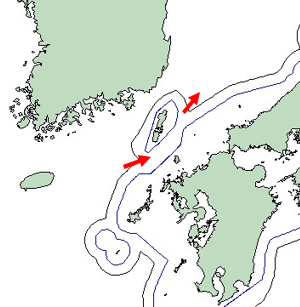 https://www.mod.go.jp/js/pdf/2026/p20260430_01.pdf |
| 5/2 |
On May 2, Japan-Viet Nam Summit Meeting between the Two Prime Ministers was held in Hanoi. Viet Nam’s prime minister expressed his intention to further advance bilateral ties and cooperation on regional and international issues under the “Comprehensive Strategic Partnership.” Japan’s prime minister stressed cooperation to enhance autonomy and resilience amid a severe international environment, reaffirmed the importance of ties with Viet Nam, and expressed her intention to strengthen the partnership and promote a “Free and Open Indo-Pacific (FOIP).” They welcomed progress in security consultations and exchanges, including the first vice‑ministerial “2+2” consultation and reciprocal naval port calls, and agreed to advance security cooperation and support for maritime law enforcement capabilities to help maintain regional stability. They also exchanged views on the South China Sea and confirmed continued coordination. Ministry of Foreign Affairs of Japanhttps://www.mofa.go.jp/s_sa/sea1/vn/pageite_000001_01619.html |
| 5/2 |
On May 2, Japan-Viet Nam Summit Meeting between the Prime Minister of Japan and the General Secretary and President of Viet Nam was held in Hanoi. Viet Nam’s general secretary and president expressed high appreciation for the strong development of Japan–Viet Nam relations under the “Comprehensive Strategic Partnership” and his intention to deepen cooperation across a wide range of fields, including security. Japan’s prime minister stated her intention to further strengthen the partnership and work together toward a “Free and Open Indo-Pacific (FOIP)” for a stronger and more prosperous region. In security, they welcomed progress in bilateral consultations and exchanges and agreed to advance security cooperation and support for strengthening maritime law‑enforcement capabilities to help maintain regional stability. They also exchanged views on regional and international issues and confirmed continued close coordination on key Indo‑Pacific matters, including the South China Sea. Ministry of Foreign Affairs of Japanhttps://www.mofa.go.jp/pageite_000001_01620.html |
| 5/2 |
On May 2, Japan’s prime minister delivered a foreign policy speech in Hanoi, including the evolution of the Free and Open Indo-Pacific (FOIP) vision. She referred to the commonalities between FOIP and the ASEAN Outlook on the Indo-Pacific (AOIP) and stated that Japan would play a more proactive role in contributing to an international order based on freedom, openness, diversity, inclusiveness, and the rule of law in the Indo-Pacific region. She also stated that, amid structural changes in the international order, strengthening countries’ autonomy and resilience is essential to realizing FOIP, and that Japan will update FOIP and work on three priority areas, including enhancing security cooperation to ensure regional peace and stability. She stated that Japan will work closely with like-minded countries to provide cooperation tailored to regional needs and expressed her conviction that Japan and the Indo-Pacific region, including ASEAN, can become “stronger and more prosperous together.” She also cited concrete initiatives in the ASEAN region, including security and maritime cooperation through OSA, ODA, and other frameworks, and called for building a FOIP based on cooperation among resilient countries with strategic autonomy. Ministry of Foreign Affairs of Japanhttps://www.mofa.go.jp/s_sa/sea1/vn/pageite_000001_01621.html (Reference) Foreign Policy Speech by Prime Minister TAKAICHI Sanae https://www.mofa.go.jp/files/101022881.pdf https://www.mofa.go.jp/files/101022859.pdf |
| 5/3 |
Last month, Taiwan’s president postponed a visit to Eswatini, one of 12 states maintaining diplomatic relations with Taiwan, after Indian Ocean states unilaterally revoked overflight permits for Taiwan’s aircraft, reportedly under Chinese pressure. It was the first time a Taiwan president had cancelled a foreign trip due to denial of airspace access, signaling what appeared to be a new Chinese strategy to curb the island’s international engagement. Taiwan’s president arrived in Eswatini on May 2 and posted a photo appearing to show him stepping off an Eswatini government jet. On X, he said Taiwan “will never be deterred by external pressures” and will continue engaging with the world despite challenges. His cancelled plans last month drew criticism of China from the United States and concern from the European Union, Britain, France, and Germany. Reuters (Yomiuri Shimbun)https://japannews.yomiuri.co.jp/news-services/reuters/20260503-325617/ |
| 5/4 |
On May 4, Japan-Australia Leaders’ Meeting was held in Canberra. Following the meeting, they attended a signing ceremony for the “Japan-Australia Joint Declaration on Economic Security Cooperation”. The Australian prime minister expressed his intention to strengthen Japan–Australia relations, including in defense and security, and to elevate the Special Strategic Partnership. Japan’s prime minister said the two countries have deepened cooperation as a core pillar among like‑minded partners and will lead efforts under the updated FOIP to promote regional stability. They agreed to raise bilateral ties to a new level. In security, they instructed ministers to devise ways to further deepen and institutionalize comprehensive cooperation and agreed to step up defense ties that make use of Australia’s geography. Japan’s prime minister said Japan and Australia have become front runners in security cooperation among like‑minded partners and have now reached a level that could be described as “quasi‑allies.” They agreed to lead FOIP’s implementation and update, and to strengthen cooperation through the Quad, Japan–U.S.–Australia, and Japan–Australia–New Zealand–Republic of Korea (IP4). They exchanged views on East Asia, including China, and on strengthening ties with Southeast Asia and Pacific Island countries, and agreed to work together. Ministry of Foreign Affairs of Japanhttps://www.mofa.go.jp/a_o/ocn/au/pageite_000001_01628.html Leaders Statement on Enhanced Defence and Security Cooperation https://www.mofa.go.jp/files/101023155.pdf |
| 5/4 |
On May 4, Japan-Indonesia Defense Ministerial Meeting was held in Jakarta. They welcomed the strengthening of defence cooperation under the “Comprehensive Strategic Partnership” and signed the Defence Cooperation Arrangement (DCA), expanding the 2015 memorandum on defence cooperation. The DCA includes cooperation in areas such as joint training, maritime security, HA/DR, and defence equipment and technology. They agreed to develop the “Integrated Defence Dialogue Mechanism” to deepen the defence partnership through strategic dialogues and meetings between their forces, while enhancing discussions on protecting classified military information. They concurred on promoting defence equipment and technology cooperation to enhance maritime deterrence capabilities and contribute to the security of both countries and regional stability. They also agreed to advance cooperation within multilateral frameworks, including the ADMM-Plus and trilateral cooperation among Australia, Indonesia, and Japan. Ministry of Defense of Japanhttps://www.mod.go.jp/en/article/2026/05/d74c99e9d91eb347d7a5f852e07e7a7581c82504.html |
| 5/4 |
On May 4, South Korea’s Coast Guard said it had increased surveillance and enforcement efforts after around 100 Chinese fishing vessels were spotted near the Northern Limit Line (NLL) in the Japan Sea. Chinese vessels have exploited weak North Korean enforcement to fish illegally near the NLL, and their presence near South Korean waters has grown in recent years, reaching around 400 vessels last year. The Korea JoongAng Dailyhttps://koreajoongangdaily.joins.com/news/2026-05-04/national/socialAffairs/South-Korea-increases-Coast-Guard-surveillance-as-Chinese-fishing-boats-gather-near-maritime-border-with-North/2584344?detailWord= |
| 5/5 |
On May 5, Japan-Philippines Defense Ministerial Meeting was held in Manila. They welcomed progress in Japan–Philippines operational cooperation, including the Reciprocal Access Agreement (RAA) and the Acquisition and Cross-Servicing Agreement (ACSA), and confirmed the deepening of bilateral and multilateral exercises such as Balikatan. They reaffirmed strong opposition to unilateral attempts to change the status quo and expressed serious concern over China’s coercive activities. Recognizing the importance of sharing situational awareness, they confirmed continued discussions between defense authorities and their intention to advance cooperation—covering policy, operations, and defense equipment and technology—in an integrated manner. They agreed on the urgent need to enhance maritime domain awareness capabilities particularly, and agreed to establish information sharing frameworks and to promote new deterrence initiatives. They signed a statement to further advance defense equipment and technology cooperation. They agreed to enhance defense partnership in multilateral settings, including Japan–Philippines– U.S., Australia–Japan–Philippines–U.S., and ASEAN, under the FOIP. On May 6, they observed the first-ever live-fire exercise of the Japan Self-Defense Forces’ Type 88 surface-to-ship missile in Philippines, as part of Exercise Balikatan 2026. Ministry of Defense of Japanhttps://www.mod.go.jp/en/article/2026/05/c0c40bde5f7dfd22210039ff144e499272bb5a28.html (Reference) Statement by the Defense Ministers of Japan and the Philippines on the Further Promotion of Defense Equipment and Technology Cooperation https://www.mod.go.jp/en/article/2026/05/cc86e9f8075c31eb64ce2becd453401d7540b254.html (Reference) Defense Minister Koizumi’s Visit to the Republic of the Philippines https://www.mod.go.jp/en/article/2026/05/49e7807f22f0fbb80e0a0d8198c50d015e19d961.html |
| 5/5 |
Australia is close to signing a major security and economic agreement with Fiji to counter China’s growing influence in the Pacific. However, Beijing’s pushback has weakened a separate pact with Vanuatu, scaling back plans to establish Australia as its primary security partner. Australia says it will continue working with Fiji and other Pacific Island nations to address fuel security and support a coordinated regional response to transnational organised crime. The Guardianhttps://www.theguardian.com/world/2026/may/05/australia-eyes-security-pact-with-fiji-as-pushback-from-beijing-undermines-agreement-with-vanuatu |
| 5/6 |
A total of 62 Chinese naval and coast guard vessels were observed in the West Philippine Sea (WPS) in April, down from 90 in March. An Armed Forces of the Philippines spokesperson did not specify the reason for the decline. Philippine News Agencyhttps://www.pna.gov.ph/articles/1274400 |
| 5/6 |
U.S. and Philippine forces, with participation from Japan, conducted a major live‑fire maritime strike drill in the strategic Luzon Strait, sinking a former Philippine Navy ship as part of the Balikatan exercise. The drills, which used various anti‑ship missiles and rocket artillery, highlight Japan’s expanding military role and the significance of operating so close to China. The Luzon Strait—between Taiwan and the Philippines—is a vital corridor for both Chinese and U.S. naval forces and would be central in any Taiwan conflict. The exercise underscored the waterway’s strategic importance and showed how deploying more mobile anti‑ship capabilities in northern Philippines could complicate China’s operations while strengthening allied anti‑access strategies. The War Zonehttps://www.twz.com/news-features/missiles-clobber-target-ship-in-highly-strategic-luzon-strait |
| 5/6 |
On May 5, the JCG reported that a Chinese oceanographic research vessel was spotted lowering a pipe-like object in waters within Japan’s EEZ off the Senkaku Islands. The JCG said it urged the vessel to stop, suspecting an unauthorized survey. The JCG observed Chinese vessels conducting a survey around the waters on April 29 and May 2. Kyodo News (Japan Today)https://japantoday.com/category/national/chinese-ship-suspected-of-marine-survey-in-japan-eez-off-senkakus |
| 5/7 |
The Philippine Coast Guard (PCG) on May 7 accused China of conducting unauthorized marine research near Reed Bank inside Manila’s EEZ in the South China Sea, calling it a violation of Philippine sovereign rights and UNCLOS. It said the Chinese oceanographic research vessel Xiang Yang Hong 33 was seen near Iroquois Reef on May 6 with a China Coast Guard ship and 13 militia vessels, confirming ongoing “unauthorized” activity. It said the vessel left China on April 15 and had in recent weeks operated near Second Thomas Shoal, Sabina Shoal, Mischief Reef, and Jackson Atoll, with 28 militia ships observed near Thitu Island. Reutershttps://www.reuters.com/world/china/philippines-says-china-vessel-conducting-illegal-research-near-gas-rich-reed-2026-05-07/ |
| 5/7 |
The Vietnam Fisheries Society (Vinafis) has protested China’s unilateral fishing ban in the South China Sea, announced on April 24 by Chinese authorities, and called on China to revoke it in waters under Vietnam’s sovereignty and in international waters. According to Vinafis, the annual moratorium runs from May 1 to August 16 and allows only angling. It said the measure infringes on Vietnam’s sovereignty and legitimate interests, violates international law including UNCLOS and the Declaration on the Conduct of Parties in the South China Sea (DOC), and would disrupt Vietnamese fishing activities and livelihoods while increasing the risk of encounters with China’s coast guard. Vietnam News Agency (Asia News Network)https://asianews.network/vietnam-fisheries-society-protests-chinas-unilateral-fishing-ban-in-east-sea/ |
| 5/7 |
On May 1, the JMSDF confirmed two Chinese Luyang III class destroyer (hull number 119 and 120) and one Chinese Renhai class destroyer (hull number 102) sailing southwest in waters 60km northeast of Tsushima Island (Nagasaki Prefecture). On May 2, these vessels sailed southwest through the Tsushima Strait and navigated to the East China Sea. 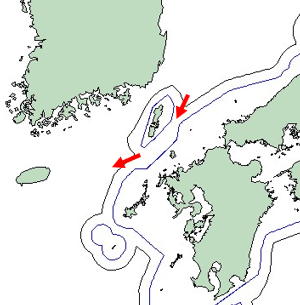 https://www.mod.go.jp/js/pdf/2026/p20260507_01.pdf |
| 5/7 |
On May 3, the JMSDF confirmed one Russian Steregushchiy class frigate (hull number 335), one Improved Kilo class submarine and one Balk class (Project 23470 class) seagoing tug sailing northeast in waters 70km west of Goto Islands (Nagasaki Prefecture). These vessels sailed northeast through the Tsushima Strait and navigated to the Sea of Japan. 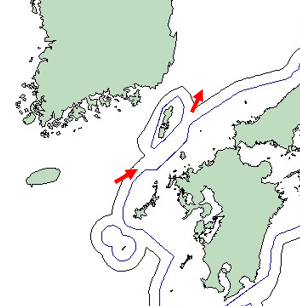 https://www.mod.go.jp/js/pdf/2026/p20260507_02.pdf |
| 5/8 |
On May 7, four Chinese government vessels intruded into Japanese territorial waters off the Senkaku Islands. Their hull numbers are 1306, 1401,1303 and 1304 (Source: the JCG). The JCG said the cannon-equipped vessels entered the Japanese waters off Uotsuri Island, sailed inside the area for roughly 90 minutes before leaving the area. This is the first time since April 28 that Chinese government vessels have been confirmed to have entered the area off the Senkaku Islands. Note: The hull numbers reported above are taken from a JCG press release. NHK Worldhttps://www3.nhk.or.jp/nhkworld/en/news/20260508_01/ |
| 5/8 |
On May 8, Paraguay reaffirmed its ties with Taiwan after Beijing urged the South American country a day earlier to sever relations with Taipei. Citing shared democratic values, Paraguay’s president pledged continued support for Taiwan, while Taiwan’s president thanked Asunción for its unwavering support for Taiwan on the international stage. Separately, Paraguay’s president said he had met Honduras’s president, fueling speculation that Tegucigalpa could distance itself from Beijing as the United States seeks to curb Chinese influence in Latin America. The Associated Presshttps://apnews.com/article/taiwan-paraguay-china-pena-president-cea85fcac12619d30cd42a58baebd163 |
| 5/8 |
ASEAN leaders adopted a Maritime Cooperation Declaration reaffirming UNCLOS as the legal framework for maritime activities and calling for peaceful dispute resolution, freedom of navigation, and stable trade and energy supply chains. The declaration strengthens cooperation on maritime security, underwater infrastructure, sustainable shipping, search and rescue, IUU fishing prevention, marine environmental protection, the blue economy, information-sharing, and capacity-building, while supporting the ASEAN Coast Guard Forum (ACF) to strengthen coordination among regional maritime law enforcement agencies. ASEAN also approved the Philippines as host of the ASEAN Maritime Center, which will coordinate maritime operations among member states. Philippine President said the center aims to ensure freedom of navigation and safe maritime trade in Southeast Asia rather than address South China Sea disputes. He described the initiative as a step toward stronger regional maritime cooperation and security and as a means to prevent disruptions similar to those seen in the Strait of Hormuz. The Manila Timeshttps://www.manilatimes.net/2026/05/11/news/national/asean-leaders-adopt-pivotal-maritime-cooperation-agreement-at-48th-summit/2340223 Philippine Presidential Communications Office https://pco.gov.ph/news_releases/asean-approves-maritime-centre-in-ph-to-ensure-freedom-of-navigation-in-southeast-asia-president-marcos/ (Reference) ASEAN Leaders’ Declaration on Maritime Cooperation https://asean2026.gov.ph/post/view/?title=asean-leaders-declaration-on-maritime-cooperation |
| 5/8 |
On May 8, Japan confirmed that the Chinese oceanographic research vessel “Xiang Yang Hong 22,” which had operated without consent in Japan’s EEZ off the Senkaku Islands since May 5, crossed the median line and left the area. The JCG said it was the fifth such case involving a Chinese research vessel in Japan’s EEZ since March 30. NHK News (Japanese)https://news.web.nhk/newsweb/na/nb-5090034938 |
| 5/9 |
On May 9, Victory Day ceremonies were held in the Russian-controlled Northern Territories, though no annual military parades took place on Etorofu and Kunashiri islands, apparently due to security concerns. In Russia’s Far East, soldier parades were held without military equipment such as tanks. Residents on Etorofu and Kunashiri joined the “Immortal Regiment” march carrying photos of relatives who served in World War II. Kyodo News (Japanese)https://www.47news.jp/14275346.html |
| 5/9 |
Philippine authorities warned vessels to avoid waters near Scarborough Shoal ahead of China’s May 11 rocket launch, noting that debris could fall within the Philippine EEZ. The Coast Guard issued a navigational warning, and the Philippine Space Agency urged caution for mariners and fishing communities, despite the low risk. Debris from past Chinese launches had been found near Palawan and Occidental Mindoro. Inquirerhttps://www.inquirer.net/474691/fishing-boats-warned-vs-possible-chinese-rocket-debris-near-zambales/ |
| 5/11 |
On May 9, the JMSDF confirmed two Russian Steregushchiy class frigate (hull number 333 and 343), one Dubna class medium replenishment ship, one Balk class (Project 23470 class) seagoing tug and six cargo ship sailing southwest in waters 140km northeast of Tsushima Island (Nagasaki Prefecture). From May 9 to 10, these vessels sailed southwest through the Tsushima Strait and navigated to the East China Sea. 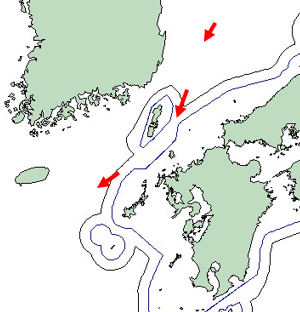 https://www.mod.go.jp/js/pdf/2026/p20260511_01.pdf |
| 5/11 |
From May 10 to 11, Japan and India held a vice-ministerial foreign affairs dialogue in New Delhi, where Japan outlined Prime Minister Takaichi’s updated “Free and Open Indo-Pacific (FOIP)” initiatives. Both sides confirmed closer cooperation toward realizing FOIP, including through the Quad framework, and exchanged views on the Indo-Pacific situation. Ministry of Foreign Affairs of Japanhttps://www.mofa.go.jp/press/release/pressite_000001_02329.html |
| 5/11 |
On May 7, Taiwan’s coast guard confirmed that the Chinese oceanographic research vessel “Tongji” was operating 29 nautical miles southeast of Taiwan’s southern tip. Suspecting illegal survey activity after the ship lowered instruments into the water, the coast guard used wake interference and radio warnings to drive it away, shadowing the vessel until it departed nearby waters on May 11. Reutershttps://www.reuters.com/world/china/taiwan-says-it-drove-away-chinese-research-ship-2026-05-11/ |
| 5/11 |
On May 3, the Italian Navy’s multi-purpose combat ship departed Italy for a six-month Indo- Pacific deployment. The mission includes participation in the U.S.-led RIMPAC and PACIFIC DRAGON exercises, port calls in about a dozen locations, and cooperation with around ten countries. Naval Newshttps://www.navalnews.com/naval-news/2026/05/italian-navy-in-the-pacific-with-mpcs-bande-nere-to-test-ballistic-missile-defence/ |
| 5/12 |
On May 7, New Zealand said it was considering Japan’s stealthy and highly automated Mogami warship and the U.K.’s cheaper Type 31 frigate as replacements for its two aging frigates. A Japanese deal with New Zealand would build on Japan’s recent agreement with Australia to build the first three of 11 Mogami-class ships for Canberra. New Zealand’s defense minister said Australia’s decision to acquire the Mogami was strongly persuasive, while Japan’s chief government spokesman said operating Mogami-class ships would strengthen Indo-Pacific deterrence and interoperability among the three countries. One expert highlighted the Mogami’s interoperability advantages, while another said the U.K. was likely to make a more cost- competitive offer. Bloomberg (The Japan Times)https://www.japantimes.co.jp/news/2026/05/12/japan/politics/japan-mogami-new-zealand/ |
| 5/13 |
On May 12, the JMSDF confirmed two Russian Steregushchiy class frigate (hull number 333 and 343), one Dubna class medium replenishment ship, one Balk class (Project 23470 class) seagoing tug and six cargo ship sailing southwest in waters 50km northwest of Iriomotejima Island (Okinawa Prefecture). From May 12 to 13, these vessels sailed southwest through waters between Yonagunijima Island (Okinawa Prefecture) and Iriomotejima Island and navigated to the Pacific Ocean. 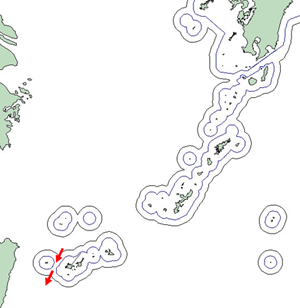 https://www.mod.go.jp/js/pdf/2026/p20260513_01.pdf |
| 5/14 |
On May 14, Japan-EU Security and Defence Dialogue was held in Tokyo. The two sides discussed expanding security and defence cooperation in areas including maritime security, cybersecurity, countering disinformation, WPS, space, and disarmament and non- proliferation, and agreed to deepen strategic cooperation. They also exchanged views on regional developments, security policies, and the strategic evolution of Japan’s FOIP. The dialogue was attended by senior officials from the Japanese foreign and defense ministries and the European External Action Service. Ministry of Foreign Affairs of Japanhttps://www.mofa.go.jp/erp/ep/pagewe_000001_00002.html |
| 5/15 |
On May 14, China said President Xi warned President Trump at their summit that mishandling differences over Taiwan could push bilateral ties to a “dangerous place,” although the U.S. summary made no mention of Taiwan. Trump had earlier said he expected Xi to raise U.S. arms sales to Taiwan, which China strongly opposes. Secretary of State Marco Rubio confirmed Taiwan was discussed, saying China routinely raises the issue and the U.S. maintains its unchanged policy. Taiwan said there was nothing surprising about the summit and that China’s military pressure remains the real threat to peace. Reuters (Asahi Shimbun)https://www.asahi.com/ajw/articles/16565786 |
Newsletter Registration
What is happening in East Asian Maritime Security? The Research Institute for Peace and Security (RIPS) publishes the biweekly newsletter, “East Asian Maritime Security (EAMS)” and updates the information on maritime security relevant to East Asia and Japan's territory.