



Vol.44. April 30. 2026
What is happening in East Asian Maritime Security? The Research Institute for Peace and Security (RIPS) publishes the biweekly newsletter, the information on maritime security relevant to East Asia and Japan's territory.
Monthly Column
Maritime Security in East Asia needs Strategic Synchronization: Maritime Domain Awareness, Industrial Capacity, and Allied Cooperation
by Dr Keizo Kitagawa,
Professor, Faculty of Policy Management, Keio University
Research Advisor, ITOCHU Research Institute
Senior Research Fellow, YCAPS
Introduction
East Asia's maritime security environment is becoming more contested, more complex, and more consequential for the wider international order.[1] As an island nation whose prosperity depends on seaborne trade, Japan relies on secure sea lines of communication across the Western Pacific, the East China Sea, the South China Sea and beyond. Energy imports, food supplies, industrial inputs, and finished products all move through maritime routes that are increasingly exposed to disruption.[2]
Maritime security in East Asia therefore cannot be understood only in terms of major naval battles or wartime convoy protection. It must also be approached comprehensively as a peacetime and gray-zone challenge involving surveillance, law enforcement, infrastructure protection, resilience, and industrial capacity.
The issue is not simply how to defeat an adversary in open conflict, but how to preserve a stable maritime order under conditions of persistent pressure in contested environments. From this perspective, maritime domain awareness, the integration of emerging technologies, the protection of undersea infrastructure, and allied cooperation in maritime industry all become central elements of strategy, and the synchronization of such elements is necessary.
This commentary argues that maritime security in East Asia requires strategic thinking with a comprehensive approach centered on stronger maritime domain awareness, effective integration of emerging technologies, preservation of maritime industrial capacity, and deeper allied coordination in which Japan plays a central role.
Emerging Challenges to Maritime Transportation
Over the past decades, the maritime security environment in East Asia has become increasingly difficult in at least three respects.
First, geopolitical competition has intensified across the Indo-Pacific maritime domain especially since the 2010s. The East China Sea and the South China Sea remain areas of persistent tension, where military modernization, coercive signaling, and competing jurisdictional claims have raised operational pressure on regional states.[3] The cumulative effect is to increase the risk of disruption to commercial navigation and to complicate crisis management at sea.
Second, gray-zone activities have become a defining feature of contemporary maritime competition. These operations remain below the threshold of overt armed conflict, yet they are designed to alter the status quo incrementally through coercion, ambiguity, and persistence.[4] In the maritime domain, use of coast guards, maritime militia, ostensibly civilian vessels, cyber means, and information operations allows pressure to be exerted without immediate escalation. Such methods are especially effective at sea, where attribution can be difficult, territorial disputes are ongoing, and law-enforcement and military jurisdictions often overlap. For Japan and its allies and partners, the implication is straightforward: maritime security must be sustained every day, not only in moments of crisis or war.
Third, the vulnerability of maritime infrastructure has become a growing strategic concern. Undersea communication cables, offshore energy facilities, ports, and logistics hubs form the backbone of contemporary maritime connectivity. Their disruption can generate effects far beyond the immediate physical damage, including consequences for commercial activity, financial transactions, government communications, cyber security and military networks.[5] In East Asia, where dense maritime traffic and geopolitical rivalry intersect, the protection of maritime transportation must now include the protection of the hidden infrastructure that makes transportation, communication, and coordination possible.
An additional danger lies in the vulnerability of international straits and strategic chokepoints. Maritime order depends not only on the safety of shipping in the open ocean, but also on the continued openness of narrow passages through which energy, trade, and data flows must pass. Blocking such straits or attempts to impose political conditions or charges on passage would have consequences far beyond the immediate region. It would challenge not merely commercial efficiency, but the principle of freedom of navigation and rule-based order. Recent tensions surrounding the Strait of Hormuz due to the conflict between US/Israel and Iran are a reminder that the security of maritime transportation is inseparable from the security of strategic chokepoints for the global economy.
Maritime Domain Awareness and Emerging Technologies
In this environment, maritime domain awareness is the indispensable foundation of effective strategy. Maritime domain awareness is more than surveillance in a narrow sense. It is the capacity to detect, identify, track, assess, and share information about activities at sea in ways that support timely political and operational decision-making.[6] In a gray-zone environment, awareness is especially important because ambiguity itself is often used as an instrument of coercion. If states cannot see and understand what is happening in their surrounding waters, they will struggle to respond in a measured and coordinated way, and it will be extremely difficult to exercise sea control. This is true for routine law-enforcement missions, for crisis management, and for deterrence. The side that recognizes a developing situation earlier and interprets it more accurately holds a major strategic advantage.
Emerging technologies can significantly strengthen this foundation. Unmanned aerial, surface, and undersea systems, together with AI-enabled analysis and information-sharing, can expand coverage, enhance persistence, and improve the speed of information collection, analysis, and dissemination.[7] These tools are particularly valuable in a maritime theater as large and complex as East Asia, where wide-area surveillance places heavy demands on crewed platforms alone.
Yet the spread of such technologies also creates new vulnerabilities. The same commercially available systems, digital tools, and autonomous platforms can be used by actors seeking to disrupt maritime order, whether through gray-zone coercion, sabotage, deception, or attacks on critical infrastructure. For that reason, the issue is not simply technological adoption, but competitive adaptation.
States must develop not only new surveillance and response capabilities, but also counter-unmanned systems, electronic warfare, cyber resilience, secure communications, and institutional arrangements that allow coast guards, navies, and other agencies to respond in an integrated manner. Technology matters, but its strategic value ultimately depends on how well it is incorporated into doctrine, training, command and control, and alliance interoperability. In other words, emerging technology is not a one-sided advantage for defenders of maritime order. It is an arena of competition in which resilience, adaptation, and institutional effectiveness will matter as much as acquisition.
The same logic applies to maritime infrastructure protection. Disruptions have social and economic effects both domestically and internationally. Therefore, better awareness is essential not only for tracking vessels and monitoring gray-zone activities, but also for protecting undersea cables, offshore facilities, and port infrastructure. Maritime transportation security today is thus inseparable from infrastructure resilience. The challenge is no longer confined to the visible movement of ships through sea lanes. It also includes the security of the physical and digital systems that enable maritime connectivity.
Industrial Capacity and the Maritime Balance
The regional maritime balance is shaped not only by fleets already deployed, but also by the industrial base that can build, repair, maintain, and replace them over time. No military operation can be sustained without timely and effective logistics.
This is why China's maritime rise must be understood in both military and industrial terms. In addition to modernizing naval, coast guard, and supporting maritime forces, China has developed by far the world's largest commercial shipbuilding industry. Outside analysts have highlighted the strategic implications of its dual-use ecosystem for long-term maritime competition.[8] This industrial scale matters because maritime power depends not only on existing ships, but also on the capacity to sustain competition over time. It is a long-term campaign. Accordingly, long-term planning and execution have developed into huge differences among states. Operations and logistics are the double wheels of maritime security, just like in any other area of security.
For East Asia, this means that maritime transportation security cannot be separated from the regional industrial balance. The ability to escort shipping, sustain patrols, protect chokepoints, and recover from disruption depends in part on whether friendly states retain sufficient maritime industrial capacity of their own. The issue is not simply whether allies can field capable ships today, but whether they can preserve the industrial means to sustain maritime power under prolonged competitive pressure.[9]
This point has special relevance for Japan. Japan still possesses advanced shipbuilding capabilities supported by major firms and highly skilled industrial networks. These capacities contribute not only to commercial shipping, but also to the construction, maintenance, and sustainment of defense-related maritime platforms.
Yet they should not be taken for granted and there is little optimism. Like other advanced industrial states, Japan faces pressure from international competition, investment, labor shortages, and long lead times associated with complex maritime production. Japan's shipbuilding global share was number one in 1956, but long-term decline began in the 1980s. In 2024, Japan only holds 8 percent of global new shipbuilding contract, compared to China's 71 percent and Republic of Korea's 14 percent.[10] Preserving shipbuilding capability therefore requires sustained strategic and policy attention.
This is also where allied cooperation becomes increasingly important. Closer coordination among Japan, the United States, and like-minded countries on shipbuilding, repair, maintenance, supply chains, and maritime technology can strengthen collective resilience. Such cooperation may include industrial dialogue, reciprocal support arrangements, selective co-development, and the alignment of standards in important maritime systems. The strategic value of this approach lies in the way it connects deterrence and resilience, from industries to defense and security in strategic perspectives. A stronger allied maritime industrial base improves peacetime readiness, enhances wartime sustainability, and signals long-term strategic resolve.
Japan's Role in Allied and Partnered Maritime Security
While technology and industrial capacity matter, maritime security ultimately depends on political and operational cooperation among states. Japan occupies a particularly important position in this regard. Geographically, it sits astride critical sea routes linking the Western Pacific, Northeast Asia, and Southeast Asia. Strategically, it is both a frontline state in the regional security environment and a key ally of the United States. When the continental states surrounding Japan want to go out to the Pacific, they must pass through the Japanese archipelago, which stretches more than 3,000 km. Institutionally, it has developed substantial maritime expertise through the Japan Maritime Self-Defense Force (JMSDF) and the Japan Coast Guard (JCG).
The Japan-U.S. alliance remains the cornerstone of regional maritime security. It provides deterrent credibility, operational interoperability, and a framework for shared planning. Within that framework, JMSDF plays an important role in sea control, maritime surveillance, anti-submarine warfare, and the protection of surrounding waters.[11] Yet today's maritime challenges also require wider networks of cooperation beyond the bilateral alliance. Japan has expanded maritime security coordination with Australia, European partners, the Republic of Korea, and Southeast Asian states through joint exercises, capacity-building, port calls, and information-sharing, while recent Japanese policy statement has also emphasized the growing importance of maritime cooperation with Southeast Asia.[12]
NATO is also a part of this picture. An unprecedented delegation of roughly 30 NATO permanent representatives visited Japan in mid-April. NATO's recent efforts to strengthen cooperation with industry on critical undersea infrastructure protection illustrate how these issues increasingly connect the Indo-Pacific and Euro-Atlantic theaters.[13] It showed that engagement with Japan has recently become more operational in character, with discussions focusing on cooperation on maritime security, resilience, and other cross-regional security challenges.[14]
This widening network matters because East Asian maritime stability is no longer a narrowly regional concern. The security of sea lanes, undersea cables, and commercial connectivity in East Asia affects global trade, digital communications, and the broader international order. Cooperation through industries must be counted in these security architectures. Japan is well placed to act as a hub linking regional priorities with wider allied and partner engagement.
Conclusion
This commentary has discussed how maritime security in East Asia can no longer be understood in narrowly naval or purely wartime terms. It must be approached as a broader comprehensive strategic problem that connects persistent gray-zone pressure, the security of strategic chokepoints and infrastructure, technological competition, industrial capacity, and allied cooperation. The central issue is not simply how to prevail in major conflict, but how to preserve a stable maritime order under conditions of continuous pressure and uncertainty.
For Japan and its partners, this means that deterrence, resilience, and cooperation must be treated as part of a single strategic logic. Awareness must be linked to response, technology to adaptation, infrastructure protection to maritime connectivity, and industrial strength to long-term operational endurance. Operations and logistics must go together. In that sense, the future of maritime security in East Asia will depend not only on naval power in the narrow sense, but on the broader capacity of like-minded states to sustain openness, industry, stability, and freedom of navigation over time. The key word is strategic synchronization.
Notes
[1] Government of Japan, National Security Strategy, Tokyo: Cabinet Secretariat, December 16, 2022, pp.2-4.
https://www.cas.go.jp/jp/siryou/221216anzenhoshou/nss-e.pdf.
[2] Ministry of Defense of Japan, Defense of Japan 2025, Tokyo: Ministry of Defense, July 2025, pp. 69-76.
https://www.mod.go.jp/j/press/wp/wp2025/pdf/DOJ2025_EN_Full.pdf.
[3] Ibid.
[4] Andrew S. Erickson and Ryan D. Martinson, eds., China's Maritime Gray Zone Operations, Annapolis, MD: Naval Institute Press, 2019, pp. 5-7.
[5] Pierre Morcos and Colin Wall, "Invisible and Vital: Undersea Cables and Transatlantic Security," Center for Strategic and International Studies (CSIS), June 11, 2021,
https://www.csis.org/analysis/invisible-and-vital-undersea-cables-and-transatlantic-security.
[6] The White House, The National Strategy for Maritime Security, Washington, D.C.: The White House, September 2005, pp.16-17,
https://2009-2017.state.gov/documents/organization/255380.pdf.
[7] Government of Japan, National Defense Strategy, Tokyo: Ministry of Defense, December 16, 2022, p.25,
https://www.mod.go.jp/j/policy/agenda/guideline/strategy/pdf/strategy_en.pdf. Government of Japan. Defense Buildup Program. Tokyo: Ministry of
Defense, December 16, pp. 9, 14-15, https://www.mod.go.jp/j/policy/agenda/guideline/plan/pdf/program_en.pdf.
[8] Matthew P. Funaiole, Brian Hart, and Aidan Powers-Riggs, Ship Wars: Confronting China's Dual-Use Shipbuilding Empire, Washington, DC: Center for Strategic and International Studies, March 11, 2025, pp. 2-6.
https://csis-website-prod.s3.amazonaws.com/s3fs-public/2025-03/250311_Funaiole_Ship_Wars.pdf?VersionId=rr_4IH5jXertgzLdS.ke07oFmgWTHnIM.
[9] Ibid.
[10] Sensho Fukami, "National Security and Shipyards Around the World 4- Japan," Ships of the World, No.1059, April 2026, pp.90-91.
[11] Maritime Staff Office, Japan Maritime Self-Defense Force, JMSDF Capstone Doctrine (MDP 1), Japan Maritime Self-Defense Force, 2024, pp. 18-20.
https://www.mod.go.jp/msdf/en/about/img/2024doctrine_en.pdf.
[12] Ministry of Foreign Affairs of Japan, New Plan for a "Free and Open Indo-Pacific (FOIP)," Tokyo: Ministry of Foreign Affairs, March 20, 2023, pp. 1-2.
https://www.mofa.go.jp/files/100477739.pdf.
[13] NATO, "NATO Strengthens Cooperation with Industry to Protect Critical Undersea Infrastructure," May 27, 2025,
https://www.nato.int/en/news-and-events/articles/news/2025/05/26/nato-strengthens-cooperation-with-industry-to-protect-critical-undersea-infrastructure.
[14] "Eastward bound: Largest-ever NATO envoy delegation to visit Japan amid China, Trump concerns," The Japan Times, April 13, 2026,
https://www.japantimes.co.jp/news/2026/04/13/japan/nato-japan-ambassadors-focus/.
Views expressed or implied in this article are solely those of the author. They must not be construed as representing the views and positions of RIPS or any other organizations.
Statistical Data and Analysis (as of April 30)
In the latter half of this month, various activities by China targeting Japan, Taiwan, and Southeast Asian countries were observed.
Regarding Japan, Japan confirmed that Chinese oceanographic research vessels operated multiple times within Japan's EEZ without consent, that China unilaterally installed structures in the undelimited waters of the East China Sea, and that Chinese naval vessels, including a destroyer, transited the waters off Amami Oshima Island and conducted exercises in the Western Pacific.
Regarding Taiwan, China sent the aircraft carrier Liaoning through the Taiwan Strait, had government vessels enter waters near Kinmen, and reportedly pressured countries along the route of the Taiwanese president's overseas trip, thereby obstructing the visit.
Regarding Southeast Asian countries, underwater drone activity in strategically important waters and the deployment of fishing vessels and barriers at the entrance to the disputed shoal were confirmed. In addition, the People's Daily called on the Philippines, which is seeking energy cooperation with China, to change its stance on issues such as the South China Sea.
Meanwhile, Japan participated fully for the first time in joint military exercises hosted by the Philippines and the United States, aiming to strengthen coordination with the participating countries.
[Statistical Data as of April 30]
The Japan Coast Guard (JCG) daily updates the statistical data on the number of China Coast Guard vessels entering in the contiguous zone around the Senkaku Islands and intruding into Japanese territorial waters. The below is from the website of the JCG.
https://www.kaiho.mlit.go.jp/mission/senkaku/senkaku.html
| Apr. | Contiguous zone |
Territorial Waters |
Apr. | Contiguous zone |
Territorial Waters |
|
|---|---|---|---|---|---|---|
| 15 | 2 | 23 | 4 | |||
| 16 | 4 | 24 | 4 | |||
| 17 | 4 | 25 | 4 | |||
| 18 | 3 | 26 | 4 | |||
| 19 | 4 | 27 | 4 | 2 | ||
| 20 | 4 | 28 | 4 | 2 | ||
| 21 | 4 | 29 | 4 | |||
| 22 | 4 |
Topics
| Date | Topics |
|---|---|
| 4/7 |
On April 7, the Singapore-based ISEAS-Yusof Ishak Institute released survey results from Southeast Asian experts across business, government, and academia. Below is a summary of findings on the South China Sea. ASEAN respondents' top concern is China's encroachment in the EEZs and continental shelves of Southeast Asia's littoral states (51.7%), especially among claimant states such as Vietnam, the Philippines, and Brunei. The risk of an accidental confrontation between an ASEAN member state and China that could result in a political crisis ranks second (45.2%), with particularly high concern in Indonesia, Timor-Leste, Laos, and Cambodia—showing anxiety beyond claimant states. Broader concerns include China's militarisation and assertive actions (37.9%) and a direct military confrontation between the US and China (36.8%). As in last year, the dominant view among ASEAN respondents is that the South China Sea Code of Conduct (COC) must be aligned with international law, including UNCLOS (40.8%). Support for this is strongest in Vietnam, Timor-Leste, and the Philippines. At the same time, 19.3% worry the COC will prevent other powers from conducting military activities and energy exploration with ASEAN member states in the South China Sea, potentially limiting security partnerships. Another 16.5% believe it will not resolve territorial disputes but will help reduce tensions and manage the dispute. Overall scepticism about the COC's effectiveness remains limited (12.3%). ISEAS - Yusof Ishak Institutehttps://www.iseas.edu.sg/wp-content/uploads/2026/03/The-State-of-Southeast-Asia-2026-Survey-Final-Single.pdf |
| 4/8 |
On April 6, Indonesia recovered what is believed to be a Chinese underwater drone in the Lombok Strait, a key alternative route if the Strait of Malacca is disrupted. The cylindrical device bore Chinese characters and the CSIC logo, the world's largest shipbuilding conglomerate. Chinese unmanned underwater vehicles (UUVs) have seen a rapid expansion in their presence and deployment in recent years under Beijing's military-civil fusion strategy, raising concerns among neighboring countries that they may be collecting sensitive data within EEZ. In recent years, fishermen in Indonesia, Vietnam, and the Philippines have repeatedly found UUVs in regional waters, highlighting growing concerns over surveillance activity and maritime security. Newsweekhttps://www.newsweek.com/chinese-underwater-drone-discovered-indonesia-waters-11801106 |
| 4/15 |
In the South China Sea, China is tightening control of the entrance to Scarborough Shoal by deploying ships and installing a 352‑meter floating barrier on April 10–11, the Philippine coast guard said. Six Chinese maritime militia vessels were seen inside the shoal and three outside, blocking the entrance. Photos from April 10–11 show fishing boats and the barrier, while satellite imagery indicates a probable Chinese naval or coast guard vessel nearby. The Philippine Navy reported 10 Chinese coast guard vessels at the shoal from April 5 to 12. Scarborough is one of Asia's most disputed maritime sites. As China's presence grows, the Philippines and the United States have increased military cooperation. Thousands of troops will hold large‑scale exercises across the Philippines this month, including areas about 120 nautical miles from the shoal. Diplomats say the drills and tensions are being closely watched amid concerns that China could act while the U.S. is focused on the Iran conflict and reopening the Strait of Hormuz. Reutershttps://www.reuters.com/world/asia-pacific/china-moves-block-entrance-disputed-south-china-sea-shoal-images-show-2026-04-15/ |
| 4/16 |
On April 15, the JCG confirmed the Chinese oceanographic research vessel "Kexue" extending what appeared to be a wire into the water in Japan's EEZ, approximately 74 kilometers north of Ishigakijima Island in Okinawa Prefecture. The JCG demanded that the activity cease, stating that research conducted without Japan's consent is not permitted. However, the vessel continued operating in Japan's EEZ on April 16. This is the first confirmed activity by a Chinese research vessel in Japan's EEZ since similar activities were observed off the Senkaku Islands from March 30 to April 2. NHK News (Japanese)https://news.web.nhk/newsweb/na/na-k10015100491000 (Reference) Unusual Activity of Foreign Oceanographic Research Vessels (2022–2026) (Japanese) https://www.kaiho.mlit.go.jp/info/topics/files/260420_tokuikodo.pdf |
| 4/16 |
On April 16, Vice Minister for Foreign Affairs of Japan held an exchange of views with NATO Permanent Representatives and others in Tokyo. Japan's Vice Minister stated his intention to strengthen cooperation with NATO, a partner sharing fundamental values and strategic interests, and to develop concrete cooperation, under the shared recognition that the security of the Euro-Atlantic and Indo-Pacific is closely linked. In response, Permanent Representatives expressed the same view and their intention to further develop Japan–NATO and NATO–IP4 relations. They exchanged frank views on regional issues, including challenges in the Indo-Pacific such as those related to China. Ministry of Foreign Affairs of Japanhttps://www.mofa.go.jp/press/release/pressite_000001_02267.html |
| 4/16 |
On April 16, Minister for Foreign Affairs of Japan received a courtesy call from NATO Permanent Representatives and others in Tokyo. Japan's Minister pointed out that the security of the Euro-Atlantic and the Indo-Pacific is inseparable and that cooperation with allies and like-minded countries is growing in importance, amid a rapidly changing international situation. He expressed hope that Permanent Representatives would deepen their understanding of the severe security environment surrounding Japan and the Indo-Pacific. In response, Permanent Representatives likewise recognized the growing importance of Japan–NATO cooperation and expressed their intention to further develop it and build concrete cooperation. They exchanged frank views on regional issues, including challenges in the Indo-Pacific such as those related to China. Ministry of Foreign Affairs of Japanhttps://www.mofa.go.jp/press/release/pressite_000001_02268.html |
| 4/17 |
Monthly Statistics on Scrambles(March) The Japan Joint Staff released its monthly statistics on scrambles. In March, the Japan Air Self Defense Force (JASDF) conducted 52 scrambles. The most scrambles were against Russian aircraft (31 times), followed by Chinese aircraft (21 times). Japan Joint Staffhttps://www.mod.go.jp/js/pdf/2026/p20260417_02.pdf |
| 4/17 |
Statistics on Scrambles Conducted in Fiscal Year 2025 The Japan Joint Staff released its statistics on scrambles conducted in FY2025 (April 1, 2025 to March 31, 2026). The total number of scrambles during this period was 595. Including estimates, approximately 61% of the scrambles were in response to Chinese aircraft, approximately 36% to Russian aircraft, and approximately 3% to others. During the same period, the following incidents occurred:
– In May, a violation of Japan's airspace occurred when a helicopter was launched from a China Coast Guard vessel after it entered Japan's territorial waters near the Senkaku Islands. https://www.mod.go.jp/js/pdf/2026/p20260417_03.pdf |
| 4/17 |
On April 17, NATO Permanent Representatives and others visiting Japan paid a visit to the Ministry of Defense of Japan. Japan's Minister emphasized that, as the security of the Euro-Atlantic and Indo-Pacific regions becomes increasingly interconnected, strengthening cooperation between Japan and NATO, NATO and IP4, and individual NATO member states is more important than ever. He reaffirmed Japan's commitment to advancing collaboration at both bilateral and multilateral levels. In light of the increasingly severe security environment and the growing linkage between the two regions, the Vice Minister for International Affairs briefed participants on Japan's security situation and defense policy. Ministry of Defense of Japanhttps://www.mod.go.jp/en/article/2026/04/dbe42a73261dfae651b92da545fb6c9e77950f31.html |
| 4/17 |
China has established multiple warning airspace zones (NOTAMs) over the East China Sea and the Yellow Sea for 40 days through May 6, without disclosing the reason. The move has raised speculation about possible military exercises and signaling to Japan, and Chinese military movements are being closely monitored. Reports indicate China has deployed around 100 vessels in the East and South China Seas, raising concerns this could lead to exercises based on past patterns. However, no exercises have been announced, and some analysts say large-scale exercises may be unlikely ahead of a planned visit by the U.S. president. Kyodo News (Japanese)https://www.47news.jp/14166860.html |
| 4/18 |
On April 18, Japan-Australia Defense Ministerial Meeting was held in Melbourne. The Ministers confirmed to further strengthen Japan-Australia defense cooperation. They released a joint statement after the meeting. In their joint statement, the two countries reaffirmed their commitment to information‑sharing and to working with partners to uphold regional security based on rules rather than force, noting that Australia–Japan cooperation is vital for regional peace and stability. They expressed serious concerns about the East and South China Seas and opposed unilateral actions, including coercion, unlawful maritime claims, militarisation of disputed areas, and unsafe conduct by Chinese maritime forces. They also reaffirmed the importance of freedom of navigation, international law including UNCLOS, and the binding nature of the 2016 Arbitral Tribunal Award. They reaffirmed that peace and stability in the Taiwan Strait are essential and opposed unilateral attempts to change the status quo, calling for dialogue instead of coercion or force. They also reiterated their intention to work with the United States, key partners and regional institutions such as ASEAN to strengthen regional resilience and uphold a free and open Indo‑Pacific, stressing the importance of their trilateral partnership with the United States and deeper defence cooperation. They reaffirmed support for Pacific partners and their efforts to strengthen regional resilience through cooperation with Pacific‑led institutions, and noted progress in Maritime Cooperative Activities with the Philippines and the United States. Ministry of Defense of Japanhttps://www.mod.go.jp/en/article/2026/04/2ed377d44fe90c5d148a170e6b44b064be03f611.html (Reference) Joint Statement: Australia–Japan Defence Ministers' Meeting https://www.mod.go.jp/en/images/d3aca158abd9dcc2a3502639acb5a06ea4df8fc7.pdf |
| 4/18 |
China said on April 17 that a New Zealand P-8A patrol aircraft conducted close-in reconnaissance and harassment in the Yellow and East China seas, undermining China's security, raising risks of miscalculation, and disrupting civil aviation. New Zealand on April 18 defended a patrol flight near China, saying its aircraft was monitoring North Korean sanctions evasion under UN Security Council resolutions. It said the crew acted professionally, followed international law, and was part of a longstanding deployment enforcing UN sanctions. Reuters (The Straits Times)https://www.straitstimes.com/asia/australianz/new-zealand-defends-military-patrol-flight-near-china |
| 4/18 |
A Japan Maritime Self-Defense Force (JMSDF) destroyer passed through the Taiwan Strait on April 17, the first such transit since Prime Minister Takaichi's remarks on a Taiwan contingency last November. Sources said the move aimed to uphold freedom of navigation and seek dialogue with China to improve bilateral ties. This was the fourth JMSDF transit after those in September 2024, February 2025, and June 2025. The destroyer is heading to the South China Sea for joint drills with the U.S. and the Philippines, with the timing likely chosen to avoid Chinese propaganda. Since China's backlash over her remark, Takaichi has briefed major leaders on Japan's stance and ties with China. After these efforts, she has apparently decided to send another vessel through the strait. On April 17, China said it had lodged a protest, calling the move a serious threat to its sovereignty, security, and bilateral ties. Yomiuri Shimbun Newshttps://japannews.yomiuri.co.jp/politics/defense-security/20260418-322889/ |
| 4/19 |
On April 18, a Chinese oceanographic research vessel was spotted extending a wire-like object into the ocean within Japan's EEZ around the Senkaku Islands, about 106 kilometers north-northwest. The JCG urged it to stop the unauthorized survey in waters off Okinawa Prefecture, and it left the EEZ six hours later. Kyodo News (The Mainichi Shimbun)https://mainichi.jp/english/articles/20260419/p2g/00m/0na/008000c (Reference) Unusual Activity of Foreign Oceanographic Research Vessels (2022–2026) (Japanese) https://www.kaiho.mlit.go.jp/info/topics/files/260420_tokuikodo.pdf |
| 4/20 |
On April 20, the Philippines and the United States kicked off their annual Balikatan military exercise, with Japan's Self-Defense Forces fully participating for the first time. Japan had taken part as an observer since 2012, while a defense pact with the Philippines that took effect last year expanded the scope of activities in which it can participate. A total of 17,000 personnel from seven countries including Australia, Canada, France and New Zealand are joining the exercise, which runs until May 8. Japan is sending 1,400 personnel, along with three ships and two aircraft, and plans to test-fire a Type-88 guided missile. A Philippine military official said the drill sends a "clear and unmistakable message that security is shared" and highlights partnership as a key advantage, while an SDF official said it will contribute to enhancing capabilities and deterring unilateral changes to the status quo by force. Kyodo Newshttps://english.kyodonews.net/articles/-/74547 (Reference) Participation in the U.S.-Philippines hosted Multinational Exercise BALIKATAN 26 https://www.mod.go.jp/js/pdf/2026/p20260414_01e.pdf |
| 4/20 |
On April 19, the JMSDF confirmed one Chinese Luyang III class destroyer (hull number 133) and one Chinese Jangkai II class frigate (hull number 577) sailing east in waters 60km southwest of Yokoatejima Island (Kagoshima Prefecture). These vessels sailed northeast through waters between Amami Oshima Island (Kagoshima Prefecture) and Yokoatejima Island and navigated to the Pacific Ocean. 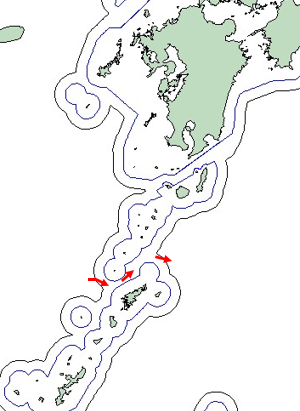 https://www.mod.go.jp/js/pdf/2026/p20260420_01.pdf |
| 4/20 |
China deployed warships for drills in the western Pacific as the US, the Philippines and Japan launched joint exercises, Balikatan, on April 20, underscoring rising tensions with Tokyo. China sent a naval group led by the destroyer Baotou through waters between Amami Oshima island and Yokoate island for Western Pacific training, the PLA Eastern Theatre Command said on April 19. The drills were described as routine and not directed at any country, and are designed to test the forces' far-seas operational capabilities. The move highlights China's growing naval activity and is the first time China has announced a transit through the Yokoate Waterway, which lies closer to Japan than the commonly used Miyako Strait. China's drills came days after it criticised Japan for sending a warship through the Taiwan Strait. On April 17, Beijing called the Japanese vessel's passage "provocative" and lodged a formal protest. Bloomberg (The Straits Times)https://www.straitstimes.com/asia/east-asia/china-deploys-warship-for-combat-drills-in-western-pacific?ref=latest-headlines |
| 4/20 |
Japan has recently confirmed that China has installed a new structure west of the Japan–China equidistance line in the East China Sea. Japan finds it regrettable that China is engaging in unilateral development while the EEZ and continental shelf remain undelimited. The Director-General of the Asian and Oceanian Affairs Bureau issued a strong protest to the Deputy Chief of Mission of the Chinese Embassy and urged China to promptly resume negotiations on the implementation of the June 2008 Agreement on joint development of East China Sea resources. China has accelerated its resource development in recent years, and Japan has confirmed 23 structures on the Chinese side of the equidistance line. Japan maintains that maritime delimitation should be based on this line. Ministry of Foreign Affairs of Japanhttps://www.mofa.go.jp/press/release/pressite_000001_02275.html (Reference) The Current Status of China's Unilateral Development of Natural Resources in the East China Sea https://www.mofa.go.jp/a_o/c_m1/page3e_000356.html |
| 4/20 |
On April 20, Japan-UK Foreign Ministers' Strategic Dialogue was held in Tokyo. Japan's minister stressed the growing importance of cooperation with the UK, an "Enhanced Global Strategic Partner," amid a shifting international order. The UK minister agreed, calling for closer ties. They shared the view that Euro-Atlantic and Indo-Pacific security are inseparable and agreed to accelerate the Global Combat Air Programme (GCAP). They discussed Indo-Pacific issues, including China, and cooperation in international fora, and agreed to continue working in close coordination. Ministry of Foreign Affairs of Japanhttps://www.mofa.go.jp/press/release/pressite_000001_02279.html (Reference) Joint press statement https://www.mofa.go.jp/files/101014993.pdf |
| 4/20 |
Chinese aircraft carrier Liaoning sailed through the Taiwan Strait on April 20, days after a Japan Self-Defense Force vessel did so, Taiwan's Defense Ministry said. It added that Taiwan's military is "maintaining close surveillance." Kyodo News (The Mainichi Shimbun)https://mainichi.jp/english/articles/20260420/p2g/00m/0in/033000c |
| 4/22 |
On April 22, Japan-New Zealand Summit Telephone Meeting was held. They concurred on further deepening bilateral relations, including security cooperation, strengthening multi-layered cooperation among like-minded countries, and working toward the realization of a Free and Open Indo-Pacific (FOIP), while maintaining close communication. Ministry of Foreign Affairs of Japanhttps://www.mofa.go.jp/a_o/ocn/nz/pageite_000001_01593.html |
| 4/22 |
The Philippines relies on the Middle East for over 90% of its crude oil, raising concerns that tensions in Iran could worsen fuel shortages. President Marcos declared a national energy emergency on March 24 and is seeking closer energy cooperation with China, including possible talks on joint oil and gas development in disputed waters. China appears to be making a change in the Philippines' stance toward China a precondition for cooperation, in response to Manila's recent outreach in the energy sector. In an April 21 commentary, the People's Daily criticized the Philippines for provoking issues tied to China's core interests and urged it to stop such actions if it wants better relations. The commentary also condemned Manila's moves in the South China Sea and the US‑Philippine "Balikatan" exercises. Sankei Shimbun News (Japanese)https://www.sankei.com/article/20260422-JC23G4FSDBNX7HAKRMN6USLOHM/ |
| 4/22 |
On April 21, the JMSDF confirmed one Russian Steregushchiy class frigate (hull number 335), one Improved Kilo class submarine and one Balk class (Project 23470 class) seagoing tug sailing northeast in waters 50km south of Yonagunijima Island (Okinawa Prefecture). These vessels sailed northeast through waters between Yonagunijima Island and Iriomotejima Island (Okinawa Prefecture) and navigated to the East China Sea. 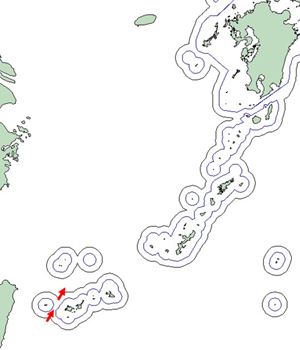 https://www.mod.go.jp/js/pdf/2026/p20260422_01.pdf |
| 4/22 |
On April 22, the JMSDF confirmed two Russian Steregushchiy class frigate (hull number 333 and 343) and one Dubna class medium replenishment ship sailing northeast in waters 70km south of Yonagunijima Island (Okinawa Prefecture). These vessels sailed northeast through waters between Yonagunijima Island and Iriomotejima Island (Okinawa Prefecture) and navigated to the East China Sea. 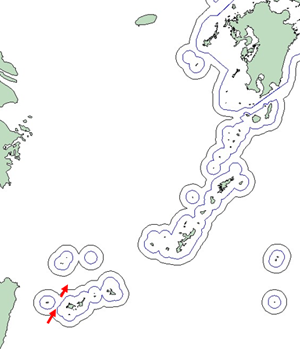 https://www.mod.go.jp/js/pdf/2026/p20260422_02.pdf |
| 4/22 |
On April 22, the JMSDF confirmed one Chinese Luyang III class destroyer (hull number 133) and one Chinese Jangkai II class frigate (hull number 577) sailing northwest in waters 80km south of Haterumajima Island (Okinawa Prefecture). These vessels sailed northeast through waters between Yonagunijima Island and Iriomotejima Island (both in Okinawa Prefecture) and navigated to the East China Sea. 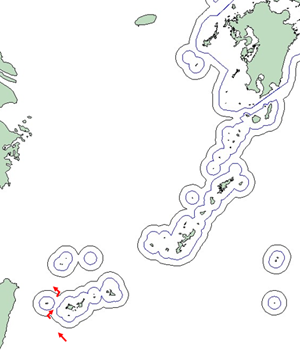 https://www.mod.go.jp/js/pdf/2026/p20260422_03.pdf |
| 4/22 |
The head of US Indo-Pacific Command told a Senate hearing on April 21 that more ships are needed in the region amid China's rapid naval buildup. He said the fleet lacks amphibious ships, destroyers, and attack submarines, and also called for more medium and large unmanned vessels. NHK Worldhttps://www3.nhk.or.jp/nhkworld/en/news/20260422_08/ |
| 4/22 |
On April 21, Taiwan's Coast Guard said four vessels from China's Coast Guard and one vessel from its Maritime Safety Administration entered waters around Kinmen, describing the incident as harassment under the guise of law enforcement and a "grey-zone operation." The four coast guard vessels entered restricted waters in two groups before departing about two hours later. During the response, a Maritime Safety Administration vessel also entered Kinmen's waters. The Coast Guard said it would continue to defend sovereignty and ensure maritime security with a firm and professional stance. Focus Taiwan (Japanese)https://japan.focustaiwan.tw/cross-strait/202604220004 |
| 4/23 |
On April 21, Taiwan's coast guard minister visited Itu Aba Island in the contested Spratly Islands in the South China Sea for an exercise. It was the first time in seven years a minister had visited the island. Taiwan has control of the island, which is also claimed by China, Vietnam and the Philippines. The island has a runway and a new wharf but it is lightly defended compared to nearby Chinese-controlled islands. Chinese forces generally leave the island alone. Reuters (Kyodo News)https://english.kyodonews.net/articles/-/74745?words=china |
| 4/24 |
Taiwan President's overseas trip on April 22 was canceled after three Indian Ocean island countries along the route revoked flight permits, the first time a Taiwanese president has been forced to cancel an entire overseas trip for this reason. ICAO requires member states to provide FIR information, but the three countries effectively refused these air traffic control duties. A Taiwan official reportedly said China pressured them with threats of economic sanctions, including revoking debt relief, while China denies the claims but expressed appreciation. If China's pressure is the cause of the revocation, it would set a precedent of the international aviation network being used for political intimidation, hindering freedom of overflight. Japan's Chief Cabinet Secretary said aviation safety is important and that aviation authorities must operate with transparency, and a Japanese official added that weaponizing air traffic for political purposes must not be tolerated. Japan has been monitoring the situation and examining whether it would affect freedom of overflight under international law. Yomiuri Shimbun Newshttps://japannews.yomiuri.co.jp/politics/politics-government/20260424-324182/ |
| 4/24 |
On April 23, the JMSDF confirmed two Russian Steregushchiy class frigate (hull number 333 and 343) and one Dubna class medium replenishment ship sailing northeast in waters 130km southwest of Goto Islands (Nagasaki Prefecture). From April 23 to 24, these vessels sailed northeast through the Tsushima Strait and navigated to the Sea of Japan. 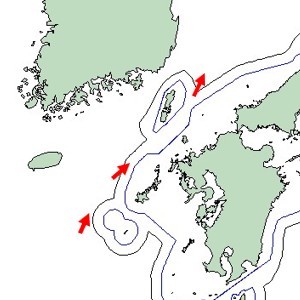 https://www.mod.go.jp/js/pdf/2026/p20260424_01.pdf |
| 4/25 |
From April 20 to 24, the Vietnam Coast Guard and the China Coast Guard conducted their first joint patrol of 2026 near the Gulf of Tonkin delimitation line, holding talks, coordinating action plans, and organizing professional legal exchanges. A Vietnamese official noted that maritime law enforcement cooperation remained effective, citing successful joint patrols and anti-crime operations in 2025. Both sides agreed to further expand cooperation in joint patrols, maritime law enforcement, search and rescue, and support for fishermen. The People's Army Newspaper of Vietnamhttps://en.qdnd.vn/military/intl-relations-and-cooperation/vietnam-and-china-coast-guards-complete-joint-patrol-590294 |
| 4/27 |
On April 27, two China Coast Guard vessels entered Japan's territorial waters off the Senkaku Islands in the East China Sea. Their hull numbers are 2302 and 2308 (Source: the JCG). According to the JCG, as the Chinese vessels tried to approach a Japanese fishing boat operating in the waters, the JCG patrol ships safeguarded the fishing boat and urged the Chinese vessels to leave the area. It was the first intrusion into the Japanese waters around the Senkaku chain by Chinese government vessels since April 14. Note: The hull numbers reported above are taken from a JCG press release. Jiji Press Newshttps://sp.m.jiji.com/english/show/47351 |
| 4/28 |
On April 27, the JMSDF confirmed one Chinese Luyang III class destroyer (hull number 120) and one Chinese Fuchi class replenishment ship (hull number 903) sailing southwest in waters 80km northeast of Tsushima Island (Nagasaki Prefecture). These vessels sailed southwest through the Tsushima Strait and navigated to the East China Sea. 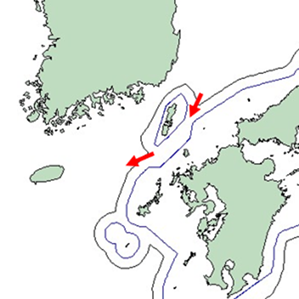 https://www.mod.go.jp/js/pdf/2026/p20260427_01.pdf |
| 4/28 |
On April 28, State Minister for Foreign Affairs of Japan attended the Security Council High-Level Open Debate on "The Safety and Protection of Waterways in the Maritime Domain," and delivered a statement on behalf of the Government of Japan. She stated that the seas and oceans allow us to live and prosper and that the safety of passage must be upheld under the 1982 United Nations Convention on the Law of the Sea. She expressed concern about the situation in the East China Sea and the South China Sea, and reiterated Japan's opposition to any unilateral attempts to change the status quo by force or coercion, including obstruction of navigation and overflight. She also noted Japan's promotion of a "Free and Open Indo-Pacific" over the past decade and its cooperation with the UN system in capacity-building for maritime nations. She concluded that Japan will continue working with the United Nations and member states to maintain a free and open maritime order based on the rule of law and ensure maritime safety and stability. Ministry of Foreign Affairs of Japanhttps://www.mofa.go.jp/press/release/pressite_000001_02301.html |
| 4/28 |
On April 28, Japan-Australia Foreign Ministers' Meeting was held in Tokyo. They agreed to strengthen bilateral cooperation across a wide range of areas, including security, and to work together to advance a "Free and Open Indo-Pacific." They also discussed the Indo-Pacific situation and reaffirmed their commitment to close communication and cooperation on various issues. Ministry of Foreign Affairs of Japanhttps://www.mofa.go.jp/press/release/pressite_000001_02304.html |
| 4/28 |
On April 28, Japan's Defense Minister received a courtesy call from the Commander of U.S. Pacific Air Forces. They discussed bilateral defense cooperation, particularly in the Indo-Pacific region, and reaffirmed the robust Alliance, underpinned by close communication at all levels. Ministry of Defense of Japanhttps://www.mod.go.jp/en/article/2026/04/69815e120b68bba49fa49b7d2cb7f307f22abd3f.html |
| 4/28 |
On April 28, two China Coast Guard vessels that had entered Japan's territorial waters off the Senkaku Islands in Okinawa Prefecture the previous day left the waters after sailing within them for more than 24 hours. NHK News (Japanese)https://news.web.nhk/newsweb/na/na-k10015110601000 |
| 4/30 |
On April 29, the JCG reported that a Chinese oceanographic research vessel left Japan's EEZ off Ishigakijima Island in Okinawa Prefecture after operating without permission for about two weeks. On April 15, the JCG confirmed the vessel had extended what appeared to be a wire into the water and continued its activities despite a call from a JCG patrol ship to stop. Jiji Press Newshttps://jen.jiji.com/jc/eng?g=eco&k=2026043000340 |
| 4/30 |
On April 29, the JCG confirmed that the Chinese oceanographic research vessel Xiangyanghong 22 had extended what appeared to be a pipe into the water within Japan's EEZ, about 63 km west-northwest of Uotsuri Island in the Senkaku Islands. The JCG requested that the activity stop, stating that surveys without consent are not permitted. Yomiuri Shimbun News (Japanese)https://www.yomiuri.co.jp/local/kyushu/news/20260430-GYS1T00016/ |
Newsletter Registration
What is happening in East Asian Maritime Security? The Research Institute for Peace and Security (RIPS) publishes the biweekly newsletter, “East Asian Maritime Security (EAMS)” and updates the information on maritime security relevant to East Asia and Japan's territory.