



Vol.43. April 15. 2026
What is happening in East Asian Maritime Security? The Research Institute for Peace and Security (RIPS) publishes the biweekly newsletter, the information on maritime security relevant to East Asia and Japan's territory.
Statistical Data and Analysis (as of April 15)
In the first half of this month, signs emerged of expanded Chinese maritime activity in the East and South China Seas, along with moves by relevant countries to bolster their defense and cooperation.
Despite UNCLOS, China conducted unauthorized maritime surveys in Japan's EEZ near the Senkaku Islands. In the week of April 6, Chinese naval and coast guard vessels increased significantly in the South and East China Seas, according to reports. Taiwan is strengthening its defense posture amid the growing presence of Chinese government vessels around the Pratas Islands. The Philippines has opened a new coast guard base on a disputed South China Sea island, expanded security measures, and held joint naval exercises with the United States and Australia.
Japan is reviewing its Pacific-side defense posture and has held a range of high-level meetings—including summit talks, 2+2 and defense ministers' meetings, and foreign ministers' discussions—with Indonesia, France, and Australia to confirm cooperation for regional peace and stability.
[Statistical Data as of April 15]
The Japan Coast Guard (JCG) daily updates the statistical data on the number of China Coast Guard vessels entering in the contiguous zone around the Senkaku Islands and intruding into Japanese territorial waters. The below is from the website of the JCG.
https://www.kaiho.mlit.go.jp/mission/senkaku/senkaku.html
| Mar. | Contiguous zone |
Territorial Waters |
Apr. | Contiguous zone |
Territorial Waters |
|
|---|---|---|---|---|---|---|
| 31 | 4 | 7 | 4 | |||
| Apr. | Contiguous zone |
Territorial Waters |
8 | 4 | ||
| 9 | 4 | |||||
| 1 | 8 | 10 | 4 | |||
| 2 | 4 | 11 | 4 | |||
| 3 | 4 | 12 | 4 | |||
| 4 | 4 | 13 | 4 | |||
| 5 | 4 | 14 | 4 | 4 | ||
| 6 | 4 |
Topics
| Date | Topics |
|---|---|
| 3/30 |
On March 28, the Japan Joint Staff confirmed one Chinese Y-9 patrol aircraft flying over the East China Sea. The Japan Air Self Defense Force (JASDF) scrambled fighter jets in response to this Chinese aircraft. JASDF has identified this particular type of Y-9 for the first time. 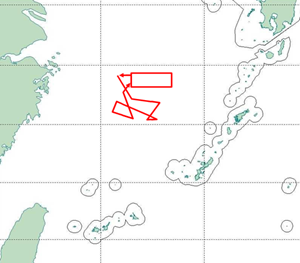 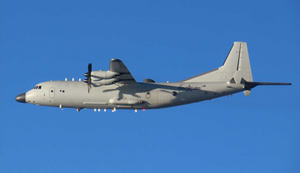 https://www.mod.go.jp/js/pdf/2026/p20260330_01.pdf |
| 3/30 |
On March 27, the Japan Maritime Self Defense Force (JMSDF) confirmed one Russian Balzam class intelligence collection ship (hull number 80) sailing east in waters 120km west of Cape Tappizaki (Aomori Prefecture). From March 27 to 28, this vessel sailed east within the contiguous zone around the Tsugaru Strait, then turned back in waters 50km southwest of Cape Tappizaki. It sailed west through the waters and navigated to the Sea of Japan. 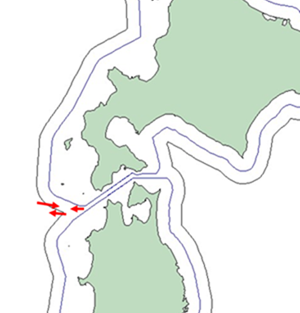 https://www.mod.go.jp/js/pdf/2026/p20260330_02.pdf |
| 3/30 |
On March 29, the JMSDF confirmed one Chinese Dongdiao class intelligence collection ship (hull number 799) sailing northeast in waters 80km southwest of Tsushima Island (Nagasaki Prefecture). This vessel sailed northeast through the Tsushima Strait and navigated to the Sea of Japan. 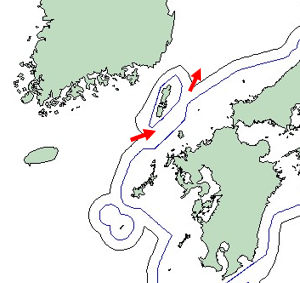 https://www.mod.go.jp/js/pdf/2026/p20260330_03.pdf |
| 3/31 |
On March 30, the JMSDF confirmed one Chinese Luyang III class destroyer (hull number 119), one Chinese Renhai class destroyer (hull number 102) and one Chinese Fuchi class replenishment ship (hull number 903) sailing northeast in waters 80km northwest of Goto Islands (Nagasaki Prefecture). From March 30 to 31, these vessels sailed northeast through the Tsushima Strait and navigated to the Sea of Japan. 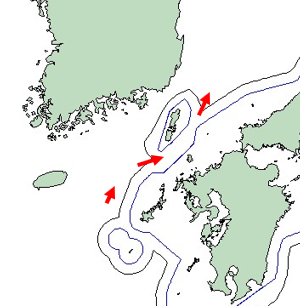 On March 30, the JMSDF confirmed one Chinese Luyang III class destroyer (hull number 120) sailing east in waters 160km west of Goto Islands. From March 30 to 31, this vessel sailed northeast through the Tsushima Strait and navigated to the Sea of Japan. 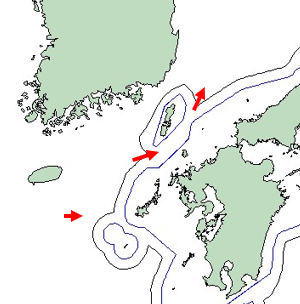 https://www.mod.go.jp/js/pdf/2026/p20260331_01.pdf |
| 3/31 |
On March 31, Japan-Indonesia Summit Meeting was held in Tokyo. Japan's prime minister expressed hope to work with Indonesia to advance a Free and Open Indo-Pacific, while the Indonesian president voiced his intention to deepen bilateral cooperation. Recognizing that closer Japan-Indonesia cooperation contributes to peace and stability in the Indo-Pacific amid challenging circumstances, the leaders agreed to advance security cooperation. The prime minister affirmed continued support for Indonesia's armed forces through OSA (Official Security Assistance) and for enhancing the capabilities of its maritime law enforcement agency. The president emphasized the importance of Japan-Indonesia cooperation on maritime security. Both leaders welcomed progress toward a Defense Cooperation Arrangement since last year's "2+2" meeting. The prime minister also explained about Japan's position on current situations in the Indo-Pacific region such as the South China Sea, and the leaders agreed to enhance communication to strengthen the Comprehensive Strategic Partnership. Ministry of Foreign Affairs of Japanhttps://www.mofa.go.jp/s_sa/sea2/id/pageite_000001_00007.html |
| 3/31 |
On March 31, the Philippines said it will rename over 100 features in the Spratly Islands, including areas claimed by China, to reinforce its "sovereignty" in the South China Sea. Manila previously used to rename in 2012, calling areas near its coast the West Philippine Sea. The new executive order directs government agencies and schools to use the names once revealed, and orders the mapping agency to update charts and maps. On April 1, China accused the Philippines of breaking international law and threatened "measures" to protect its sovereignty, after Manila announced the renaming. AFP News (The Straits Times)https://www.straitstimes.com/asia/philippines-to-rename-disputed-south-china-sea-islands https://www.straitstimes.com/asia/china-opposes-philippines-renaming-disputed-south-china-sea-islands |
| 4/1 |
On April 1, Japan-France Foreign and Defense Ministers' Meeting ("2+2") was held in Tokyo. The Japanese side emphasized that, amid a rapidly changing security environment, it is essential for Japan and France as like-minded countries to strengthen cooperation in diplomacy and defense. The French side, while maintaining close coordination with Japan within the G7, expressed its intention to further deepen ties, underscoring Japan as an "Exceptional Partner." The Japanese side outlined the revision of the three security documents, including the National Security Strategy, the review of the defense equipment transfer framework, and initiatives related to a Free and Open Indo-Pacific. The French side welcomed these developments and reaffirmed its strong commitment to the Indo-Pacific. The ministers welcomed deepening defense cooperation and discussed international challenges, including the situation in the Indo-Pacific and issues relating to China, confirming continued close coordination. Ministry of Foreign Affairs of Japanhttps://www.mofa.go.jp/press/release/pressite_000001_02228.html |
| 4/1 |
On April 1, Japan-France Summit Meeting was held in Tokyo. Japan's prime minister stated that the Euro-Atlantic and Indo-Pacific are closely interconnected, making cooperation among like-minded countries vital. She emphasized France as an "Exceptional Partner," recognized it as an Indo-Pacific nation, and expressed her intention to strengthen strategic cooperation, including in security and defense. The French president noted significant progress in Japan–France cooperation and expressed his intention to deepen bilateral relations and work closely within the G7. They welcomed the Foreign and Defense Ministers' Meeting ("2+2") as an opportunity to advance security and defense cooperation, exchanged views on the Indo-Pacific, including China, and confirmed close coordination as Indo-Pacific nations. Ministry of Foreign Affairs of Japanhttps://www.mofa.go.jp/erp/erp_1/fr/pageite_000001_01563.html |
| 4/1 |
On April 1, Japan-France Defense Ministerial Meeting was held in Tokyo. Japan's minister stated that, as regional situations become more interconnected, cooperation with France, Japan's "special partner," is crucial for regional deterrence, and the French minister shared this view. They agreed to consult and cooperate as needed for the security of both countries and regional stability, including during peacetime. They exchanged views on regional security issues, including those in the Indo-Pacific, and confirmed close coordination. Recognizing that Euro-Atlantic security and Indo-Pacific security are inseparable, they confirmed their intention to deepen defense cooperation and exchanges. Ministry of Defense of Japanhttps://www.mod.go.jp/en/article/2026/04/ffffe42da0a30655696dc233230d5022f2a9d71b.html |
| 4/1 |
A Chinese oceanographic research vessel, Xiangyanghong 22, has been conducting surveys in Japan's EEZ around the Senkaku Islands since March 30. According to the JCG and AIS data, it remains in the area on March 31 and April 1, conducting surveys without Japan's consent for three consecutive days. A China Coast Guard vessel, Haijing 2204, shadowed it at a distance of several hundred meters to a few kilometers. A JCG official said, "Such behavior is common in the South China Sea but rare around Japan. The purpose is unclear, and we are continuing to monitor the situation." Sankei Shimbun News (Japanese)https://www.sankei.com/article/20260401-HBJAUWBIINHDLDLMGN2ZXRQ2ZM/ |
| 4/1 |
On April 1, Japan's Chief Cabinet Secretary received a courtesy call by the delegation led by Senator Jeanne Shaheen, United States, in Tokyo. He expressed gratitude for strong support for the Japan-U.S. Alliance, especially thanking Senator Shaheen for securing a Senate resolution on Japan during Prime Minister Takaichi's U.S. visit last month and sponsoring one on the alliance late last year. They also exchanged views on strengthening the alliance. Ministry of Foreign Affairs of Japanhttps://www.mofa.go.jp/na/na1/us/pageite_000001_01566.html |
| 4/2 |
On April 2, Japan's State Minister for Foreign Affairs met with Marshall Islands' Minister of Finance, Banking and Postal Services in Tokyo. Japan's state minister said Japan aims to strengthen ties with the Marshall Islands, which is an important partner in realizing a "Free and Open Indo-Pacific," sharing values such as freedom, democracy, human rights, and the rule of law. They confirmed continued cooperation, including the recovery of the remains of war dead, and coordination for next year's Pacific Islands Leaders Meeting in Japan. Ministry of Foreign Affairs of Japanhttps://www.mofa.go.jp/press/release/pressite_000001_02241.html |
| 4/2 |
The minister in charge of Taiwan's coastguard said on April 2 that China is expanding the maritime areas in which it carries out "grey zone harassment." Since last year, Chinese government vessels, including coastguard ships, have increased around the Pratas, in addition to earlier concentrations near Taiwan and the Kinmen islands. "From a political and strategic perspective, we have found that for them, seizing Dongsha would carry considerable strategic significance," she said. Taiwan has renovated the wharf on the main island and will regularly deploy vessels with greater operational capacity there, she added, in comments to the Taiwan Foreign Correspondents' Club. The Pratas are seen as vulnerable due to their distance from Taiwan and are lightly defended, with the coastguard rather than the military responsible. In wartime, Taiwan's coast guard, including new Anping-class corvettes, would be deployed. She said Taiwan is accelerating efforts to strengthen its capabilities and transition from peacetime to wartime readiness as a result of China's actions. Reutershttps://www.reuters.com/world/china/taiwan-strengthen-pratas-islands-defences-china-steps-up-pressure-2026-04-02/ |
| 4/3 |
On April 2, the JCG reported that a Chinese oceanographic research vessel left Japan's EEZ around the Senkaku Islands. On March 30, the vessel was seen extending objects resembling a pipe and wire into Japanese waters. The JCG repeatedly urged it by radio to stop, but it did not respond. This is the first confirmed Chinese research operation in Japan's EEZ since last October near Tokunoshima in Kagoshima Prefecture. NHK Worldhttps://www3.nhk.or.jp/nhkworld/en/news/20260403_03/ |
| 4/3 |
On April 1, Japan's Ministry of Defense established a 10-member Pacific defense initiative office to strengthen its vulnerable Pacific flank. During a March 28 visit to Ioto Island, the defense minister said enhancing Pacific defense is urgent, noting current capabilities are insufficient. The government plans to include stronger Pacific defenses in this year's revision of the three key national security documents. Through the new office, the Defense Ministry will review the Self-Defense Forces' posture and reflect the findings. Until now, the Defense Ministry has focused on radar deployment along the Sea of Japan and East China Sea coasts. It plans surveys this fiscal year to deploy a mobile radar on Chichijima Island and is considering enhancing radar functions on Ioto Island and Minami-Torishima Island. Surveys will also begin on port and runway development on Ioto Island, where a proposal to station SDF fighter jets is under consideration. However, these initiatives face challenges in effectiveness, cost, and personnel. Asahi Shimbun Newshttps://www.asahi.com/ajw/articles/16473142 |
| 4/4 |
Analysis of AIS data shows that more than 10 Chinese oceanographic research vessels have been conducting continuous marine surveys near Japan's EEZ off the coast of Minami-Torishima Island. Activities are mainly concentrated outside Japan's EEZ, but some surveys have also been observed near the EEZ boundary. Within Japan's EEZ off Minami-Torishima Island, Japan has successfully conducted test drilling for rare-earth-rich mud, while Chinese companies plan large-scale mining of rocks containing rare metals in waters to the east and south outside Japan's EEZ. The United Nations Convention on the Law of the Sea recognizes the freedom of scientific research in waters outside the EEZ. However, the presence of Chinese naval vessels, including the aircraft carrier Liaoning, has been confirmed nearby, raising security tensions. Experts stress the importance of rule-compliant research and development activities. Sankei Shimbun News (Japanese)https://www.sankei.com/article/20260221-KISYE64HSBN7NDYAGLTMGZPC2Y/ |
| 4/6 |
Japan's defense minister plans to visit the Philippines in early May to discuss exporting decommissioned JMSDF destroyers, sources said April 5. Japan is considering providing some Abukuma-class vessels, with Philippine Navy officials interested in three, amid efforts to respond to China's assertiveness in the South China Sea. The Philippines is also considering the SDF's Type-03 Medium-Range Surface-to-Air Missiles. Exports of lethal weapons, including destroyers, are restricted under Japan's defense export principles, but the government aims to ease the rules later this month, allowing sales to like-minded partners. Japan and the Philippines, both U.S. allies, have recently deepened security cooperation, with Japan supplying air and coastal surveillance radar units. Before visiting the Philippines, the defense minister is expected to meet his Indonesian counterpart. Indonesia has also shown interest in some JMSDF destroyers and submarines. Kyodo News (Japan Today)https://japantoday.com/category/politics/japan-defense-chief-koizumi-eyes-visiting-philippines-in-early-may |
| 4/7 |
On April 7, the Japan Joint Staff confirmed one Russian IL-20 intelligence gathering aircraft flying from the continent over the Sea of Japan. The aircraft flew to the area off the coast of Niigata Prefecture, then changed course and flew toward the
continent. 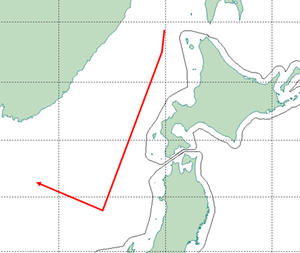 https://www.mod.go.jp/js/pdf/2026/p20260407_01.pdf |
| 4/8 |
On April 8, the Japanese and Australian foreign ministers held a phone meeting and agreed to further strengthen bilateral cooperation, including in security, with a view to realizing a "Free and Open Indo-Pacific." Ministry of Foreign Affairs of Japanhttps://www.mofa.go.jp/press/release/pressite_000001_02251.html |
| 4/8 |
On April 8, Japan-Australia Defense Ministerial Meeting under the Framework for Strategic Defence Coordination (FSDC) was held. They exchanged views on regional circumstances, including in the Indo-Pacific region, and agreed to maintain close communication. They also discussed their respective national defense strategy reviews and concurred on continuing close cooperation to maintain strategic alignment, as well as on continuing discussions to further elevate the "Special Strategic Partnership," including through the FSDC. Notes: https://www.mod.go.jp/en/article/2026/04/cc71509252765c06a6f2b11d925f9b6afebcbfdf.html |
| 4/9 |
On April 9, the Philippines opened a new coast guard base on disputed Thitu Island in the South China Sea to strengthen sovereignty protection and support for fishermen, with personnel, vessels, and aircraft assigned for various missions. Additional outposts are planned, while Thitu remains a small settlement compared with the China-controlled Subi Reef installation. That same day, the Philippine coast guard accused Chinese forces of firing flares at its patrol aircraft near disputed Subi and Mischief Reefs, calling it a deliberate act of bullying that endangered Philipino personnel. The Associated Presshttps://apnews.com/article/south-china-sea-thitu-island-philippines-0880f88576273345a9efe850e0dbfef6 |
| 4/10 |
On April 9, the JMSDF confirmed one Chinese Dongdiao class intelligence collection ship (hull number 799) sailing southwest in waters 60km northeast of Tsushima Island (Nagasaki Prefecture). From April 9 to 10, this vessel sailed southwest through the Tsushima Strait and navigated to the East China Sea. 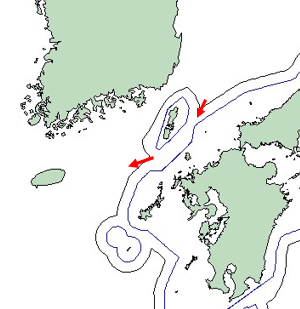 https://www.mod.go.jp/js/pdf/2026/p20260410_01.pdf |
| 4/10 |
On April 10, the Vice Minister for Foreign Affairs of Japan held a phone call with the U.S. Deputy Secretary of State. They affirmed that Japan and the United States would advance cooperation across a wide range of areas, including security, promote a Free and Open Indo-Pacific, and further elevate the Japan–U.S. Alliance. They also exchanged views on regional situations, including issues related to China, and confirmed continued close cooperation. Ministry of Foreign Affairs of Japanhttps://www.mofa.go.jp/press/release/pressite_000001_02255.html |
| 4/10 |
On April 10, Japan-Australia Vice Foreign Ministers' Meeting was held in Australia. They confirmed their commitment to building on concrete bilateral cooperation across a wide range of fields and, given the challenging strategic environment, agreed to further enhance security cooperation between Japan and Australia. They discussed challenges in the Indo-Pacific region, shared views, and agreed to address them together. They also stressed the importance of multi-layered cooperation with allies and like-minded countries, including closer cooperation with the United States, and to work with regional partners to realize and further develop a Free and Open Indo-Pacific (FOIP). Ministry of Foreign Affairs of Japanhttps://www.mofa.go.jp/press/release/pressite_000001_02261.html |
| 4/10 |
Taiwanese officials said China has deployed nearly 100 naval and coast guard vessels in the East China Sea and the South China Sea during the week of April 6, up from about 50–60 and described by officials as "very rare," though some see it as a "new normal." Taiwan also reported seven Chinese aircraft and seven warships operating around the island in the previous 24 hours. China has also designated "reserved" airspace off its east coast from March 27 to May 5, a move Taiwan's intelligence chief believes is meant to gauge U.S. aircraft activity. He added it may also serve as a political signal ahead of the Trump–Xi meeting. Reutershttps://www.reuters.com/world/china/taiwan-sees-only-warships-warplanes-china-talks-peace-with-opposition-2026-04-10/ |
| 4/13 |
The United States and Australia joined the Philippines for four-day joint maritime exercises in the South China Sea from April 9 to 12, involving warships, fighter jets and surveillance aircraft to enhance defence capabilities, the Philippine military said. The drills highlighted deepening cooperation and a shared commitment to regional security, while China criticized such activities as raising tensions. Reutershttps://www.reuters.com/business/aerospace-defense/us-australia-philippines-hold-second-joint-drills-south-china-sea-this-year-2026-04-13/ |
| 4/13 |
On April 11, the JMSDF confirmed one Chinese Dongdiao class intelligence collection ship (hull number 799) sailing southeast in waters 90km west of Kusagaki Islands (Kagoshima Prefecture). This vessel sailed east through the Osumi Strait and navigated to the Pacific Ocean. 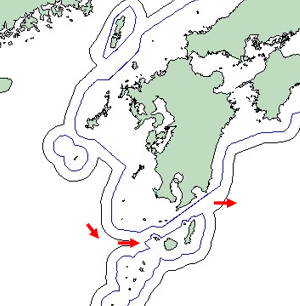 https://www.mod.go.jp/js/pdf/2026/p20260413_01.pdf |
| 4/13 |
On April 13, Japan-Viet Nam Summit Telephone Meeting was held. Japan's prime minister expressed her intent to deepen ties with Viet Nam amid the increasingly severe regional environment. The Vietnamese leader said he would work to further strengthen the Viet Nam–Japan Comprehensive Strategic Partnership. They also exchanged views on regional issues such as the South China Sea. Ministry of Foreign Affairs of Japanhttps://www.mofa.go.jp/s_sa/sea1/vn/pageite_000001_01578.html |
| 4/13 |
On April 13, the Philippines accused Chinese fishermen of sabotage, alleging that they had poured cyanide around Second Thomas Shoal in the Spratly Islands last year. Philippine officials alleged the fishermen's mother ships worked for the Chinese Navy. Authorities said that, on several occasions, cyanide bottles were seized from small boats launched from Chinese fishing vessels, and that troops also directly witnessed the crews pouring cyanide into the waters. Philippine officials said that such activities could deplete fish stocks, deprive stationed personnel of food, threaten health, damage the reef, and undermine the structural integrity of the BRP Sierra Madre, the grounded warship serving as the country's military outpost at the shoal. AFP News (Jiji Press News)https://sp.m.jiji.com/english/show/47027 |
| 4/14 |
On April 14, four China Coast Guard vessels entered Japanese territorial waters off the coast of the Senkaku Islands. Their hull numbers are 2501, 2303, 2302 and 2308 (Source: the JCG). This was the first intrusion by Chinese government vessels of Japanese waters near the islands since March 18. The four vessels successively entered the waters near Kubashima, one of the islands, stayed for about two hours, and have already left the area. Note: The hull numbers reported above are taken from a JCG press release. Jiji Press Newshttps://sp.m.jiji.com/english/show/47045 |
Newsletter Registration
What is happening in East Asian Maritime Security? The Research Institute for Peace and Security (RIPS) publishes the biweekly newsletter, “East Asian Maritime Security (EAMS)” and updates the information on maritime security relevant to East Asia and Japan's territory.