



Vol.42. March 31. 2026
What is happening in East Asian Maritime Security? The Research Institute for Peace and Security (RIPS) publishes the biweekly newsletter, the information on maritime security relevant to East Asia and Japan's territory.
Monthly Column
Xi Jinping's "People's War at Sea"[1]
by Koichi SATO, Ph.D.,
Professor, J.F. Oberlin University
Introduction
The New York Times reported that China had quietly mobilized thousands of fishing boats in December 2025 and January 2026 to form massive floating barriers of at least 200 miles long, showing a new level of coordination that could give Beijing more ways to impose control in contested East China Sea.[2] In December, about 2000 Chinese vessels assembled in two long, parallel formations on Christmas Day in the East China Sea. Each stretched 290 miles long, forming a reverse L shape, ship-position data indicated.
In January, about 1,400 Chinese vessels congregated in the East China Sea. By January 11, they had assembled into a rectangle stretching more than 200 miles. The New York Times never reported that all the Chinese fishing boats were maritime militia vessels though some of them joined maritime militia activities in the past, and some of them belonged to militia fleets. Its animation of Automatic Identification System (AIS) showed the wake of each Chinese fishing boat, and they made a rectangle shape, as if they composed the long wall which would refuse Japan and the U. S. to approach Taiwan.
What is the objective of the Chinese Communist Party (CCP) government led by President Xi Jinping to utilize the maritime militia? The present writer would like to consider this theme by the history of the Chinese maritime policy.
1. The Definition of Chinese Maritime Militia and its Actual Appearance
The Chinese maritime militia was established under the influence of People's War theory of Chairman Mao Ze Dong.[3] Admiral Xiao Jing Guang, the first commander of the People's Liberation Army Navy tried to construct the modern navy with assistance of Soviet Russia, but Chairman Mao insisted on the fleets of small gunboats and torpedo boats.[4] China's maritime militia was established as an auxiliary force of maritime guerrilla warfare, and the by-product of Chairman Mao's People's War.
A Japanese defense specialist described the Chinese maritime militia as follows: Chinese maritime militia was organized by fishermen, residents of remote islands, shipping agents, maritime officials. They act in accordance with the international law, and wear the uniform with the mark of militia.[5] The present writer summarized the explanations of several Chinese military analysts: maritime militias are in charge of weapon operation, logistics, reconnaissance, civil engineering work, demonstration of the presence, escort, disturbance, and sabotage.[6]
The Chinese militias include the core militia: retied soldiers, military training graduates, and military training personnel under 28 years old, and ordinary militia: conscripts from 18 years old to 35 years old.[7] Actual number of maritime militias is not known. Number of the maritime militias suggested by the Western scholars seem to be big, for example, a scholar suggested 750,000 in 1975, though the Chinese Military White Paper 2019 suggests total number of militias of all four military forces include army, navy, air force and rocket force, 1.41 million in Chapter 3.[8] A Chinese military general told the present writer that this figure included all the military forces and all of core and ordinary militias.[9] If so, the actual number of maritime militias seemed to be smaller.
A Japanese newspaper reported the number of Chinese maritime militias in 2016 was 300,000, and according to Professor James Kraska of U.S. Naval-War College, their size was 20,000 boats and several hundred thousand soldiers in 2020.[10] A Japanese government officer told the present writer that the number of Chinese maritime militias boats appeared in the East China Sea was approximately 120 in 2022, and the Philippine government official told at the press conference that the number of Chinese maritime militias boats appeared in the Philippine waters in the South China Sea was approximately 300 to 350 in 2025.[11] Most of boats in the East China Sea were around 150 gross tons and 30 meters length, and most of boats in the South China Sea were around 550 tons displacement and 50 meters length.[12]
The article of Dr. Zhang Hongzhou and Commodore Sam Bateman reported that "Chinese Government provided financial support to fishermen, and there are three major fishery subsidies: a fishing fuel subsidy; a subsidy for ship construction; and a special fishing fuel subsidy for fishing in the Spratly Islands. Between 2011 and 2015, the central government's financial support to the marine fishery amounted to RMB 146 billion (US$21.8 billion), nearly three times higher than during 2006-2010."[13] The title of this article is "Fishing Militia," and it suggested that the Chinese Government utilized financial support to mobilize Chinese fishermen under the government's direction. A Chinese scholar told the present writer in 2019, "If a fisherman needs a fishing boat, the government constructs two fishing boats for him. These boats' appearance was not different from the usual fishing boats, though they were attached ammunition storages."[14]
Dr. Zhang Hongzhou stressed that Vietnam and the Philippines organized the maritime militias and deployed militia fishing boats in the South China Sea, too.[15] He said, "Chinese reports suggest that Vietnam's fishing militia is now quite large, with thirteen fishing militia platoons helping over 3,000 fishermen from Danang operate in the waters of the Paracel Islands. In the case of the Philippines, armed fishing vessels have been operating in the disputed waters of the South China Sea for years.[16] Sometimes, pirates poised as fishermen and in other cases, law enforcement officials have been disguised as fishermen."
2. Encounters of the Chinese Maritime Militias with the Japan Coast Guard (JCG) and the U. S. Navy
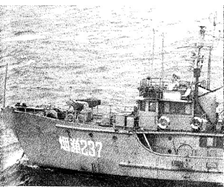
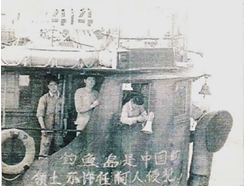
The Japan Coast Guard (JCG) patrol vessels encountered the 137 Chinese fishing boats with maritime militias in the sea area surrounding Senkaku Islands on 12 April 1978.[17] They included armed fishing boats, and Chinese fishing boats encircled the JCG patrol vessels, showed the cabin wall with the chalk description: "Diaoyudao (Senkaku Islands' Chinese name) is China's territory, we never permit foreigners' intrusion (See Photo-1 and Photo-2)." They pointed the automatic rifles at the JCG patrol vessels. They were well disciplined, and did not fire, though they did not wear military uniforms with the mark of militia. So that the Japanese media could not understand their identity, but their activities were described in the wall newspaper put up in Shanghai City.[18] The CCP members used the wall newspaper to assert their opinion to the people when they cannot accept the party policy in 1960th and 1970th. The militia leader opposed Deng Xiaoping's fraternal policy to Japan, that is why they gave the maritime demonstration in the Senkaku Islands. The Japanese finally could understand the circumstances by the wall newspaper report.
The U.S. navy ocean surveillance ship USNS Impeccable encountered two Chinese fishing trawlers 75 miles south of Hainan Island on 8 March 2009, and they disturbed the surveillance of Impeccable.[19] Two Chinese trawlers sailed toward Impeccable. They quickly targeted the ship's towed sonar array. One trawler crossed its wake in an attempt to run over the underwater equipment. When this failed, the fishermen tried to use long poles with grappling hooks. Shortly thereafter, the two Chinese fishing trawlers stopped abruptly ahead of Impeccable and dropped pieces of wood in the water to block its exit. The crew of these trawlers never wore the military uniforms with the mark of militia. But the American scholars who belong to the U.S. Naval War College and the Center for Strategic and International Studies (CSIS), drew increasing attention towards Chinese Maritime Militias.
|
|
|
Photo-1: Chinese Armed Fishing Boat |
Photo-2: Chinese Maritime Militias |
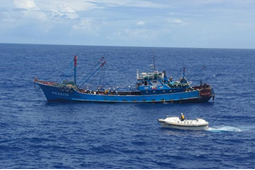
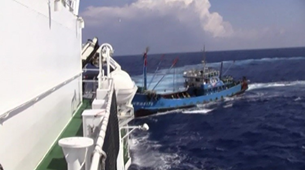
Compared to the scholars in the United States, the Japanese scholars had little attention to Chinese maritime militias, though the Chinese Navy's provocation to the Japan's Maritime Self-Defense Force continued.[20] A Fujian fishing trawler Mǐn jìn yú 5179 (around 166 gross tons and 32.99 meters length: Photo-3) intruded into Japanese territorial water surrounding Kubajima Island of the Senkaku Islands on 7 September 2010.[21] Min jin yu 5179 collided into two JCG patrol vessels; Yonakuni and Mizuki (Photo-4). The JCG crew members captured Min jin yu 5179, and arrested Zhān Qí Xióng, the Captain of Min jin yu 5179.[22]
|
|
|
Photo-3: Mǐn jìn yú 5179 |
Photo-4: Mǐn jìn yú 5179 collided into JCG Patrol |
Japan-China relations deteriorated, and the Chinese Government arrested four Japanese construction company Fujita employees in retaliation.[23] Zhan Qi Xiong was said to be a maritime militia, though it was not sure. Anyway, it was the major incident which eliminated the expectations for the restoration of Japan-China cordial relationship.[24] The Chinese maritime law-enforcement agencies vessels began to intrude into the Japanese territorial waters of the Senkaku Islands in October 2010.
The then President Hu Jintao said, "We should enhance our capacity for exploiting marine resources, develop the marine economy, protect the marine ecological environment, resolutely safeguard China's maritime rights and interests, and build China into a maritime power," at 18th Party Congress of the Chinese Communist Party (CCP) on 8 November 2012.[25] The paragraph which included the word "maritime power" in the Party Congress's report in the People's Daily was just 26 words, and it shows that moderate President Hu Jingtao's passive attitude towards the aggressive maritime policy which will cause the territorial disputes with neighboring countries in the East and Southeast Asia.
3. Xi Jinping's "Maritime Power" Policy and Maritime Militias
President Hu Jintao stepped down from his post, and Xi Jinping became President of CCP on 14 March 2013. He willingly promoted the maritime power policy. He established the State Maritime Committee on 11 March 2013, and integrated four Maritime law enforcement agencies such like China Marine Surveillance (中国海監:CMS), Fishery Law Enforcement Command (漁政:FLEC), China Coast Guard of Border Control Department under the Ministry of Public Security (辺防海警:CCG), and Customs(海関)into China Coast Guard (CCG) under the State Oceanic Administration (SOA).[26] This new organization included not only the CCG vessels of Ministry of Public Security, but also other law enforcement agencies' vessels excluding Maritime safety administration (海巡:MSA).
The SOA and CCG have begun to administrate the ocean development plan, maritime law enforcement, maritime domain control, maritime environment protection. This is the integration of four maritime law enforcement agencies into the CCG, and Xi Jinping has a strong interest in the maritime militias, too.
President Xi Jinping visited Hainan Island from 8 April to 10 April in 2013, and he advised the maritime militias in Tanmen Town of Qiónghǎi City that they shall lead not only the fishery activities but also collection of maritime information and support of the construction of maritime features.[27] This advice became a motivating factor for all coastal cities in China to organize the maritime militia troops, and to support the fishermen's training and construction of the new fishing boats.
As mentioned above, President Xi Jinping began to integrate four maritime law enforcement agencies into CCG and to strengthen the maritime militias. Some may find this odd that the navy was not mentioned. Strengthening of PLA Navy is also important, though Xi Jinping didn't really have control over the Navy, because Xi and Hu lacked specialized knowledge of naval affairs. That is why the CCP Central Military Committee left the PLA Navy under Admiral Wu Shengli for long (See Table 1). It seemed that the CCP Central Military Committee began to intervene in personnel matters of PLA Navy after Admiral Wu's retirement, and the PLA Navy Commanders retired earlier than the commanders in the past (See Table 1).
Table-1:Personnel Record of the PLA Navy Commander and China Coast Guard Director
| 【PLA Navy Commander】 | 【China Coast Guard Director】 | |||
|---|---|---|---|---|
| Name | Tenure | Name | Tenure | |
| Liú Huáqīng | 1982.8~1988.1 | Mèng Hóngweǐ | 2013.3~2017.12 | |
| Zhāng Liánzhōng | 1988.1~1996.11 | Wáng Zhòngcái | 2018.1~2022.6 | |
| Shí Yúnsheng | 1996.11~2003.6 | Yù Zhōng | 2022.12~2026.1 | |
| Zhāng Dìngfā | 2003.6~2006.8 | Zhāng Jiànmín | 2026.1~ | |
| Wú Shēnglì | 2006.8~2017.1 | |||
| Shěn Jīnlóng | 2017.1~2021.8 | |||
| Dŏng Jūn | 2021.8~2023.12 | |||
| Hú Zhōngmíng | 2023.12~2025.10 | |||
| Zhāng Zhēng | 2025.12~ | |||
Source:People's Daily Online, Baike Baidu.com
Remarks:Those who had committed corruption and being purged are shown in red.
The Chinese Government promoted the maritime activities in the South China Sea in 2014, and they dispatched the Oil Rig: Hai Yang Shi You 981 to the sea area off the Paracel Islands on 2 May 2014. The Paracel Islands were also claimed by Vietnam. The Hai Yang Shi You 981 started the oil and gas exploration, escorted by the CCG patrol vessels, cargo ships, fishing boats, and a small number of PLA Navy gunboats because they had to prepare for Vietnam's resistance.[28]
Vietnam dispatched the vessels of Marine Police, Fisheries Resources Surveillance, and fishing boats to cope with Chinese exploration, and their conflict continued to 15 July 2014. It was said that there was the U.S. intervention for Sino-Vietnamese settlement.[29] The experience taught Xi a lesson. The Chinese fishermen hired by the Chinese Government for the escort activities complained that their daily allowance ranging from 500 to 800 Yuan. It was too cheap.[30] The Chinese government understood that they had to develop more professional and well-integrated maritime militias. This led to strengthening the militia organizations such like Tanmen Town Militia of Qiong Hai City in Hainan Province, and Quanzhou Ocean Institute of Quanzhou City in Fujian Province.[31] Quanzhou Ocean Institute has militia training course, and it has trained 3,000 maritime militias by 2024.[32] The maritime militia organization exists in almost every Province, so the number of training institutes might increase, too.
On July 12, 2016, the arbitral tribunal adjudicating the Philippines' case against China in the South China Sea ruled overwhelmingly in favor of the Philippines, determining that major elements of China's claim—including its nine-dash line, recent land reclamation activities, and other activities in Philippine waters—were unlawful, and the Japanese government fully supported this award.[33] The Chinese Government dispatched 6 CCG vessels and 230 fishing boats to the sea areas of the Senkaku Islands (Photo-5).[34]
A Japanese newspaper reported that more than 100 maritime militias on board, though no crew wore military uniform.[35] The present writer asked the Chinese scholar if it was true or not. He said, "They were mobilized to oppress Japan to stop the intervention towards the South China Sea issue. They were fishermen being trained and instructed by the Chinese local government. Yes, you can call them militias in a broad sense, though they were not instructed by the PLA Navy."[36] The maritime militias' definition is becoming loose, and expanded, though the photos of the homepage of Quanzhou Ocean Institute showed all the militias in training wore militia's uniform.[37]
A new form of harassment in the sea was laser irradiation. The Chinese fishing boats, PLA Navy gunboats, and CCG vessels began to conduct the laser irradiation at the Western navy helicopters, patrol planes, and vessels in the South China Sea in 2019.[38] A Chinese small boat conducted the laser irradiation at the Canadian Navy's frigate in the East China Sea on 5 September 2023.[39] It's unclear whether the boat is a militia vessel.
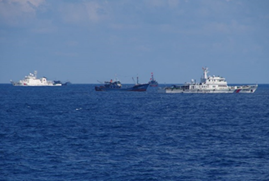
Photo-5: CCG patrol vessels and Chinese fishing boats in the sea area of the Senkaku Islands in August 2016 (Photo: Courtesy of JCG)
Mr. Conor Kennedy of U.S. Naval-War College reported that the PLA Navy mobilized merchant Roll on-Roll off (RO-RO) ships for the landing exercises in amphibious training areas off the coast of Guangdong Province in 2020.[40] The PLA Navy may use these merchant RO-RO ships to cover the shortage of amphibious assault ships for landing operation in case of PLA's Taiwan invasion. Taiwan National Security Bureau also stated on 15 January 2025 that China-linked cargo vessel, the Shunxing-39 damaged an undersea data cable to the north of the island on 3 January 2025.[41] Marine Data Tracking Services showed that the vessel made multiple "figure eights" in the water, which could be an indication that it was dragging its anchor across the seabed to cut the cable. Mobilizing RO-RO ships for amphibious assault operation, and cargo vessels for cable cutting may be new patterns of Chinese maritime militias tactics.
Further, a Chinese man tried to illegally enter northern Taiwan on 14 September 2024 on an inflatable rubber boat (3.6mL) that went undetected by radar systems, raising alarm bells about gaps in the island's coastal defense capabilities amid heightened cross-strait tensions.[42] While the man was spotted by anglers in Tām-tsuí river mouth, he claimed that he had fled China to seek a new life. It was not sure whether he was a militia or not, but the Taiwanese analysts were not ruling out the possibility that the incident could be a part of Beijing's grey-zone tactics against the island. Five other similar incidents occurred in 2025.[43]
Conclusion
As discussed so far, the Chinese Government utilizes maritime militias to oppress Japan, the U.S.A, the Philippines, and Vietnam. But they never actually attacked the JCG crew and the Japanese fishermen. One thing is for sure, the number of Chinese militia fishing boats in December 2025 is about ten times that of the Chinese fishing boats which appeared the East China Sea in 2016. Xi Jinping utilizes the fishing boats to pose a major obstacle to Japan and the United States in the East China Sea. Two thousand fishing boats' row in the East China Sea can be a major barrier to the maritime security cooperation of the Japan-US alliance. No matter what, Xi Jinping wants to stop the US and Japan from getting involved in the Taiwan issue. This is Xi Jinping's "People's War at Sea." But what are they trying to do in the East China Sea? The Chinese maritime militias have quite unsettling aura, which could not be figured out. Careful assessment of their aims and accordingly devising appropriate measures against illegal activities is necessary. Here are the following four points that come to mind.
First, Chinese maritime militia vessels may navigate in a group, or they may tie together with a rope to secure them together in a row, and they navigate together to demonstrate the Chinese presence. This tactic was used by the illegal Chinese fishing boats' crew in the Yellow Sea from 2009 to 2010.[44] They were not the militia, but the group of illegal Chinese fishermen, and used this tactic to prevent the capture by the South Korean Marine Police. The Chinese maritime militia used this tactic in the sea areas of Whitsun Reef of the Spratly Islands in March 2021.[45] They moored the combined fishing boats in the reef, and they began to demonstrate the Chinese presence to other claimants such like the Philippines, though the Chinese militias in the East China Sea may not use this tactic in case of stormy weather.[46]
Second, Chinese militia vessels may utilize drift nets and fixed nets to disturb navigation of foreign ships. They may disturb not only surface ships but also the submarines' navigation. There was a tragic incident in Indian Ocean in 2012. A local fisherman set the fixed net in the Indian Exclusive Economic Zone (EEZ), and an Italian cargo ship approached.[47] The Indian fisherman tried to protect his fishing net, and he fired a gun for warning. An Italian soldier who was on board to escort the cargo ship misunderstood the fisherman as a pirate, and shot him dead. The Chinese maritime militias might do the same. They might disguise themselves as fishermen and using fishing nets to disturb the ships navigation. The South Korean navy once captured the North Korean Yugo class submarine (90 tons and 25 meters length) in July 1998, because the submarine's propeller got tangled in the fishing net.[48] The fishing net can be an obstacle to ship navigation.
Third, Chinese militia vessels may carry and use explosives and weapons. The blast fishing is notorious in the South China Sea, and the Filipino fishermen denounced some Chinese utilized dynamite and cyanide.[49] The Chinese fishermen escalated the environmental degradation of coral reefs in the South China Sea, though some Chinese media made rebuttal.[50] Further, the Chinese maritime militias may use weapons. If so, what is the possible image for this?
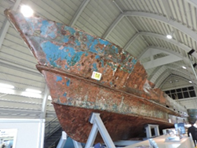
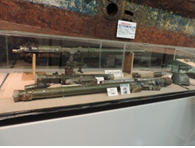
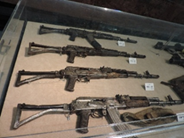
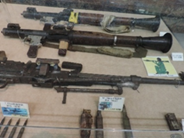
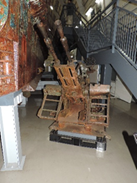
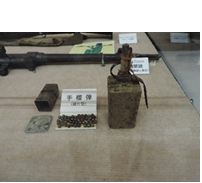
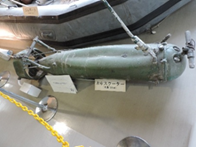
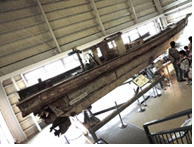
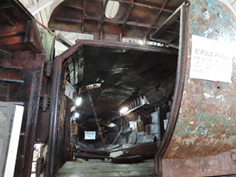
There's a good tip. The Vietnamese Marine Police Delegation visited Japan accompanying the Communist Party General Secretary Nguyễn Phú Trọng from 15 to 18 September 2015. They visited Japan Coast Guard Museum YOKOHAMA on the sidelines of the exchange of maritime cooperation memorandum between Japan and Vietnam.[51] They showed strong interest in the exhibition of North Korean spy ship (Ship Name: Chang Yu 3705, 44 gross tons, 29.68 meters length, 4.66 meters width, speed: 33 knots). The spy ship's appearance was a fishing boat, and it scuttled itself after the shootout with the JCG patrol vessels in the East China Sea on 22 December 2001. It was salvaged in 2002 by the Japanese Government. The spy ship was equipped with a portable surface-to-air missile, a recoilless rifle, rocket-propelled grenades (RPG), automatic rifles, machine guns, hand grenades, and so on (See Appendix:Photo-6~Photo-14).[52] The crew members of the North Korean spy ship attacked the JCG patrol vessels with automatic rifles and rocket-propelled grenades (RPG).
International law includes the principle of the prohibition of the use of force.[53] China cannot use military forces explicitly for the expansion of the Chinese territorial waters in the East and South China Seas, so that they use fishing boats for the maritime conflicts with the neighboring countries. Xi Jinping prefers Chairman Mao Ze Dong's People's War tactics, and the maritime militia is his trump card. It is possible that the Vietnamese Marine Police members considered the North Korean spy ship would be the ultimate model of the militia vessel. This might sound abrupt. But no one knows more about China and North Korea than the Vietnamese. Vietnam has been in constant struggle with China since the Han Dynasty.[54] Vietnam has always anticipated the worst-case scenario and sought ways to survive. For this reason, North Korea's brinkmanship policy can also serve as their reference. We have much to learn.
In the future, we might see combinations of militia boats and drones in the East China Sea. A Filippino fisherman said that China used the surveillance drones in the South China Sea to monitor the Filippino fishing boats in February 2026.[55] It is not sure if the drone was launched from the Chinese militia fishing boat or not, though the number of CCG patrol vessels was limited, and the Chinese militia boat's size in the South China Sea was almost equivalent to the navy corvette (550 tons displacement and 50 meters length). It is possible that militia boats launched the surveillance drones.[56] A large Chinese drone (Yi Long: Wing Dragon) first appeared in the East China Sea in September 2013, and the small drones appeared in May 2017.[57] The large drones were probably flying in from China, and the small drones were probably flying from the CCG vessels. The maritime militia may launch a drone from the fishing boats, too.
Four, Chinese militia vessels may commit deceptions. Many Chinese fishing boats appeared in the Senkaku sea areas committed AIS spoofing, and they disguised themselves as South Korean fishing boats.[58] The Chinese militias may float mines and periscope dummies in the East China Sea.[59] If there is something resembling a mine or a periscope in the sea, it will be big disturbance to sea lines of communications. China may use this tactic to disturb the Japan-US alliance's maritime cooperation in the next Taiwan contingency. Minesweeping and submarine detection require enormous amounts of time and money. Further, it is possible that Chinese trawler equips intelligence device: intelligence trawler.[60] The militia may disguise themselves as castaways, too. This is a tactic of Southeast Asian pirates.[61]
As seen so far, maritime militias can cause various problems, and lack of their information is a problem. That's why Japan and like-minded countries need to establish a maritime security cooperation conference and a maritime security information sharing center under the Free and Open Indo-Pacific (FOIP) framework for the information sharing and maintenance of maritime order in the East and South China Seas including the Taiwan Strait.[62] With regard to a maritime security information sharing center, there is a good precedent, Regional Cooperation Agreement on Combating Piracy and Armed Robbery against Ships in Asia (ReCAAP) Information Sharing Centre: ReCAAP ISC.[63]
The Japanese Government also needs to reconsider its domestic system of maritime defense and security to cope with Xi Jinping's "People's War at Sea." We need to increase the number of coast guard officers and patrol vessels. The JCG patrol vessels must cope with the combined fishing boats, and illegal fishing nets being stretched by the maritime militias. The South Korean Navy deployed navy corvettes to Yellow Sea to cope with the North Korean attack and the Chinese fishing boats in June 2009.[64] If Chinese fishing boats disturb the foreign ships' navigation, or they carry explosives and weapons, JCG crew members must enter the fishing boats for inspections, and the JCG crew members must seize the fishing boats.
If JCG cannot control the Chinese militia boats, Japan must dispatch Maritime Self-Defense Force (MSDF)'s small gunboats and missile boats. Japan must construct many missile corvettes to cope with armed militia boats such like the North Korean spy ship. The Chinese maritime militias may carry out an amphibious assault on the Japanese remote islands: Nansei Islands including the Senkaku Islands. If so, ship inspections will be required not only in the territorial waters but also in the contiguous zone. Japan needs to reconsider the laws and roles of Japan Coast Guard and Maritime Self-Defense Force to cope with maritime militias.[65]
Appendix
|
|
|
Photo-6: North Korean Spy Ship |
Photo-7: Portable Surface-to-Air Missile and |
|
|
|
Photo-8: Automatic Rifles |
Photo-9: Rocket-Propelled Grenades (RPG) |
|
|
|
Photo-10: 14.5mm Machine Gun |
Photo-11: Hand Grenade |
|
|
|
Photo-12: Underwater Scooter |
Photo-13: Onboard Boat |
|
|
|
Photo-14: Stern Double Doors |
|
Notes
[1] The description of this report is based on the author's book: "Maritime Power" China, and Japan, the U.S.A, and ASEAN (『「海洋強国」中国と日・米・ASEAN』), Keiso Shobo Publisher(勁草書房), 2023.
[2] Thousands of Chinese Fishing Boats Quietly Form Vast Sea barriers, The New York Times, 16 January 2026,
https://www.nytimes.com/interactive/2026/01/16/world/asia/china-ships-fishing-militia-blockade.html.
[3] 上田篤盛「民兵」茅原郁生編『中国軍事用語事典』蒼々社、2006年、406‐408頁。
[4] 房功利他『中国人民解放軍 海軍60年(1949-2009)』青島出版社、青島、2009年、115頁、平松茂雄『甦る中国海軍』勁草書房、1991年、56-65頁。
[5] 山本勝也「防衛駐在官の見た中国(その13)=海上民兵と中国の漁民=」https://www.mod.go.jp/msdf/navcol/index.html?c=columns&id=056, accessed 24 February 2026.
[6] Megha Rajagopalan, "China trains 'fishing militia' to sail into disputed waters," Reuters, 1 May 2016,
https://www.reuters.com/article/world/china-trains-fishing-militia-to-sail-into-disputed-waters-idUSKCN0XS0ZI/,
accessed 23 February 2026, 上田篤盛、前掲、アンドリュー・S・エリクソン他編『中国の海洋強国戦略』原書房、2020年、184‐199頁。
[7] 「中華人民共和国兵役法」、https://www.gjxfj.gov.cn/gjxfj/xxgk/fgwj/flfg/webinfo/2016/03/1460585589889665.htm, accessed 23 February 2026.
[8] Andrew S. Erickson and Conor M. Kennedy, "China's Maritime Militia," 2016, p. 2,
https://www.andrewerickson.com/wp-content/uploads/2016/06/Maritime-Militia_Chinas_Erickson-Kennedy_CNA_20160307.pdf, accessed 23 February 2026, 『新時代における中国の国防』国務院新聞弁公室、外聞出版社、2019年、23頁。
[9] Author's interview with a member of Chinese military science academy.
[10] 「全30万人、東シナ海も武装化」『産経新聞』2016年8月17日、James Kraska, "China's Maritime Militia Vessels May Be Military Objectives During Armed Conflict," The Diplomat, July 7, 2020,
https://thediplomat.com/2020/07/chinas-maritime-militia-vessels-may-be-military-objectives-during-armed-conflict/, accessed 23 February 2026.
[11] The author's interview with the Japanese government officer on 23 March 2022, PH Navy expands monitoring as Chinese ships transit nearby, By: Gabryelle Dumalag - @inquirerdotnet, INQUIRER.net / 03:42 PM December 09, 2025,
https://www.inquirer.net/462651/ph-navy-expands-monitoring-as-chinese-ships-transit-nearby/, accessed 10 December 2025.
[12] The author's Interview with the JCG crew on 6 December 2021, 24 March 2023, 7 August 2023, 11 October 2023, and, Gregory B. Poling, Pulling Back the Curtain on China's Maritime Militia, CSIS,
https://csis-website-prod.s3.amazonaws.com/s3fs-public/publication/211118_Poling_Maritime_Militia.pdf?Y5iaJ4NT8eITSlAKTr.TWxtDHuLIq7wR, accessed 31 December 2023.
[13] Hongzhou Zhang and Sam Bateman, "Fishing Militia, the Securitization of Fishery and the South China Sea Dispute," Contemporary Southeast Asia, Vol. 39, No. 2 (August 2017), pp. 288-314.
[14] The author's interview with a Chinese scholar on 23 February 2019.
[15] Hongzhou Zhang and Sam Bateman, op. cit., pp.291-292.
[16] The present writer disagrees with this opinion.
[17] 「尖閣列島に中国漁船群」『朝日新聞』1978年4月13日、1頁、「中国全漁船、領海去る 尖閣周辺」『朝日新聞』1978年4月17日、1頁。
[18] It was published in Hong Kong Newspaper "Ming Pao," and it was translated in Japanese Newspaper, Asahi Shinbun.「尖閣事件 裏に首謀者」『朝日新聞』1978年6月23日、7頁。
[19] "Counter-Coercion Series: Harassment of the USNS Impeccable," Asia Maritime Transparency Initiative, CSIS,
https://amti.csis.org/counter-co-harassment-usns-impeccable/, accessed 23 February 2026.
[20] 『中国安全保障レポート2011』防衛研究所、2012年、37頁、http://www.nids.mod.go.jp/publication/chinareport/pdf/china_report_JP_web_2011_A01.pdf, accessed 30 January 2018.
[21] 『海上保安レポート2011』海上保安庁、2011年、21頁、「最近の日中関係(尖閣諸島をめぐる基本情報及び最近の中国漁船衝突事件)」『外務省』、平成22年10月、https://www.mofa.go.jp/mofaj/area/china/pdfs/senaku-gyosen_1010.pdf, accessed 9 March 2026.
[22] 「中国人乗組員 聴取」『朝日新聞』2010年9月9日、26頁。
[23] 「中国拘束の日本人4人はフジタ社員、20日から取り調べ」『朝日新聞』電子版2010.9.24、http://www.asahi.com/special/senkaku/TKY201009240176.html, accessed 22 December
2012.
[24] There was a maritime joint development plan including the sea area of the median line between Japan and China in 2008. The incident of Mǐn jìn yú 5179 eliminated the chance for Japan-China rapprochement. 薮中三十二『世界に負けない日本』PHP新書、2016年、137‐143頁。
[25] Full text of Hu Jintao's report at 18th Party Congress, 2012-11-27 00:27,
https://iq.china-embassy.gov.cn/eng/zt/zfgcdsbd/201211/t20121127_2517623.htm, accessed 24 February 2026.
[26] 「国務院擬重新組建国家海洋局」『国家海洋局』2013.3.11(機構改革により閉鎖)、「中国の特色ある海上法執行機関が整備」『中国網 日本語版』、http://japanese.china.org.cn/politics/txt/2013-03/11/content_28205169.htm, accessed 21 February 2026.
[27] 「習近平在海南考察:加快國際旅游島建設 譜寫美麗中國海南篇」『人民網』2013年4月11日、https://cpc.people.com.cn/BIG5/n/2013/0411/c64094-21093668.html, accessed
21 February 2026.
[28] "Vietnam demands China withdraw from territorial waters," VietnamPlus, May 6, 2014,
https://en.vietnamplus.vn/vietnam-demands-china-withdraw-from-territorial-waters/60007.vnp, accessed May 7, 2014,
「中国、南シナ海で石油掘削 ベトナム船と衝突、緊張」『朝日新聞』2014年5月8日、1頁。
[29] Carl Thayer, "4 Reasons China Removed Oil Rig HYSY-981 Sooner Than Planned," The Diplomat, July 22, 2014, accessed August 13, 2014.
[30] Author's hearing from the Chinese scholar on 3 September 2015.
[31] It is said that Tanmen Maritime Militia was established in August 1985, and Quanzhou Ocean Institute was established in 2009. 「海南瓊海潭門鎮海上民兵連副連長王書茂——"繼續守好祖國南大門"」『中国共産党新聞網』2018年12月26日、http://dangjian.people.com.cn/BIG5/n1/2018/1226/c117092-30488112.html, accessed 23 February 2026, 「我校国防教育基地正式投入使用」『泉州海洋職業学院』2020年6月5日、https://www.qzoi.edu.cn/info/1331/7311.htm, accessed 21 February 2026, Behind the
Curtain: An Update on Hainan's Maritime Militia, Asia Maritime Transparency Initiative, 12 December 2024,
https://amti.csis.org/behind-the-curtain-an-update-on-hainans-maritime-militia/, accessed 12 January 2025,
樊子賢「「国境」に立つ潭門漁民」『アジア太平洋研究科論集』No. 48(2024.9)、p.32, 『泉州海洋職業学院』https://www.gaoxiaojob.com/company/detail/17.html, accessed 28 February
2026.
[32] 「媒体聚焦 | 《国防教育》:向海图强勇担当——泉州海洋职业学院大力开展国防教育纪实」『泉州海洋職業学院』2024年1月9日、https://www.qzoi.edu.cn/info/1331/18751.htm, accessed 21
February 2026.
[33] South China Sea Arbitration Ruling: What Happened and What's Next? U.S.-China Economic and Security Review Commission, 12 July 2016,
https://www.uscc.gov/research/south-china-sea-arbitration-ruling-what-happened-and-whats-next, accessed 28 February 2026,
「日・ベトナム首脳会談」『外務省』2016年7月15日、http://www.mofa.go.jp/mofaj/s_sa/sea1/vn/page4_002180.html、「ヤサイ・フィリピン外務大臣による安倍総理表敬」『外務省』2016年7月15日、http://www.mofa.go.jp/mofaj/s_sa/sea2/ph/page4_002178.html, accessed March 29, 2017.
[34] 「尖閣諸島周辺の中国海警船舶等に関する中国側への申し入れ」『外務省』2016年8月6日、http://www.mofa.go.jp/mofaj/press/release/press4_003572.html, accessed August
6, 2016, and the author's interview with the government official on 13 September, 2016 and on 20 June, 2018.
[35] 「尖閣漁船に中国民兵」『産経新聞』2016年8月17日、1頁。
[36] Author's interview with the Chinese scholar specialized in military affairs on 25 January 2017.
[37] 「学院隆重举行2018级新生开学典礼暨军训阅兵仪式」『泉州海洋職業学院』2018年9月14日、https://www.qzoi.edu.cn/xgb/info/1271/7832.htm, accessed 21 February 2026.
[38] 「豪軍のヘリにレーザー照射 南シナ海 中国?漁船」『朝日新聞』2019年5月30日、9頁、「中国艦、豪機のレーザー照射」『読売新聞』2022年2月21日、7頁、Marcos summons Chinese envoy over 'military-grade laser' incident," Philippine News Agency, 14 February 2023,
https://www.pna.gov.ph/articles/1195226, accessed 12 March 2026.
[39] 「中国軍艦、カナダ艦に接近 東シナ海で日米と演習中」『共同通信』2023年9月8日。
[40] Conor Kennedy, Ramping the Strait: Quick and dirty Solutions to Boost Amphibious Lift, CHINA BRIEF, Vol. 21, Issue 14, 16 July 2021,
https://jamestown.org/ramping-the-strait-quick-and-dirty-solutions-to-boost-amphibious-lift/, accessed 9 March 2026.
[41] Taiwan to scrutinise ships with 'flags of convenience,' Straits Times, 16 January 2025, p. A6.
[42] Chinese man enters Taiwan on boat, raising alarm about island's defence, Straits Times, 17 September 2024, p. A7.
[43] 「有關「北部分署偵辦2名中國籍人士搭乘橡皮艇從觀音海水浴場左側沙灘上岸」一案,北部分署說明如下:」『海洋委員会海巡署金馬澎分署』2025.5.16、https://www.cga.gov.tw/GipOpen/wSite/ct?xItem=165046&ctNode=8195&mp=9996, accessed 17 May 2025.
[44] 「違法操業の中国漁船団、合体して取り締まりに対抗」『AFP』2010年12月23日、https://www.afpbb.com/articles/-/2780566, accessed 2 March 2026, Straits Times, 24 December 2010.
[45] "Over 200 Chinese vessels moored at West Philippine Sea reef," Philippine Daily Inquirer, 21 March 2021,
https://globalnation.inquirer.net/194406/over-200-chinese-vessels-moored-at-west-philippine-sea-reef, accessed 21 March
2021.
[46] A Japanese scholar pointed out, "In some case, the distance between the two Chinese fishing boats was less than 500m, and it seemed to be dangerous." 「中国漁船2000隻が東シナ海で「異常な隊列」 2025年末、26年1月にも」『日本経済新聞』2026.2.17,
https://www.nikkei.com/article/DGXZQOCA091L30Z00C26A2000000/, accessed 8 March 2026.
[47] The author's interview with the director of International Maritime Bureau (IMB) Piracy Reporting Centre in Kuala Lumpur on 19 March 2012.
[48] 「漁網にかかり捕獲 北朝鮮潜水艇で九人自決 韓国東岸」『AERA』1998年7月6日、61頁。
[49] In isolated South China Sea territory, Filipino fisherman see 'dwindling catch,' Benar News, 28 March 2024,
https://www.rfa.org/english/news/southchinasea/coral-reefs-dynamite-fishing-west-philippine-sea-03282024154836.html, accessed 4 March 2026.
[50] "How the Philippines is destroying South China Sea's ecological environment," People's Daily Online, 17 July 2024,
https://en.people.cn/n3/2024/0717/c90000-20194474.html, accessed 4 March 2026.
[51] The author's interview with a Vietnamese diplomat on 15 December 2015.
[52] Leaflet of Japan Coast Guard Museum YOKOHAMA, https://www.kaiho.mlit.go.jp/03kanku/kouhou/jcgm_yokohama/PDF/20230112var.leaflet.pdf,
accessed 4 March 2026.
[53] The Charter of the United Nations, article2(4), https://legal.un.org/repertory/art2/english/rep_supp7_vol1_art2_4.pdf, accessed 23 March 2026.
[54] The history of Vietnam is characterized by subjugation to and rebellion against China. Motoo Furuta, Vietnam in the Context of World History: From Chinese World Order to Joining Southeast Asia, University of Tokyo Press, 1995.
[55] Philippine officials visit S. China Sea amid Chinese pressure, Straits Times, 24 February 2026, A8.
[56] A former JMSDF officer told the present writer on 18 March 2026, "We shall understand that Chinese fishing boats have already become the mother ship of the drones."
[57] 「領空侵犯の無人機、撃墜も政府が検討 中国は反発」『ハフポスト』2019年9月18日、https://www.huffingtonpost.jp/2013/09/18/mujinki-china_n_3946036.html,
accessed 24 March 2026、「中国の無人機運用急増」『読売新聞』、2023年2月27日、1頁。
[58] Author's interview with a former JCG member on 19 January 2024.
[59] Lyle Goldstein and William Murray, Undersea Dragons, International Security, Vol. 28, No. 4 (Spring 2004), pp.161-196.
[60] Norman Polmar, U.S. Navy: American Spy Ships, U.S. Naval Institute, October 2003 Vol. 129/10/1,208,
https://www.usni.org/magazines/proceedings/2003/october/us-navy-american-spy-ships, accessed 15 March 2026.
[61] 読売新聞社会部『マラッカ海賊海峡』WAC、2000年、205頁。
[62] The author several times suggested the South China Sea Maritime Security Information Sharing Center (MSISC), but this idea shall be expanded to the East China Sea and the Taiwan Strait.
「インドネシアでの国際会議『東アジアの海洋安全保障――地域的、実務的協力』(世界平和研究所・インドネシアCSIS共催)」、2017/03/23、https://npi.or.jp/research/2017/03/23125618.html,
accessed 12 March 2026, Koichi SATO, The battle of the Philippines and Japanese Support in the South China Sea, RIPS Newsletter, "East Asian Maritime Security, Vol.5,"
https://www.rips.or.jp/en/newsletter/vol-5-september-5-2024/, accessed 8 March 2026.
[63] ReCAAP ISC, https://www.recaap.org/, accessed 6 March 2026.
[64] 「黄海の中国漁船、大半撤収」『時事通信』2009年6月16日、https://www.jiji.com/jc/v2?id=20090616north_korea_vol2_32, accessed 5 March 2026.
[65] A new bill for maritime security is needed. The key is Basic Act on Ocean Policy, especially Article 21 and Article 26. It was suggested by Late Professor Soji Yamamoto at the Meeting of JCG Policy Advisers nearly twenty years ago, though it has not been legislated
due to the negligence of later generations.
Acknowledgement: Author sincerely thanks the Japan Coast Guard for providing the materials.
Views expressed or implied in this article are solely those of the author. They must not be construed as representing the views and positions of RIPS or any other organizations.
Statistical Data and Analysis (as of February 27)
In the latter half of this month, Japan’s foreign and defense ministers visited Germany for the Munich Security Conference. The foreign minister attended the G7 Foreign Ministers’ Meeting and met with the NATO secretary-general and the foreign ministers of the United States and Germany, reaffirming the importance of international coordination. He also joined a panel discussion, stressing the need to uphold a free and open international order based on the rule of law. The defense minister met with the NATO secretary-general and the defense ministers of the United Kingdom, New Zealand, Italy, and Canada, emphasizing that Euro-Atlantic and Indo- Pacific security are inseparable and pledging close cooperation. He also delivered a speech on Japan’s security policy and participated in a dialogue on the main stage of the Munich Security Conference.
Japan’s Ministry of Defense also held the Japan–Pacific Islands Defense Dialogue (JPIDD), inviting Pacific Island countries, regional partner countries, and ASEAN countries. Through this meeting of defense ministers, discussions deepened mutual trust and confirmed stronger cooperation in addressing shared challenges.
Separately, plans were announced to increase the deployment of the United States’ advanced missile systems in the Philippines.
[Statistical Data as of February 27]
The Japan Coast Guard (JCG) daily updates the statistical data on the number of China Coast Guard vessels entering in the contiguous zone around the Senkaku Islands and intruding into Japanese territorial waters. The below is from the website of the JCG.
https://www.kaiho.mlit.go.jp/mission/senkaku/senkaku.html
| Feb. | Contiguous zone |
Territorial Waters |
Feb. | Contiguous zone |
Territorial Waters |
|
|---|---|---|---|---|---|---|
| 13 | 4 | 20 | 2 | |||
| 14 | 4 | 21 | 4 | |||
| 15 | 4 | 22 | 4 | |||
| 16 | 4 | 23 | 4 | |||
| 17 | 4 | 24 | 4 | |||
| 18 | 4 | 25 | 4 | |||
| 19 | 4 | 26 | 4 |
Topics
| Date | Topics |
|---|---|
| 3/13 |
Monthly Statistics on Scrambles(February) The Japan Joint Staff released its monthly statistics on scrambles. In February, the Japan Air Self Defense Force (JASDF) conducted 54 scrambles. The most scrambles were against Russian aircraft (27 times), followed by Chinese aircraft (26 times). Japan Joint Staffhttps://www.mod.go.jp/js/pdf/2026/p20260313_01.pdf |
| 3/15 |
Taiwan's defense ministry said on March 15 that Chinese military flights near the island surged after a two-week drop. On March 14, 26 aircraft were detected, 16 entering the Air Defense Identification Zones, and seven naval ships were spotted. No flights crossed the median line from Feb. 27 to March 5; after two on March 6, none were seen for four days. Small numbers resumed between March 11 and 13. The drop puzzled analysts. While such dips often occur during major events, this year's was sharper. They said the legislature meeting alone couldn't explain it; other factors may include easing tensions with Washington before the U.S. President's visit (March 31–April 2) or a shift in China's military training, with the army testing a new joint-exercise model. The Associated Presshttps://apnews.com/article/china-taiwan-planes-military-decline-surge-c7a1dfa0bd5fba6b74ccf430a422c178 |
| 3/16 |
On March 16, two China Coast Guard vessels entered Japan's territorial waters off the Senkaku Islands in Okinawa Prefecture. Their hull numbers are 1401 and 1307 (Source: the JCG). According to the JCG, as the Chinese vessels attempted to approach a Japanese fishing boat, the JCG moved to ensure the boat's safety and warned the Chinese vessels to leave the waters. It is the first confirmed entry since February 10 that Chinese government vessels have sailed into the waters around the Senkaku Islands. Note: The hull numbers reported above are taken from a JCG press release. Jiji Press Newshttps://sp.m.jiji.com/english/show/46413 |
| 3/16 |
On March 15, the Japan Maritime Self Defense Force (JMSDF) confirmed one Russian Udaloy Ⅲ class destroyer (hull number 543) sailing northeast in waters 70km south of Yonagunijima Island (Okinawa Prefecture). This vessel sailed northeast through the waters between Yonagunijima Island and Iriomotejima Island (Okinawa Prefecture) and navigated to the East China Sea. 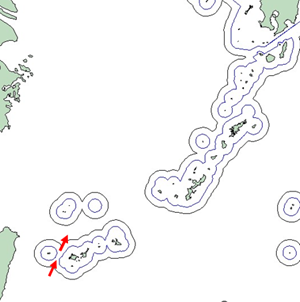 https://www.mod.go.jp/js/pdf/2026/p20260316_01.pdf |
| 3/16 |
On March 16, the Joint Committee under the Japan-EU Strategic Partnership Agreement (SPA) was held in Tokyo. It was co-chaired by Director-General for European Affairs of Japan's MOFA and the EEAS Managing Director for Asia-Pacific. In this joint committee, the two sides reaffirmed the importance of close cooperation as strategic partners. They reviewed the implementation of the Strategic Partnership Agreement, including the Japan-EU Security and Defense Partnership, and discussed sectoral cooperation. They also exchanged views on regional issues of mutual interest and agreed to continue close cooperation both bilaterally and in the international community. Ministry of Foreign Affairs of Japanhttps://www.mofa.go.jp/erp/ep/pagewe_000001_00347.html |
| 3/16 |
On March 16, Japan's Foreign Minister received a courtesy call by the ASEAN Committee in Tokyo (ACT). Japan's minister noted that Japan places great importance on its relations with ASEAN as a key partner in realizing a Free and Open Indo-Pacific (FOIP). He further noted that, amid intensifying geopolitical competition and a shifting international order, Japan will continue to evolve FOIP. He added that Japan will respect ASEAN centrality and unity and promote cooperation with the ASEAN Outlook on the Indo-Pacific (AOIP) to advance Japan–ASEAN relations. Ministry of Foreign Affairs of Japanhttps://www.mofa.go.jp/press/release/pressite_000001_02181.html |
| 3/17 |
On March 16, the Philippines rejected Beijing's claim to the entire South China Sea, responding to a Chinese embassy social media post claiming a former Filipino diplomat had conceded Scarborough Shoal was not part of Philippine territory. A Philippine foreign ministry spokesperson said maritime claims are settled under international law, not through unilateral proclamations or social media. In 2016, the Philippines won a landmark case at the Permanent Court of Arbitration, which found China's claim had no legal basis —a ruling Beijing continues to reject. On March 17, the Chinese embassy in Manila said on social media that China "has never laid claim" to the entire South China Sea, saying, "The Philippine's deliberate distortion of China's position is unconstructive and has no merit." Reutershttps://www.reuters.com/world/china/philippines-rejects-beijings-claim-sovereignty-over-south-china-sea-2026-03-16/ |
| 3/17 |
On March 17, the JMOD–MINDEF Policy Talks (Japan–Singapore Defense Authorities Consultation) were held in Tokyo. The Japanese delegation was led by the Deputy Director General for the Bureau of Defense Policy, and the Singapore delegation by the Deputy Secretary (Policy). They exchanged views on regional affairs and discussed the future of Japan–Singapore defense cooperation and exchanges, as well as other relevant issues. Ministry of Defense of Japanhttps://www.mod.go.jp/en/article/2026/03/2c07f3ecced2f63ccd020d4b1b00c3fa007e6753.html |
| 3/17 |
On March 17, two Chinese Coast Guard vessels left Japan's territorial waters off the Senkaku Islands. Their hull numbers are 1401 and 1307 (Source: the JCG). The previous day, they had entered the waters and attempted to approach a Japanese fishing boat operating there. Note: The hull numbers reported above are taken from a JCG press release. Jiji Press News (Japanese)https://www.jiji.com/jc/article?k=2026031701199&g=pol |
| 3/18 |
On March 9, the Commandant of the JCG and the Commandant of the U.S. Coast Guard met in Washington, D.C. They welcomed the growing cooperation between the two agencies and discussed their roles in the increasingly complex international environment. They also reaffirmed the importance of bilateral and minilateral cooperation through their joint initiative, the "Solid Alliance for Peace and Prosperity with Humanity and Integrity on the Rule-of-law Based Engagement (SAPPHIRE)," to uphold a rules-based maritime order, and agreed to continue to promote it. Japan Coast Guard (Japanese)https://www.kaiho.mlit.go.jp/info/kouhou/post-1295.html |
| 3/18 |
On March 17, the JMSDF confirmed one Russian Udaloy Ⅲ class destroyer (hull number 543) sailing northeast in waters 110km southwest of Tsushima Island (Nagasaki Prefecture). From March 17 to 18, this vessel sailed northeast through the Tsushima Strait and navigated to the Sea of Japan. 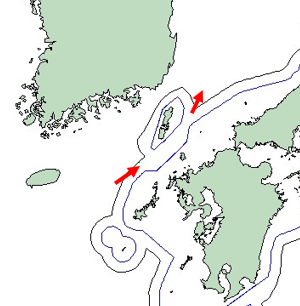 https://www.mod.go.jp/js/pdf/2026/p20260318_02.pdf |
| 3/18 |
On March 17, Japan's State Minister for Foreign Affairs met with Sri Lanka's Deputy Minister of Defence. Japan's state minister stated that Japan is committed to promoting security cooperation, including through OSA (Official Security Assistance) provided to Sri Lanka for the first time last year, to contribute to regional peace and stability and a Free and Open Indo-Pacific (FOIP). In response, Sri Lanka's deputy minister expressed gratitude for Japan's continued cooperation and friendship and said he hopes to further strengthen security cooperation with Japan. Ministry of Foreign Affairs of Japanhttps://www.mofa.go.jp/s_sa/sw/lk/pageite_000001_00001.html |
| 3/18 |
On March 18, Japan's Defense Minister held a meeting with Sri Lanka's Deputy Defence Minister in Tokyo. Japan's minister said that amid a new era of crises, the importance of stronger defense cooperation with Sri Lanka is growing to realize a "Free and Open Indo-Pacific (FOIP)." In response, Sri Lanka's deputy minister said the country's location is critical and that it bears significant responsibility, especially in maritime security, for FOIP, and expressed his intention to deepen cooperation, including in defense. They exchanged views on regional issues, welcomed steady progress in defense cooperation and exchanges, and agreed to strengthen cooperation with urgency. Ministry of Defense of Japanhttps://www.mod.go.jp/en/article/2026/03/607a48dc3730c8d7738623feefcdb4e4d2e2bee1.html |
| 3/18 |
On March 18, the Japan–Singapore Summit Meeting was held. The two leaders agreed to elevate Japan–Singapore relations to a "Strategic Partnership," identifying priority areas including security and defense, and issued a joint statement on cooperation. They affirmed the importance of deepening ties as like-minded countries supporting a rules-based, free, and open international order. Japan's Prime Minister expressed determination to advance FOIP initiatives to strengthen national autonomy amid rising geopolitical competition. Singapore's Prime Minister appreciated Japan's contributions to Indo-Pacific peace and stability and hoped for further collaboration. They also discussed international issues, including in the Indo-Pacific. Japan's prime minister, noting ASEAN's key role in FOIP, expressed the desire to deepen collaboration with Singapore, next year's ASEAN Chair. They agreed to advance efforts supporting the ASEAN Outlook on the Indo-Pacific (AOIP). Ministry of Foreign Affairs of Japanhttps://www.mofa.go.jp/s_sa/sea2/sg/pageite_000001_01534.html |
| 3/18 |
On March 18, four Chinese Coast Guard vessels entered Japan's territorial waters off the Senkaku Islands. Their hull numbers are 1307, 1401, 1303 and 1302 (Source: the JCG). According to the JCG, after sailing for under two hours, the vessels left the territorial waters. Note: The hull numbers reported above are taken from a JCG press release. Jiji Press Newshttps://sp.m.jiji.com/english/show/46497 |
| 3/19 |
On March 18, the 2026 Annual Threat Assessment of the U.S. Intelligence Community said Japan's Prime Minister Takaichi's remarks on a Taiwan contingency marked a significant shift. It added that her view is noteworthy, as it would justify Japan's involvement. Takaichi said her views align with past policy, and on March 19, Japan's Chief Cabinet Secretary said, "The comment [in the report] is not accurate." He said, "The government's position, in which it makes judgments by synthesizing all information for specific circumstances, has remained consistent." The report noted China worries her remarks could boost Taiwan's independence movement and may respond with economic pressure and increased military activity near the Senkaku Islands, where the risk of accidental escalation could increase. The report says China is steadily, though unevenly, building the capabilities needed to seize Taiwan and counter U.S. intervention. It also says China is not planning a 2027 invasion, preferring peaceful unification, and that Chinese officials recognize an amphibious invasion of Taiwan would be extremely difficult and risky, especially if the U.S. intervenes. Kyodo Newshttps://english.kyodonews.net/articles/-/72562 Yomiuri Shimbun News https://japannews.yomiuri.co.jp/politics/defense-security/20260320-317550/ Reference: 2026 ANNUAL THREAT ASSESSMENT OF THE U.S. INTELLIGENCE COMMUNITY https://www.dni.gov/files/ODNI/documents/assessments/ATA-2026-Unclassified-Report.pdf |
| 3/19 |
On March 19, Japan-U.S. summit meeting was held in Washington D.C. Japan's prime minister praised President Trump's commitment to the alliance amid a worsening Indo-Pacific security environment and called for deeper cooperation for mutual prosperity. She reaffirmed her commitment to advancing the "Free and Open Indo-Pacific (FOIP)" as a pillar of Japan's diplomacy. Both leaders pledged continued cooperation and stressed the importance of strengthening networks among like-minded partners, including Japan-U.S.-ROK, Japan-U.S.-Philippines, and Japan-Australia-India-U.S. The two leaders exchanged views on China and reaffirmed close Japan-U.S. coordination. Building on mutual trust, they agreed to advance high-quality cooperation to strengthen the alliance and expand a broad range of security cooperation, including missile co-development and co-production to enhance deterrence and response capabilities. Ministry of Foreign Affairs of Japanhttps://www.mofa.go.jp/na/na1/us/pageite_000001_00007.html Reference: The White House https://www.whitehouse.gov/fact-sheets/2026/03/fact-sheet-president-donald-j-trump-strengthens-u-s-japan-alliance-for-the-benefit-of-all-americans/ |
| 3/19 |
On March 19, Japan's Foreign Minister exchanged views with the Vice President of the U.S. in Washington D.C. They exchanged views on recent international developments, particularly in East Asia and China's activities. Japan's minister emphasized that, as neighbors, Japan and China face various challenges, making dialogue essential, and stated that Japan remains open to it. He highlighted issues such as Taiwan and attempts to unilaterally change the status quo by force or coercion in the East and South China Seas. They also agreed to further expand Japan-U.S. cooperation. Ministry of Foreign Affairs of Japanhttps://www.mofa.go.jp/na/st/pageite_000001_00008.html |
| 3/19 |
On March 11, a Japan-Australia-Philippines-United States officials' policy seminar was held in Tokyo, marking the first meeting of working-level defense officials from the four countries. Participants held in-depth discussions on cooperation and coordination to enhance deterrence, considering various security challenges in the Indo-Pacific. Ministry of Defense of Japanhttps://www.mod.go.jp/en/article/2026/03/248ff19b95585827b47094b3d3514534b3371fff.html |
| 3/20 |
On March 20, the Philippine military accused a Chinese navy ship of aiming its fire-control radar at a Philippine guided missile frigate on patrol near Sabina Shoal in the South China Sea on March 7. Fire-control radar locates targets for missiles or shells. "This was an alarming and provocative action that created unnecessary risk and could have led to misinterpretation at sea," it said. "Although the situation did not escalate, the incident highlights the need for restraint and professionalism," the armed forces added. Reuters (The Straits Times)https://www.straitstimes.com/asia/se-asia/philippines-accuses-chinese-navy-ship-of-alarming-radar-lock-on-its-vessel |
| 3/22 |
On March 22, Japan-Germany Defense Ministerial Meeting was held in Yokosuka. They concurred that, when necessary to ensure the security of both countries and regional stability, Japan and Germany would consult and consider appropriate responses through regular consultations. They welcomed the steady expansion of bilateral defense cooperation and exchanges, discussed regional security issues including the Indo‑Pacific, and confirmed continued close coordination. They affirmed their intention to further deepen Japan–Germany defense cooperation and exchanges in various forms, under their shared recognition that security in the Euro‑Atlantic and Indo‑Pacific regions is inseparable. Ministry of Defense of Japanhttps://www.mod.go.jp/en/article/2026/03/5444e7191cb6f64e651c9bd3a7732040d27fe523.html |
| 3/24 |
Fishing vessels from the Yaeyama Fisheries Cooperative have resumed operations in the waters around the Senkaku Islands. Amid tensions between Japan and China, the JCG had initially asked the Cooperative to refrain. However, according to an official from Ishigaki City, Okinawa Prefecture, in late February, the JCG indicated they would permit it after a consultation. On March 16, two Chinese Coast Guard vessels entered Japanese territorial waters near the Senkaku Islands and attempted to approach a Japanese fishing vessel, believed to be from the Yaeyama Fisheries Cooperative and operating there. Sankei Shimbun News (Japanese)https://www.sankei.com/article/20260324-WHKGYTDFVZKVPCKQHQD6MLPC4E/ |
| 3/24 |
China is conducting extensive undersea mapping across the Pacific, Indian, and Arctic Oceans, building knowledge of marine conditions that experts say is vital for submarine warfare against the United States and its allies. One example is the Chinese research vessel Dong Fang Hong 3, which in 2024–2025 operated near Taiwan and Guam, checked ocean sensors near Japan in late 2024, and in March 2025 criss-crossed the Indian Ocean between Sri Lanka and Indonesia, covering approaches to the Malacca Strait, according to ship-tracking data and Ocean University of China. While officially conducting scientific research, including seabed surveys, the vessel has also carried out deep-sea mapping, which experts say helps China better deploy submarines and detect adversaries' submarines. Reutershttps://www.reuters.com/investigations/china-is-mapping-ocean-floor-it-prepares-submarine-warfare-with-us-2026-03-24/ |
| 3/25 |
Satellite imagery shows China is rapidly reclaiming about 1,490 acres at Antelope Reef in the South China Sea's Paracels, most since October. Antelope Reef is comparable to China's largest artificial island there, Mischief Reef, and two-thirds the size of nearby Woody Island, and already large enough to host infrastructure seen on those militarized features, including coastal defenses, surface-to-air missiles, and electronic warfare systems, CSIS says. Analysts say the outpost could strengthen Beijing's power projection. According to AMTI's features (CSIS), "It provides incremental, not monumental, gains." The report added, "While it may not greatly alter the strategic picture, it signals Beijing's ability to expand its occupied features, a message likely aimed at Hanoi, which continues reclamation in the Spratlys." Newsweekhttps://www.newsweek.com/satellite-photos-china-manmade-island-disputed-waters-antelope-reef-11733191 |
| 3/26 |
On March 25, a Philippine Army spokesperson said Japan Ground Self-Defense Force personnel will participate in the annual Salaknib army drills with the Philippines and the US in April, with Australia also joining. Japan has usually participated in roles such as observers, but this will be the first post-war joint exercise with full on-the-ground combat involvement. This marks deepening ties between Manila and Tokyo's armed forces amid maritime disputes with Beijing in the East and South China Seas. Bloomberghttps://www.bloomberg.com/news/articles/2026-03-26/japan-to-join-army-drills-on-philippine-soil-in-first-since-wwii |
| 3/26 |
On March 26, the Japan-EU Foreign Ministerial Strategic Dialogue was held in France. Japan's minister stressed that, amid a worsening security environment, Japan and the EU should maintain close communication and cooperation as trusted partners, and expressed a desire to elevate ties in the political and security fields. The EU's high representative echoed this, seeking stronger relations. Japan's minister stressed the need to deepen strategic cooperation, noting the inseparability of Euro-Atlantic and Indo-Pacific security and rising transnational challenges. The EU's high representative agreed, and both sides committed to strengthening cooperation under the Japan-EU Security and Defence Partnership. They exchanged candid views on regional affairs, including the Indo-Pacific, and reaffirmed close cooperation including through multilateral frameworks such as the G7. Ministry of Foreign Affairs of Japanhttps://www.mofa.go.jp/erp/ep/pageite_000001_01551.html |
| 3/26 |
On March 26, the Japan-France Foreign Ministers' Meeting was held in France. Japan's minister emphasized the importance of relations with France, an "Exceptional Partner," and expressed a desire to work closely to elevate ties and address international challenges. The French minister echoed this, seeking closer collaboration amid the challenging international situation. They agreed to elevate Japan-France relations across a broad range of areas, including security and defense. They exchanged views on various international issues, including the Indo-Pacific, and concurred to continue close cooperation. Ministry of Foreign Affairs of Japanhttps://www.mofa.go.jp/erp/erp_1/fr/pageite_000001_01549.html |
| 3/26 |
On March 26, the Japan-UK Foreign Ministers' Meeting was held in France. Japan's minister expressed his hope to elevate Japan-UK cooperation and work together to address international challenges. UK's minister echoed this, seeking to further strengthen Japan-UK ties. They agreed to continue advancing concrete security cooperation and exchanged views on international issues, including the Indo-Pacific, reaffirming close cooperation. Ministry of Foreign Affairs of Japanhttps://www.mofa.go.jp/erp/erp_1/gb/pageite_000001_01553.html |
| 3/26 |
On March 26, the Japan-Germany Foreign Ministers' Informal Talks were held in France. Japan's minister noted the growing importance of cooperation with like-minded countries and emphasized strengthening ties with Germany. The German minister agreed, and both sides concurred to continue close cooperation across a wide range of areas, including security and defense. They exchanged views on international issues, including the Indo-Pacific, reaffirming close cooperation. Ministry of Foreign Affairs of Japanhttps://www.mofa.go.jp/erp/erp_2/de/pageite_000001_01554.html |
| 3/26 |
On March 26, Japan's Senior Deputy Minister for Foreign Affairs held a meeting with U.S. Under Secretary of State for Political Affairs in France. They exchanged views on the international situation, discussed shared interests, and led a U.S.-Japan FOIP Dialogue to discuss priorities and align approaches in the Indo-Pacific. The Japanese side outlined its perspective on strategically advancing the FOIP concept on its 10th anniversary. Both sides confirmed the importance of concrete joint initiatives and cooperating with third countries to enhance regional autonomy and resilience. They decided to further advance cooperation with like-minded countries. They also committed to regular engagement, including the second U.S.-Japan FOIP Dialogue later this year. Ministry of Foreign Affairs of Japanhttps://www.mofa.go.jp/press/release/pressite_000001_02215.html |
| 3/27 |
On March 26, the Armed Forces of the Philippines' Western Command (Wescom) said a Philippine Navy ship avoided a collision after a Chinese frigate made a dangerous maneuver near Pag-asa Island in the West Philippine Sea on March 25. It said the unsafe and unprofessional close approach as a violation of international collision regulations, but said the measured response prevented escalation and ensured safety, and urged China to adhere to international rules to prevent similar incidents. The Philippine News Agencyhttps://www.pna.gov.ph/articles/1271907 |
| 3/27 |
On March 26, the Philippines and France signed a visiting forces agreement allowing joint military training in each other's territory, as Manila expands defense ties amid South China Sea tensions. The Philippine defense department said the deal would boost cooperation and provide legal protection for joint activities. The Philippines has similar agreements with the U.S., Australia, Japan, and New Zealand. Reutershttps://www.reuters.com/world/china/philippines-france-sign-military-pact-amid-south-china-sea-tensions-2026-03-27/ |
| 3/27 |
On March 27, the Japan Joint Staff confirmed two Russian patrol aircraft flying from the Pacific Ocean through the Sea of Okhotsk toward the Sea of Japan. The aircraft flew to the area off the coast of Akita Prefecture, then turned back and flew toward the
continent. 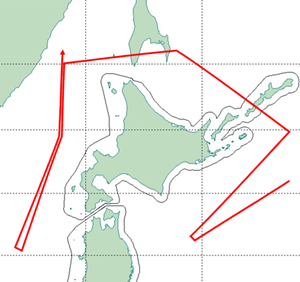 https://www.mod.go.jp/js/pdf/2026/p20260327_01.pdf |
| 3/27 |
On March 27, Japan's foreign minister attended the G7 Foreign Ministers' Meeting session on "Cross-cutting Threats and Sovereignty" in France. In this session, the G7 foreign ministers and invited countries discussed cross-cutting threats, including maritime and port security, and reaffirmed their commitment to cooperation with like-minded countries. Japan's minister emphasized the security of sea lanes and port infrastructure, and introduced Japan's regional FOIP initiatives, including capacity-building assistance, noting plans to further expand them. Ministry of Foreign Affairs of Japanhttps://www.mofa.go.jp/fp/pc/pageite_000001_01542.html |
| 3/27 |
On March 27, Japan's foreign minister attended the G7 Foreign Ministers' Meeting session on "Peace and Security" in France. In this session, the G7 members exchanged candid views on regional situations affecting international peace and security, including the Indo-Pacific, and reaffirmed the importance of close communication and cooperation amid a worsening security environment. Regarding the Indo-Pacific, Japan's minister explained Japan's position on recent developments concerning China, including Japan-China relations. Ministry of Foreign Affairs of Japanhttps://www.mofa.go.jp/fp/pc/pageite_000001_01545.html |
| 3/27 |
From March 25 to 27, the ADMM-Plus Experts' Working Group on Maritime Security was held in Tokyo and via videoconference. In preparation for the Joint Cooperative Activity (JCA) at sea, the culminating event of the current EWG cycle, a Table-Top Exercise (TTX) focused on maritime activities, including disaster response and marine environmental protection. Participants discussed future maritime cooperation and shared perspectives to further enhance it. Ministry of Defense of Japanhttps://www.mod.go.jp/en/article/2026/03/c0758950dfa74aa483c105e3890fdc0e3add8242.html Reference: ADMM-Plus Experts' Working Group on Maritime Security https://www.mod.go.jp/en/article/2021/12/8f7d4a67327a2d86856123c6fb00cb1a6e0cb2af.html |
| 3/29 |
According to ingeniSPACE and GFW data, from March 1 to 3, around 1,200 Chinese fishing vessels formed an inverted L-shaped formation stretching about 350 kilometers near the median line between Japan and China in the East China Sea. This follows similar movements in December last year and January this year; while the number of vessels was smaller this time, the location was nearly identical. From March 1 to 3 in the southern East China Sea, numerous fishing vessels maintained the same position and formation despite rough weather. Since fishermen are also mobilized as militia, experts point out that this is part of preparations not only for a Taiwan contingency but also for countering U.S. hegemony in the Western Pacific and containing Japan. Since early 2022, Chinese fishing vessels have been repeatedly observed gathering in the same area, and since late December last year, they have formed a distinct L-shaped formation, suggesting an improvement in their operational proficiency. Sankei Shimbun News (Japanese)https://www.sankei.com/article/20260329-PBABJVKVUBMPRH433VBKZQZWCU/ |
| 3/31 |
The JCG said it had confirmed a Chinese oceanographic research vessel was operating in its EEZ west-northwest of Uotsuri Island in the Senkaku Islands on March 30 and demanded that the activity be halted. The vessel, Xiang Yang Hong 22, was spotted about 37 nautical miles (69 km) from the island, extending pipe-like equipment from both sides and wire-like equipment from its stern into the sea, the JCG said. Japan's patrol vessel issued a radio warning that marine scientific research without Japan's consent was not permitted. The JCG continues to monitor the vessel and repeat its demand for the activity to stop. Reutershttps://www.reuters.com/world/asia-pacific/japan-spots-chinese-survey-ship-operating-its-exclusive-economic-zone-2026-03-30/ |
Newsletter Registration
What is happening in East Asian Maritime Security? The Research Institute for Peace and Security (RIPS) publishes the biweekly newsletter, “East Asian Maritime Security (EAMS)” and updates the information on maritime security relevant to East Asia and Japan's territory.