



Vol.41. March 13. 2026
What is happening in East Asian Maritime Security? The Research Institute for Peace and Security (RIPS) publishes the biweekly newsletter, the information on maritime security relevant to East Asia and Japan's territory.
Statistical Data and Analysis (as of March 13)
In the first half of this month, various incidents and security-related activities related to East Asian maritime security were reported.
Japan, concerned about Taiwan contingencies and China's growing military presence in the Pacific, is deploying surface-to-air missiles to Yonagunijima Island, located near the border with Taiwan. Japan also plans to enhance Ioto Island's air base in the Pacific.
China reportedly flew large military drones in the South China Sea using fake transponder signals to disguise them as other aircraft. In the Philippines, information on resupply missions in the South China Sea was leaked to Chinese intelligence. In the Yellow Sea, an Australian military helicopter was approached at a dangerous distance by a Chinese military helicopter and forced to take evasive action. Meanwhile, Chinese flights around Taiwan have sharply decreased.
China has continued to strongly oppose remarks by Japan's Prime Minister Takaichi through a National People's Congress spokesperson, the foreign minister, and a Chinese delegate at the UN women's commission.
[Statistical Data as of March 13]
The Japan Coast Guard (JCG) daily updates the statistical data on the number of China Coast Guard vessels entering in the contiguous zone around the Senkaku Islands and intruding into Japanese territorial waters. The below is from the website of the JCG.
https://www.kaiho.mlit.go.jp/mission/senkaku/senkaku.html
| Feb. | Contiguous zone |
Territorial Waters |
Mar. | Contiguous zone |
Territorial Waters |
|
|---|---|---|---|---|---|---|
| 27 | 4 | 5 | 4 | |||
| 28 | 4 | 6 | 4 | |||
| Mar. | Contiguous zone |
Territorial Waters |
7 | 4 | ||
| 8 | 4 | |||||
| 1 | 8 | 9 | 4 | |||
| 2 | 4 | 10 | 4 | |||
| 3 | 4 | 11 | 4 | |||
| 4 | 4 | 12 | 4 |
Topics
| Date | Topics |
|---|---|
| 2/26 |
A large Chinese military drone has conducted regular flights over the South China Sea in recent months, transmitting false signals that made it appear as other aircraft—including a sanctioned Belarusian cargo plane and a British Typhoon fighter jet—according to a Reuters analysis of data from the flight-tracking website Flightradar24. Since last August, at least 23 flights have been recorded under the call sign YILO4200, often departing from Hainan and heading east toward the Philippines near the Paracel Islands before continuing down Vietnam's coast. According to experts, these operations mark a new and sophisticated element of China's presence in the South China Sea and around Taiwan, involving real-time electronic warfare and deception tactics that, while unlikely to fully fool air traffic controllers or military radars, could still cause confusion, waste time, conceal surveillance, or support propaganda and misinformation. Security analyst Alexander Neill said the Hainan operations are a new Chinese digital tactic to sow confusion in regional conflicts, resembling rehearsals for confrontation rather than exercises. He added that the route patterns suggest rehearsals for an operation over Taiwan. Analysts said it was unclear which Chinese agency operated the aircraft from Boao Airport. Reutershttps://www.reuters.com/world/china/how-china-is-masking-drone-flights-potential-taiwan-rehearsal-2026-02-26/ |
| 3/2 |
From February 26 to 28, Japan's Prime Minister's Special Advisor visited Hawaii. He met with U.S. military officials including the Commanders of INDOPACOM, PACFLT, and PACAF, to exchange views on Japan-U.S. security cooperation and regional issues. He also met with experts from the Daniel K. Inouye Asia-Pacific Center for Security Studies (APCSS) and Pacific Forum to exchange views, including Japan–U.S. relations, particularly on foreign and security policy, and regional issues. Ministry of Foreign Affairs of Japanhttps://www.mofa.go.jp/na/st/pageite_000001_01506.html |
| 3/2 |
On February 28, the Japan Joint Staff confirmed that two Chinese Y-9 Patrol aircraft flew from the East China Sea to the Pacific Ocean through the area between Okinawajima Island and Miyakojima Island (both in Okinawa Prefecture). These aircraft flew to the area off the coast of Amami Islands, then turned back and flew to the East China Sea through the same area. The Japan Air Self Defense Force (JASDF) scrambled fighter jets in response to these Chinese aircraft. 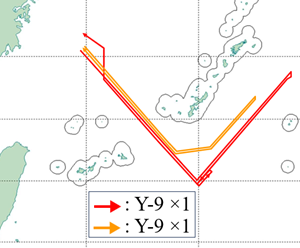 https://www.mod.go.jp/js/pdf/2026/p20260302_01.pdf |
| 3/3 |
On March 2, Japan's Ministry of Defense briefed residents of Yonaguni Town on plans to deploy a surface-to-air missile unit on Yonagunijima Island, Okinawa Prefecture. The ministry said a new unit equipped with an upgraded Type 03 medium-range surface-to-air missile (Chu-SAM), capable of countering hypersonic glide vehicles (HGVs) being developed by China and North Korea, is expected to be deployed in fiscal 2030. An official explained the role and necessity of the deployment, noting the town's location on Japan's westernmost island, about 110 kilometers from Taiwan, and sought understanding for enhancing deterrence and response capabilities with a Taiwan contingency in mind. The ministry is advancing missile deployments in the Nansei Islands region. Surface-to-air and surface-to-ship units are deployed on Amami Oshima Island (Kagoshima Prefecture), Ishigakijima Island, and Miyakojima Island (both in Okinawa Prefecture), while a surface-to-ship unit is stationed on Okinawajima Island. Yonagunijima Island hosts coastal surveillance units, and a new air defense electronic warfare unit is set for fiscal 2026. Yomiuri Shimbun News (Japanese)https://www.yomiuri.co.jp/national/20260303-GYT1T00255/ |
| 3/4 |
The ministry has focused on reinforcing defenses in the southwestern region. Last June, China operated two aircraft carriers simultaneously in the Pacific for the first time, and the carriers advanced east of the "second island chain" from Japan's Izu Islands to Guam — also a first. In response to China's increasing military operations in the Pacific, Japan's Defense Ministry has decided to beef up its air base on Ioto Island and aims to strengthen Pacific-side capabilities, long seen as a "surveillance gap." The ministry is working to start studies in the new fiscal year to reinforce the port and the runway on Ioto island, the sources said. Besides reinforcing its surveillance framework, it is considering installing a non-fixed pier for large vessels. To enable a swift response to Chinese military aircraft and other fighter jets, one option is to permanently station Self-Defense Forces fighters on the island. The ministry also plans to establish a "Pacific defense initiative office" in April and include "strengthening Pacific defense" in the next revision of the three security-related documents. Asahi Shimbun Newshttps://www.asahi.com/ajw/articles/16395927 |
| 3/4 |
On March 4, China's National People's Congress spokesperson reiterated opposition to Japanese Prime Minister Sanae Takaichi's remarks on a Taiwan contingency, stating, "China firmly opposes the erroneous remarks made by Japan's leaders concerning Taiwan," regarding the deteriorating Japan–China relationship. He emphasized that "the Chinese people will never tolerate foreign interference in internal affairs and will steadfastly safeguard national sovereignty, unity, and territorial integrity." China shows no sign of easing pressure on Japan. Sankei Shimbun News (Japanese)https://www.sankei.com/article/20260304-ZKN3P3JKOZLADA5TBHHHVK37BI/ |
| 3/5 |
On March 5, Japan's Deputy Chief Cabinet Secretary received a courtesy call from the NATO Deputy Secretary General. The deputy chief cabinet secretary stated that, amid a shaken international order, Japan values cooperation with allies and like-minded countries and hopes to further strengthen Japan–NATO relations. The deputy secretary general welcomed the deepening this cooperation. They exchanged views on regional affairs, including the Indo-Pacific, and agreed to deepen cooperation across multiple fields. They confirmed that Japan and the NATO, as well as the NATO and the Indo-Pacific partners (IP4: Japan, Australia, New Zealand, and South Korea) will continue to work closely on global challenges. Ministry of Foreign Affairs of Japanhttps://www.mofa.go.jp/erp/ep/pageite_000001_01513.html |
| 3/5 |
On March 5, Japan's Foreign Minister met with the ASEAN Secretary-General. Japan's minister underscored the importance of the ASEAN relationship, a cornerstone for a Free and Open Indo-Pacific (FOIP), and expressed determination to strengthen cooperation. He stated his intention to coordinate with the "ASEAN Outlook on the Indo-Pacific (AOIP)" while respecting ASEAN's unity and centrality. In response, the secretary-general expressed high expectations for further cooperation, and both agreed to continue working closely in various areas. Ministry of Foreign Affairs of Japanhttps://www.mofa.go.jp/press/release/pressite_000001_02149.html |
| 3/5 |
On March 5, Japan's Foreign State Minister held a working dinner with the NATO Deputy Secretary General. Japan's state minister stated that, recognizing the inseparable security of the Euro-Atlantic and Indo-Pacific, the importance of cooperation between Japan and the NATO, and between the NATO and the IP4 partners, is increasing, and Japan aims to strengthen cooperation with the NATO across various fields. In response, the deputy secretary general said she hopes to strengthen Japan–NATO relationship. They exchanged views on the Indo-Pacific and confirmed that Japan and the NATO, and the NATO and the IP4 partners, will continue working closely on global challenges. Ministry of Foreign Affairs of Japanhttps://www.mofa.go.jp/press/release/pressite_000001_02151.html |
| 3/5 |
On March 5, Japan's Defense Minister received a courtesy call from the NATO Deputy Secretary General. As recognition grows that security in the Euro-Atlantic and the Indo-Pacific is inseparable, they confirmed the strategic importance of Japan–NATO cooperation. They exchanged views on regional situations and Japan's defense policy, and noted the growing importance of Japan–NATO cooperation, including for strengthening deterrence. They welcomed steady progress of cooperation across a wide range of fields and agreed to advance more practical security and defense cooperation under close communication. Ministry of Defense of Japanhttps://www.mod.go.jp/en/article/2026/03/3e744af6d8aef59888086c3a76f6b42556cbf974.html |
| 3/5 |
A spokesman for the Philippines' National Security Council (NSC) said on March 5 that information on the country's South China Sea resupply missions had been compromised and passed to Chinese intelligence agents. He said rotation and resupply data fall under operational security because disclosure could endanger personnel, adding the breach was "alarming" but limited and the transmission channels had been shut down. Three Filipinos had been apprehended and more could be involved, he said. Philippine and Chinese vessels frequently clash during Manila's resupply missions to features it occupies in the South China Sea. China's Foreign Ministry rejected the accusation, saying the case was unclear and lacked conclusive evidence. Reutershttps://www.reuters.com/world/china/philippine-resupply-mission-data-leaked-chinese-intelligence-security-official-2026-03-05/ |
| 3/6 |
According to government officials, Russia notified Japan by March 4 that it would conduct firing exercises from March 9 to 31 north of Shikotan Island and south of Kunashiri Island. The government lodged a strong protest through diplomatic channels, calling the move incompatible with Japan's position and unacceptable. Last year, Russia notified Japan of exercises north of Shikotan Island almost every month. This year, it has expanded them to waters around Kunashiri Island, continuing the announcements. The Japanese government has repeatedly protested, but Russia has not responded. Sankei Shimbun News (Japanese)https://www.sankei.com/article/20260306-3TYUE4LJPJNWBFAWXYTBYTBMDI/ |
| 3/6 |
An Australian military helicopter flying over international waters in the Yellow Sea took evasive action on March 4 after a Chinese helicopter approached at an unsafe distance, accelerated, and rolled toward it, Australia said on March 6. Australia called the manoeuvre unsafe and unprofessional and raised concerns with China. No injuries were reported. The patrol was part of an international effort to enforce U.N. Security Council sanctions on North Korea, Australia said. China denied the claim, accusing Australian helicopters of conducting close-range reconnaissance and provocative actions near China, and said its response was legitimate. The incident is the latest in a series of military encounters between the two countries. Reutershttps://www.reuters.com/world/china/australia-complains-china-after-encounter-between-military-helicopters-2026-03-06/ |
| 3/6 |
On March 5, the Japan Maritime Self Defense Force (JMSDF) confirmed one Russian Steregushchiy class frigate (hull number 335), one Improved Kilo class submarine and one Balk class (Project 23470 class) seagoing tug sailing southwest in waters 60km northeast of Tsushima Island (Nagasaki Prefecture). From March 5 to 6, these vessels sailed southwest through the Tsushima Strait and navigated to the East China Sea. 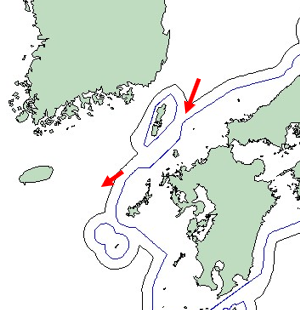 https://www.mod.go.jp/js/pdf/2026/p20260306_01.pdf |
| 3/6 |
From March 4 to 6, Japan's Prime Minister's Special Advisor visited India. He delivered a speech at the 11th Raisina Dialogue, co-hosted by the Indian think tank ORF (Observer Research Foundation) and the Ministry of External Affairs of India. In the speech, he said the Japanese government will strategically advance efforts for a "Free and Open Indo-Pacific" and work to make the region strong and prosperous. He also emphasized the need to further promote Japan-India defense cooperation, including cooperation in defense equipment and technology. He also held discussions with the Indian foreign secretary and think tank representatives to strengthen Japan-India relations, particularly in security. Ministry of Foreign Affairs of Japanhttps://www.mofa.go.jp/s_sa/sw/in/pageite_000001_00013.html |
| 3/6 |
On March 6, Japan–Canada summit meeting was held in Tokyo. Japan and Canada agreed to elevate their relations to a Comprehensive Strategic Partnership. Japan's Prime Minister highlighted Canada as a like-minded partner sharing fundamental values such as freedom, democracy, and the rule of law, and as an important partner in promoting a Free and Open Indo-Pacific (FOIP). On security, they concurred on strengthening Japan–Canada security cooperation, including expanding joint exercises. They also concurred on strengthening information sharing in peacetime and cooperation during crises. They welcomed the signing of three memoranda on maritime cooperation and confirmed continued collaboration toward realizing FOIP, while exchanging views on developments in the Indo-Pacific, including policies toward China. Ministry of Foreign Affairs of Japanhttps://www.mofa.go.jp/na/na1/ca/pageite_000001_00005.html |
| 3/6 |
On March 6, Japan–Canada defense ministerial meeting was held. Japan's defense minister reaffirmed that the security of the Euro-Atlantic and Indo-Pacific is inseparable, noting that the two countries share common regional and security interests, including the Indo-Pacific and the Arctic Circle, and emphasizing the importance of opportunities for active dialogue and exchanges. They exchanged views on the regional situation, including the Indo-Pacific. Ministry of Defense of Japanhttps://www.mod.go.jp/en/article/2026/03/cda0affeca4c95cee67bda6b054a296ad7aafd44.html |
| 3/8 |
On March 8, China's foreign minister repeatedly criticized Japan's Prime Minister Sanae Takaichi's remarks on Taiwan. He said the remarks suggested that an attack on Taiwan could create a "survival-threatening situation" for Japan and that they echoed rhetoric used by Japanese militarists in the past. He urged Japan not to repeat the "disastrous path" of its past militarism. He said Taiwan is purely China's internal affair and questioned Japan's right to interfere. He added that China would never allow colonialism or a reversal of history's verdict on aggression, warning that the future of China-Japan relations hinges on Japan's choices and demanding that Takaichi withdraw her remarks. Kyodo Newshttps://english.kyodonews.net/articles/-/71838 |
| 3/9 |
On March 7, Japan's Foreign Parliamentary Vice Minister met with Viet Nam's Foreign Permanent Deputy Minister in Ho Chi Minh City. Japan's parliamentary vice minister said that under the "Comprehensive Strategic Partnership," Japan intends to continue strengthening ties across multiple fields to support a Free and Open Indo-Pacific (FOIP), and plans to coordinate high-level meetings and exchanges of dignitaries. In response, Viet Nam's permanent deputy minister expressed intent to further strengthen strategic cooperation. Ministry of Foreign Affairs of Japanhttps://www.mofa.go.jp/s_sa/sea1/vn/pageite_000001_00005.html |
| 3/9 |
Taiwan has seen almost no Chinese military aircraft in the past 10 days, with just two recorded in a single 24-hour period since February 28, compared with 86 in the same period last year. Available data show this is the longest stretch without detections since records began in 2024. Chinese sorties around Taiwan fell about 42% in January and February, while an average of six Chinese warships have been spotted daily, unchanged from last year. Experts are speculating on the sharp drop in Chinese aircraft deployments, citing China's two sessions, recent military purges, Trump's upcoming Beijing visit, and the Middle East conflict. Drew Thompson of the S. Rajaratnam School called the lack of a clear explanation disconcerting. Another longtime observer said it is unclear how to interpret the drop. An analyst said that he has seen no signs that China is preparing major military action. A Taiwanese military expert suggested Beijing may be trying to weaken public support for Taiwan's plans to increase defence spending. Other analysts were less surprised. Brian Hart of the Center for Strategic and International Studies said there is no evidence of anything unusual so far. A Taiwanese security official suggested Beijing may be trying to create a false impression to weaken U.S. support for Taiwan. AFP (Jiji News)https://sp.m.jiji.com/english/show/46270 |
| 3/10 |
On March 9, the JMSDF confirmed one Russian Steregushchiy class frigate (hull number 335), one Improved Kilo class submarine and one Balk class (Project 23470 class) seagoing tug sailing southwest in waters 50km north of Iriomotejima Island (Okinawa Prefecture). These vessels sailed southwest through waters between Yonagunijima Island (Okinawa Prefecture) and Iriomotejima Island and navigated to the Pacific Ocean. 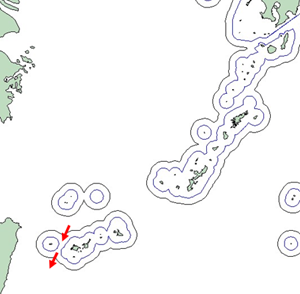 https://www.mod.go.jp/js/pdf/2026/p20260310_01.pdf |
| 3/11 |
On March 10, at the United Nations Commission on the Status of Women, a Chinese delegate raised the comfort women issue, criticizing Japan and saying, "Forces seeking to deny or distort history have always existed in Japan." Minister Kawahara of Japan's mission to the United Nations responded that China's remarks were inappropriate and that "the accusation of denying or distorting history is completely untrue." China has repeatedly raised history issues at the UN to criticize Japan and demand the retraction of Prime Minister Takaichi's remarks on a Taiwan contingency. Each time, Japan has countered by emphasizing its record as a peaceful nation. NHK News (Japanese)https://news.web.nhk/newsweb/na/na-k10015072631000 |
| 3/12 |
On March 12, Indonesia's defense minister met with his Australian counterpart in Jakarta. He said the two countries plan to expand security cooperation via two trilateral arrangements: Indonesia–Australia–Japan and Indonesia–Australia–Papua New Guinea. They also discussed developing a training facility on an eastern Indonesian island, which could be used by troops from Japan, Australia, the Philippines, and Singapore. Recently, Australia has strengthened security ties with regional partners amid China's growing assertiveness, having signed defense treaties with Papua New Guinea last year and with Indonesia last month. Kyodo Newshttps://english.kyodonews.net/articles/-/72169 |
Newsletter Registration
What is happening in East Asian Maritime Security? The Research Institute for Peace and Security (RIPS) publishes the biweekly newsletter, “East Asian Maritime Security (EAMS)” and updates the information on maritime security relevant to East Asia and Japan's territory.