



Vol.39. February 13. 2026
What is happening in East Asian Maritime Security? The Research Institute for Peace and Security (RIPS) publishes the biweekly newsletter, the information on maritime security relevant to East Asia and Japan's territory.
Statistical Data and Analysis (as of February 13)
In the first half of this month, China and Russia each showed moves to intensify pressure on Japan over maritime and territorial issues.
Regarding the Senkaku Islands, on February 1, it was confirmed that two of the four China Coast Guard vessels navigating the contiguous zone around the Senkaku Islands were 5,000-ton-class ships. It is said to be highly unusual for the coast guard to simultaneously deploy two such large vessels around the Senkakus. On the same day, marking five years since the enforcement of the China Coast Guard Law, the coast guard released for the first time footage filmed from a coast guard vessel sailing within Japan’s territorial waters around the Senkaku Islands.
Regarding the Northern Territories, visits to the graves of former island residents were conducted from 1964 to 2020, when they were suspended due to the coronavirus pandemic and the war in Ukraine. The Russian foreign minister said former residents would need a Russian visa to visit relatives’ graves, effectively rejecting Japan’s request to resume the visits. On February 7, “Northern Territories Day,” Japanese Prime Minister Sanae Takaichi said the matter is a humanitarian issue and “one of the top priorities” in bilateral relations, and Japan will patiently urge Russia to resume it.
[Statistical Data as of February 13]
The Japan Coast Guard (JCG) daily updates the statistical data on the number of China Coast Guard vessels entering in the contiguous zone around the Senkaku Islands and intruding into Japanese territorial waters. The below is from the website of the JCG.
https://www.kaiho.mlit.go.jp/mission/senkaku/senkaku.html
| Jan. | Contiguous zone |
Territorial Waters |
Feb. | Contiguous zone |
Territorial Waters |
|
|---|---|---|---|---|---|---|
| 30 | 4 | 5 | 4 | |||
| 31 | 4 | 6 | 4 | |||
| Feb. | Contiguous zone |
Territorial Waters |
7 | 4 | ||
| 8 | 4 | |||||
| 1 | 8 | 9 | 4 | |||
| 2 | 4 | 10 | 4 | 4 | ||
| 3 | 4 | 11 | 4 | |||
| 4 | 4 | 12 | 4 |
Topics
| Date | Topics |
|---|---|
| 1/31 |
On January 31, Japan-UK summit meeting was held. Japan’s prime minister stated that Japan-UK cooperation as an “Enhanced Global Strategic Partner” reflects the inseparable nature of security in the Euro-Atlantic and Indo-Pacific. Noting the steady progress made in bilateral cooperation, the two leaders agreed to elevate Japan-UK relations to new heights. They exchanged views on the Indo-Pacific and reaffirmed their commitment to the Free and Open Indo-Pacific (FOIP). They recognized the importance of the rules-based international order and agreed to further strengthen cooperation in the international arena. Ministry of Foreign Affairs of Japanhttps://www.mofa.go.jp/erp/erp_1/gb/pageite_000001_00003.html |
| 1/31 |
On January 31, China conducted naval and air patrols around the Scarborough Shoal in the South China Sea, the China Southern Theater Command said. The shoal is in the Philippines’ exclusive economic zone, but China also claims it. China has stepped up combat readiness patrols in the area in January, “resolutely countering the infringement provocations of individual countries in the region,” the post said. Reutershttps://www.reuters.com/world/asia-pacific/china-conducts-naval-air-patrols-around-disputed-south-china-sea-shoal-2026-01-31/ |
| 2/1 |
On February 1, the Japan Coast Guard reported that two 5,000-ton vessels of the China Coast Guard were operating simultaneously in the contiguous zone outside the territorial waters around the Senkaku Islands (Okinawa Prefecture). Both were observed for the first time that day, and such a dual deployment is extremely unusual. Since Japan nationalized the Senkaku Islands in 2012, Chinese vessels have continued operating in the area. Initially unarmed, they are now routinely equipped with autocannons. Of the four vessels observed that day, all were armed with autocannons, including the two 5,000-ton vessels. As the vessels have grown larger, their consecutive days at sea have also increased. Last year, the record for continuous operations in the contiguous zone was significantly surpassed. Previously, vessels would temporarily retreat during rough seas, but the larger vessels can now operate regardless of weather. February 1 marked the fifth anniversary of China’s Coast Guard Law, which clarifies the force’s authority to use weapons. The China Coast Guard’s operations around the Senkakus are said to be directed by President Xi Jinping, and the simultaneous deployment of two 5,000-ton vessels is seen as part of this effort. This underscores the ongoing trend of larger, more heavily armed Chinese coast guard vessels. Sankei Shimbun News (Japanese)https://www.yomiuri.co.jp/world/20251227-GYT1T00191/ |
| 2/1 |
On February 1, the China Coast Guard released for the first time footage from its vessels operating in Japan’s territorial waters around the Senkaku Islands, marking the fifth anniversary of the Coast Guard Law. The move is seen as an effort to reaffirm China’s claim amid ongoing tensions with Japan. On January 30, the head of China's Coast Guard announced that over the past five years, its vessels have patrolled the Senkaku area 134 times and that in 2025 they operated there for 357 days. The Coast Guard Law has a vague definition of "Chinese jurisdictional waters," raising long-standing concerns among neighboring countries such as Japan and the Philippines. Nikkei Shimbun News (Japanese)https://www.nikkei.com/article/DGXZQOGM010VT0R00C26A2000000/ |
| 2/2 |
On February 1, the Secretary of Russia’s Security Council held talks with China’s Foreign Minister. According to China’s Foreign Ministry, the Chinese Foreign Minister said the two should strengthen mutual support on core interests, thereby indicating willingness to deepen strategic cooperation. Russia’s Interfax reported that the Secretary of Russia’s Security Council emphasized readiness to strengthen cooperation with China within frameworks such as the UN, BRICS, and the SCO. He reaffirmed Russia’s consistent support for China on the Taiwan issue, and expressed vigilance toward Japan’s policies accelerating militarization, including increased defense spending. The two had confirmed coordination on Japan last December, and this meeting again served as a warning to Japan. NHK News (Japanese)https://news.web.nhk/newsweb/na/na-k10015041261000 |
| 2/2 |
On February 1, the Japan Maritime Self Defense Force (JMSDF) confirmed one Russian Steregushchiy Ⅲ class frigate (hull number 337) sailing southeast in waters 130km west of Cape Tappizaki (Aomori Prefecture). This vessel sailed east through the Tsugaru Strait and navigated to the Pacific Ocean. 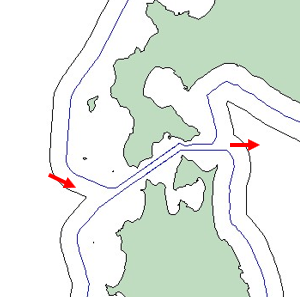 https://www.mod.go.jp/js/pdf/2026/p20260202_01.pdf |
| 2/3 |
On February 2, the Russian Foreign Minister announced that former residents would need a Russian visa to visit relatives’ graves in the northern territories, effectively rejecting Japan’s request to resume visits. He added that lifting sanctions imposed over Russia’s 2022 invasion of Ukraine is a condition for resuming Japan–Russia dialogue, including talks on grave visits. Visits have been suspended since 2020. The Japanese government says obtaining a visa would mean recognizing Russia’s jurisdiction over the northern territories. Yomiuri Shimbun Newshttps://www.aei.org/articles/china-taiwan-update-special-edition-december-31-2025/ |
| 2/4 |
On February 4, the JMSDF confirmed one Russian Steregushchiy class frigate (hull number 335) sailing west in waters 50km northeast of Cape Shiriyazaki (Aomori Prefecture). This vessel sailed west through the Tsugaru Strait and navigated to the Sea of Japan. 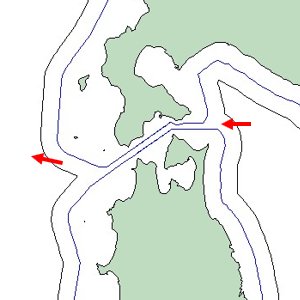 https://www.mod.go.jp/js/pdf/2026/p20260204_01.pdf |
| 2/4 |
On February 4, sources said the Ministry of Defense is coordinating to hold the Japan Pacific Islands Defense Dialogue (JPIDD) in late February, attended by defense ministers from Japan and Pacific island nations. Its aim is to strengthen defense cooperation and secure sea lanes amid China’s growing military activity in the Western Pacific. Japan’s minister is scheduled to deliver a keynote address opposing unilateral changes to the status quo by force and stressing the rule of law, as a counter to China’s expanding regional influence. Kyodo News (Japanese)https://www.47news.jp/13819131.html |
| 2/5 |
On February 5, France’s de facto ambassador in Taipei, Franck Paris, said naval missions by foreign countries in the Taiwan Strait are intended to assert international law rather than provoke China. “We are careful to send these naval assets into international waters without any provocation,” he said, adding that the aim was to send a clear message that international law prevails and should remain so, with G7 partners coordinating their messages, citing past naval trips by Canada and the Netherlands. Beijing claims sovereignty over Taiwan, views the narrow strait as its territorial waters, and has at times responded aggressively to foreign naval transits. U.S. warships traverse the strait every few months, enraging Beijing, and allies including France, Australia, Britain and Canada have also made occasional transits. Taiwan’s government welcomes them as support for freedom of navigation, while China’s military routinely operates there in what Taipei sees as a pressure campaign. Reutershttps://www.reuters.com/world/china/taiwan-strait-missions-are-about-international-law-not-provocation-french-2026-02-05/ |
| 2/7 |
On February 7, Prime Minister Sanae Takaichi attended the 2026 National Rally to demand the return of the Northern Territories. She said resuming the program for former residents to visit ancestors’ graves on Russian-held islands is a humanitarian issue and a top priority in Japan-Russia relations. The program was halted due to factors including Russia’s invasion of Ukraine, and it is unclear when it will restart. Referring to aging former residents, she said, "We will patiently urge the Russian side to resume them." She also expressed regret that a peace treaty with Russia has not been concluded and that the Northern Territories issue remains unresolved 80 years after World War II. Jiji Press Newshttps://sp.m.jiji.com/english/show/45649 Prime Minister’s Office of Japan: Prime Minister Takaichi's message (Japanese) https://www.kantei.go.jp/jp/104/actions/202602/07hoppou.html |
| 2/9 |
On February 9, a Chinese Foreign Ministry spokesman said Japan should not repeat the mistakes of militarism. He again urged Takaichi to retract what he called her “erroneous” November remarks on a Taiwan contingency and to demonstrate a commitment to the basis of China-Japan relations through concrete actions. He also said China remains determined to oppose anti-China actions, adding that Beijing’s policy toward Japan will not change because of a single election. This came after Prime Minister Sanae Takaichi’s party scored a landslide victory in the weekend general election. Kyodo Newshttps://english.kyodonews.net/articles/-/70223 |
| 2/10 |
According to people familiar with the incidents and a Taiwanese defence ministry report shared with the US military, Chinese fighter jets carried out unusually dangerous manoeuvres near Taiwanese F-16s during the PLA’s “Justice Mission” exercise around Taiwan in December. In one incident, a Chinese J-16 fired decoy flares at a Taiwanese F-16 that had scrambled. In another, a J-16 flew “very closely” behind an F-16, “basically in firing position.” In a third incident north-west of Taiwan, a J-16 flew just beneath a Chinese H-6K bomber in a “piggybacking” tactic to evade Taiwanese radar. “When discovered, the Chinese pilot rolled his plane and flashed missiles under its belly,” a source said, calling it unprofessional and like “a gangster swinging his gun around.” A source said these “risky and provocative” acts reflected a recent pattern of aggressive behavior toward China’s neighbors. While the PLA has reduced aggressive intercepts of US aircraft, it continues to target American allies. In its 2024 report, the Pentagon said the PLA conducted multiple unsafe actions near allied aircraft, including reckless manoeuvres and discharging chaff or flares. Bonnie Glaser of the German Marshall Fund said the PLA was becoming “increasingly reckless,” warning it could next enter Taiwan’s 12-nautical-mile airspace, raising the risk of an accident. People familiar with the incidents said PLA pilots seemed pushed beyond normal training, possibly reflecting disruptions from Xi Jinping’s military purges. Ann Kowalewski of the Institute for Indo-Pacific Security said Xi may be pressuring the PLA to be ready to take Taiwan next year, which could push it to take greater risks with increasingly sophisticated manoeuvres, raising the risk of clashes. The Financial Timeshttps://www.ft.com/content/66a59c7c-5a22-482c-9363-71cb016ceb01 |
| 2/10 |
On February 10, four Chinese coast guard vessels entered Japan's territorial waters off the Senkaku Islands in Okinawa Prefecture. According to the JCG, it is the first time since January 14 that Chinese government vessels have sailed into Japan's waters in the East China Sea. After sailing for about two hours, the vessels left the territorial waters. Jiji Press Newshttps://sp.m.jiji.com/english/show/45712 |
| 2/12 |
Japan has provided the Philippines with five coastal surveillance radar systems through a cooperation framework called Official Security Assistance. The two countries agreed on the supply in 2023. On February 11, a handover ceremony was held in Manila after the equipment arrived last month. Tokyo and Manila have also agreed on projects, including constructing facilities to enhance maritime surveillance operations. NHK Worldhttps://www3.nhk.or.jp/nhkworld/en/news/20260212_01/ |
| 2/12 |
On February 11, the Japan Joint Staff confirmed one Russian IL-20 intelligence gathering aircraft flying from the continent through the Sea of Okhotsk toward the Pacific Ocean. The aircraft flew south to the area off the coast of Iwate Prefecture, then turned back
and flew through the Sea of Okhotsk toward the Sea of Japan. 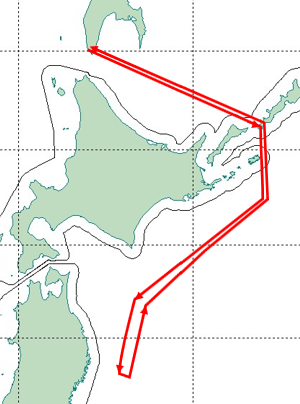 https://www.mod.go.jp/js/pdf/2026/p20260212_01.pdf |
| 2/12 |
On February 12, sources said the Japanese government began coordinating to have ministers refrain from attending the “Takeshima Day” ceremony to be held by Shimane Prefecture and others on February 22. The ceremony has been held since 2006, and the government has dispatched a Cabinet Office Parliamentary Vice-Minister since 2013. As in previous years, a Parliamentary Vice-Minister will attend and is expected to assert Japan’s position that Takeshima is its inherent territory both historically and under international law. Prime Minister Sanae Takaichi had argued during last year’s LDP presidential election that a cabinet minister should attend, but the decision reflects consideration for South Korea’s opposition amid improving bilateral relations. Kyodo News (Japanese)https://www.47news.jp/13858740.html |
| 2/13 |
On February 12, Japanese authorities seized a Chinese fishing vessel and arrested its skipper for allegedly trying to evade an onboard inspection by a Japanese fisheries control officer within Japan's exclusive economic zone off Nagasaki Prefecture, the fisheries agency said on February 13. It was the first seizure of a Chinese vessel since 2022 and the first foreign vessel seized this year, amid months of strained diplomatic relations between Japan and China under Prime Minister Sanae Takaichi. The chief cabinet secretary said the government would act "resolutely" to prevent and deter illegal operations by foreign fishing vessels. Kyodo Newshttps://english.kyodonews.net/articles/-/70463 |
Newsletter Registration
What is happening in East Asian Maritime Security? The Research Institute for Peace and Security (RIPS) publishes the biweekly newsletter, “East Asian Maritime Security (EAMS)” and updates the information on maritime security relevant to East Asia and Japan's territory.