



Vol.38. January 30. 2026
What is happening in East Asian Maritime Security? The Research Institute for Peace and Security (RIPS) publishes the biweekly newsletter, the information on maritime security relevant to East Asia and Japan's territory.
Monthly Column
Dignity, Deterrence, and
Rejection of Incremental Coercion
What Japan’s Security Posture Demands
in an Era of Gray-Zone Pressure
by Toshimichi Nagaiwa,
Lieutenant General, JASDF (Ret.)
Former Commander, Air Support Command
Japan Air Self-Defense Force
Executive Summary
A growing series of aerial encounters around Japan’s Southwestern Islands has once again exposed the fragility of international norms governing military conduct, while underscoring the profound responsibility borne by major powers. These incidents should not be viewed as isolated events; rather, they constitute part of a broader pattern testing the credibility of rules-based behavior in the air and at sea.
Drawing on firsthand experience as a fighter pilot in the Japan Air Self-Defense Force during the Cold War—first flying the F-4EJ Phantom II and later the F-15 Eagle, and directly responsible for intercepting Soviet aircraft approaching Japanese airspace—this paper argues that the true measure of a great power lies not in the display of force, but in deterrence firmly grounded in restraint. History demonstrates that stability is preserved not by bravado, but by professionalism and self-control exercised at moments of maximum tension.
By examining arbitrary military operations conducted within Japan’s Air Defense Identification Zone (ADIZ), prolonged fire-control radar illumination lasting approximately thirty minutes with intermittent breaks, so-called “salami-slicing” strategies in the gray zone, and the structural challenge known as the “Tyranny of Time and Distance,” this essay integrates political philosophy, cockpit-level operational reality, strategic analysis, and national will into a single coherent perspective.
Through comparison with the political thought of ancient sages of China Laozi (老子), it further highlights the strategic divergence evident in contemporary Chinese behavior, while positioning Japan’s current response as an expression of democratic legitimacy and proactive contribution to peace—an embodiment of national resolve dedicated to the defense of law and order.
Security as Seen from the Cockpit
The security environment in East Asia is becoming increasingly unstable, not merely in quantitative terms of force expansion by the People’s Liberation Army (PLA), but qualitatively as well. In the airspace of the East China Sea and around Japan’s Southwestern Islands, the frequency, proximity, and ambiguity of military activities have intensified, elevating the risk of accidental confrontation. Any such “flash-point” incident would inevitably carry international ramifications.
During the Cold War, the author served as a fighter pilot in the JASDF, flying the F-4 Phantom II and subsequently the F-15 Eagle on air defense missions responding to Soviet aircraft approaching Japanese territorial airspace. These missions were routine and persistently tense, yet serious escalation remained rare.
From the cockpit, security is never an abstract concept. Decisions are measured in seconds, information is invariably incomplete, and psychological stress is constant. What is required under such conditions is not bravado, but discipline; not emotion, but composure. Defending national sovereignty with firmness while simultaneously preventing accidental escalation constituted the core responsibility of air defense missions. That reality remains unchanged today.
Radar Illumination and the Risk of Accidental Conflict
Recent incidents around the Southwestern Islands starkly illustrate these dangers. Japan Air Self-Defense Force F-15 fighters were subjected to prolonged illumination by Chinese military aircraft’s fire-control radar.
In fighter operations worldwide, sustained radar lock-on is universally recognized as an extremely grave act, signaling the immediate prelude to weapons employment. Inside the cockpit, warning tones sound continuously, imposing intense psychological pressure on the pilot as decision time rapidly contracts.
When fighter aircraft approach head-on, distance closes at approximately fifteen nautical miles per minute. To explain radar illumination lasting several minutes as accidental or the result of equipment malfunction is not realistic. Such actions are deliberate and sharply increase the risk of miscalculation.
That these incidents did not escalate into collision or weapons use was not the result of inherent stability. It was due solely to the exceptional professionalism, restraint, and calm judgment of Japan Air Self-Defense Force pilots and intercept controllers operating under extreme conditions.
ADIZ Operations and Strategic Intent
The PLA operations associated with these incidents were conducted over international waters, yet within Japan’s ADIZ, in close proximity to the Southwestern Islands and east of the First Island Chain.
The designation of airspace as international does not confer unlimited freedom of military action. Operations conducted within another state’s ADIZ— particularly in geographically sensitive areas—carry unmistakable strategic significance.
The choice of location and timing suggests not routine activity, but an intent to apply sustained pressure on Japan’s air defense posture and to normalize an expanded military presence through incremental faits accomplis.
China’s Salami-Slicing and Gray-Zone Strategy
These actions are consistent with so-called “salami-slicing” or gray-zone strategies—approaches designed to alter the status quo incrementally through small, ambiguous actions deliberately kept below the threshold of armed conflict.
While individual actions may appear manageable in isolation, such operations are inherently dangerous in the aerial domain. The defending side is repeatedly compelled to absorb risk, and over time both human and material limits are revealed. Employing air power in grey-zone contests carries a significant risk of leading to unintended incidents or accidental escalation.
The Primary Challenge: Preventing Faits Accomplis
For the Japan–U.S. alliance, the greatest danger in the East China Sea is not deliberate full-scale war. It is the accumulation of willful faits accomplis before alliance decision-making mechanisms can fully engage.
This risk is structurally amplified by the “Tyranny of Time and Distance.” The geographically proximate actor can respond immediately, while the alliance requires time for consultation, political decision-making, and force deployment. Gray-zone strategies exploit this asymmetry, advancing the situation to a point at which resistance becomes politically and militarily difficult.
Air and maritime activities around the Southwestern Islands are therefore not mere provocations. They are attempts to compress time, weaponize distance, and normalize military presence.
Overcoming Time and Distance: A Japan–U.S. Strategy
Preventing faits accomplis requires more than retaliation-based deterrence. What is needed is deterrence by denial, jointly implemented by Japan and the United States in a visible and sustained manner.
First, decision-making authority must be delegated to lower levels. Excessively centralized decision-making slows responses during the transition from peacetime to crisis and risks ceding the initiative to an adversary. Front-line commanders must be empowered to act rapidly under pre-established rules of engagement and clearly delegated authorities. At the same time, integrated, cross-domain command-and-control relationships must be established in peacetime to preserve speed and tempo.
Second, sustained presence is essential. Not episodic demonstrations following crises, but continuous and lawful peacetime operations prevent the emergence of temporal vacuums. Persistent shared-base operations and in-flight training among the JASDF, U.S. Air Force, U.S. Navy, and U.S. Marine Corps combat air forces ensure responsive, credible deterrence and, if necessary, decisive localized engagements.
Third, integration of sensors, command, and response capabilities is critical. By linking Japanese and U.S. C4ISR(Command, Control, Communication, Computer, Intelligence, Surveillance, Reconnaissance) and response capabilities into a kill web, the alliance shortens the OODA loop (Observe, Orient, Decide, Act loop) and neutralizes advantages derived from ambiguity.
Fourth, political will must be clearly articulated at the alliance level. Hesitation or delayed resolve in the U.S.–Japan Alliance creates opportunities for adversaries to pursue faits accomplis. Consistent, calm, and visibly resolute responses by Japan—reinforced by sustained and credible U.S. engagement—directly undermine this assumption.
Fifth, Japan and the United States must further strengthen strategic cooperation with like-minded partners. Deeper coordination with countries that uphold international law and democratic values enhances collective deterrence and reduces opportunities for unilateral coercion.
China’s Laozi’s Thought and Strategic Divergence
The Chinese philosopher Laozi taught that “a great state is like the lower reaches of a great river … it is the great power that should first humble itself.” A true great power stabilizes order not through intimidation, but through restraint.
Measured against this philosophy, the habitual application of pressure evident in contemporary Chinese behavior represents a clear strategic divergence. Under the Xi Jinping administration, the emphasis on active assertion and the normalization of pressure across military, political, and informational domains stand in stark contrast to Laozi’s vision of great-power conduct.
When measured against the deep wisdom of China’s ancient sages, modern China can only be described as having strayed far from those principles.
Japan’s Response: Legitimacy and Proactive Contribution to Peace
In this demanding strategic environment, Japan has deliberately refrained from emotional confrontation and instead anchored its response in democratic legitimacy, the rule of law, and close alliance coordination. Japan seeks not short-term advantage through intimidation or retaliation, but calm, responsible deterrence that contributes to long-term international stability.
The steady strengthening of deterrent capabilities must be understood in this context. The resolve demonstrated by the Takaichi administration to enhance national defense is not intended to display superiority, but to prevent miscalculation and avert conflict before it occurs. Japan chooses to possess strength precisely in order not to use it.
This approach gives concrete expression to Japan’s long-standing commitment to a “Proactive Contribution to Peace,” translating principle into practice. By reconciling restraint with resolve, deterrence with dialogue, and alliance solidarity with respect for law and order, Japan offers a model of responsible statecraft in an era of uncertainty.
Japan will continue to act with quiet, unwavering determination as a nation that rejects attempts to alter the status quo by force, accepts responsibility for sustaining regional and global order, and stands alongside those who believe that peace is preserved not by impulse, but by discipline and foresight.
Peace is not preserved by aspiration alone.
It becomes sustainable only through deterrence anchored in law and restraint.
Japan remains committed to bearing that responsibility—not in words, but through action.
It goes without saying that Japan itself must possess the strong will and resolve to defend its own country—this is the fundamental prerequisite for everything.
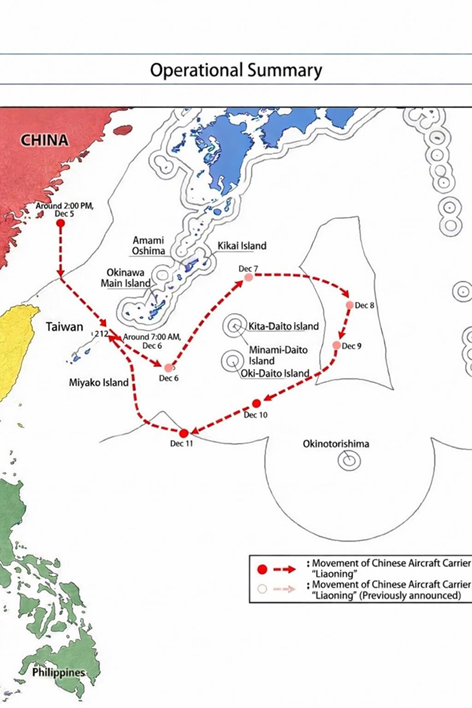
Supplementary figure: track chart of recent routes of the Liaoning and other vessels in the vicinity of the Nansei Islands (based on data released by the Japan Joint Staff)
This paper is accompanied by a flight track diagram illustrating the trajectories, relative positions, and temporal sequence of the aircraft involved in the recent air encounter near Japan’s southwestern islands. This track diagram was prepared based on public information released by the Joint Staff Office, Ministry of Defense, Japan.
The diagram is provided for reference purposes to assist in understanding the geographic proximity, operational context, and escalation risk associated with the incident, including its occurrence within Japan’s Air Defense Identification Zone (ADIZ).
It is inferred that several formations of F-15 fighter aircraft tasked with airspace intrusion response missions calmly and consistently continued surveillance and monitoring operations in response to Liaoning’s activities, in accordance with international norms, in order to defend Japan’s airspace.
Toshimichi Nagaiwa is a retired Lieutenant General of the Japan Air Self-Defense Force and former Commander of the Air Support Command. A former fighter pilot, he flew the F-4EJ Phantom II and F-15 Eagle on air defense missions during the Cold War.
Statistical Data and Analysis (as of January 30)
In the latter half of this month, the situation regarding tensions with neighboring countries remains largely unchanged, considering China’s maritime activities and diplomatic posture.
In the East China Sea, thousands of Chinese fishing vessels were mobilized twice, in massive flotillas, revealing China’s enhanced maritime militia capacity. It has also been reported that China's oceanographic research in Japan's EEZ has intensified in recent years. In the South China Sea, the Philippine authorities issued a report noting a significant increase in the activities of Chinese naval forces near the Philippines last year.
China’s opposition to Prime Minister Takaichi's remarks on a Taiwan contingency continues. China has repeatedly criticized these remarks at UN meetings, regardless of the agenda. The continued vacancy of Japan's Consul General post is also reported as a countermeasure in response to these remarks.
During this period, Japan held discussions with the US, Europe, India, and others, reaffirming cooperation in light of the current situation.
[Statistical Data as of January 30]
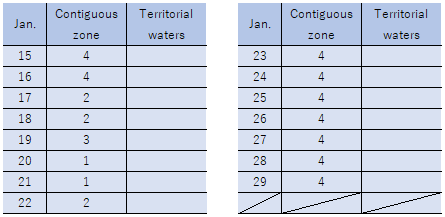
The Japan Coast Guard (JCG) daily updates the statistical data on the number of China Coast Guard vessels entering in the contiguous zone around the Senkaku Islands and intruding into Japanese territorial waters. The below is from the website of the JCG.
https://www.kaiho.mlit.go.jp/
| Date | Topics |
|---|---|
| 1/15 |
On January 15, Japan–France vice ministers’ meeting was held. The two sides confirmed that Japan and France will strengthen bilateral relations in a wide range of fields, including security and defense, and cooperate to maintain and strengthen a free and open international order based on the rule of law. They also exchanged views on regional issues, including the Indo-Pacific and Europe, as well as global cooperation, and agreed to further strengthen ties through bilateral cooperation and discussions in international arena. Ministry of Foreign Affairs of Japanhttps://www.mofa.go.jp/press/release/pressite_000001_02003.html |
| 1/15 |
On January 12, the Japan Maritime Self Defense Force (JMSDF) confirmed one Russian Vishnya class Intelligence ship (hull number 535) sailing southwest in waters 60km northwest of Yonagunijima Island (Okinawa Prefecture). From January 13 to 15, this vessel sailed northeast in the contiguous zone from southwest to north of Yonagunijima Island, then sailed through waters including the contiguous zone from north to south of Miyakojima Island (Okinawa Prefecture), and navigated to the Pacific Ocean. 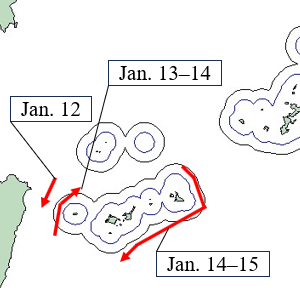 https://www.mod.go.jp/js/pdf/2026/p20260115_01.pdf |
| 1/16 |
On January 15, Japan–U.S. defense ministerial meeting was held. The two ministers confirmed that the Japan–U.S. alliance remains unshakable and that both countries are working closely together. In light of the increasingly severe security environment in the Indo-Pacific region, they held frank exchanges of views on concrete measures to further strengthen Japan–U.S. defense cooperation. They also agreed to continue advancing efforts to enhance the deterrence and response capabilities of the Japan–U.S. alliance to address the changing security environment. In particular, they confirmed that, as one of the alliance's top priorities, they would enhance more advanced and practical joint exercises in various locations, especially in the Southwest region, to expand the Japan–U.S. joint presence there. Ministry of Defense of Japanhttps://www.mod.go.jp/en/article/2026/01/3eee3a5675cfbb9312ca9962baf1f5dc7547e1da.html Ministry of Defense of Japan (Japanese) https://www.mod.go.jp/j/approach/anpo/2026/0115a_usa-j.html Reference: U.S. Department of War https://www.war.gov/News/News-Stories/Article/Article/4381019/hegseth-hosts-japanese-counterpart-at-pentagon/ |
| 1/16 |
On January 16, Japan–Italy summit meeting was held. On this occasion, the two leaders concurred on redefining and elevating Japan–Italy relations as a “Special Strategic Partnership” to further promote bilateral relations in a wide range of fields. They confirmed that they would enhance cooperation in security and defense. They exchanged views on the situation in the Indo-Pacific, including the East and South China Sea, and confirmed their cooperation in realizing a Free and Open Indo-Pacific (FOIP). They also shared a common understanding on the importance of an international order based on the rule of law and concurred on further strengthening cooperation in the international arena. Ministry of Foreign Affairs of Japanhttps://www.mofa.go.jp/erp/erp_1/it/pageite_000001_01460.html |
| 1/16 |
Statistics on Scrambles Conducted Through the Third Quarter of Fiscal Year 2025 The Japan Joint Staff released its statistics on scrambles conducted through the third quarter of FY2025 (April 1 to December 31, 2025). The total number of scrambles during this period was 448. During the same period in FY2024 (April 1 to December 31, 2024), the total number of scrambles was 521. Including estimates, approximately 68% of the scrambles were in response to Chinese aircraft, approximately 29% to Russian aircraft, and approximately 3% to others. During the same period, cases indicating active operations by Chinese and Russian aircraft were observed, including: In addition, on December 6, an incident arose in which J-15 fighter aircraft, which launched from a Chinese aircraft carrier, intermittently illuminated with its radar the F-15 fighter aircraft of the Japan Air Self-Defense Force (JASDF), which were conducting airspace intrusion countermeasures against the aircraft. Japan Joint Staffhttps://www.mod.go.jp/js/pdf/2026/p20260116_03.pdf |
| 1/16 |
Monthly Statistics on Scrambles(December) Japan Joint Staff released its monthly statistics on scrambles. In December, JASDF conducted 79 scrambles. The most scrambles are against Chinese aircrafts (53 times). The others were against Russian aircrafts (23 times) and so on. Japan Joint Staffhttps://www.mod.go.jp/js/pdf/2026/p20260116_02.pdf |
| 1/16 |
On January 16, Japan’s foreign minister paid a courtesy call on India’s prime minister. The minister stated that Japan and India are "natural partners," sharing fundamental values and strategic interests, and that Japan intends to cooperate toward realizing a “Free and Open Indo-Pacific” (FOIP) under their robust bilateral relationship. They exchanged candid views on security and other issues, and concurred to elevate Japan–India relations to new heights. Ministry of Foreign Affairs of Japanhttps://www.mofa.go.jp/s_sa/sw/in/pageite_000001_01461.html |
| 1/16 |
On January 16, Japan–India foreign ministers’ strategic dialogue was held. Japan’s minister stated that India is an important partner in realizing FOIP and that Japan attaches great importance to cooperation with India. Both Ministers concurred on deepening cooperation, including in security and defense. They also concurred on cooperating to realize a “Free and Open Indo-Pacific,” including through Japan–Australia–India–U.S. (Quad) cooperation. They shared concerns over coercive measures in the region. Ministry of Foreign Affairs of Japanhttps://www.mofa.go.jp/s_sa/sw/in/pageite_000001_00008.html |
| 1/16 |
It has been recently confirmed that China has begun installing a new structure west of the geographical equidistance line between Japan and China in the East China Sea. It is extremely regrettable that it is pursuing unilateral development there, while the Exclusive Economic Zone and the continental shelf in the East China Sea remain undelimited. Japan’s foreign ministry director-general issued a strong protest to the deputy chief of mission of the Chinese embassy and again strongly urged China to resume negotiations on implementing the June 2008 Agreement, under which the two countries agreed to cooperate on natural resource development in the East China Sea. Ministry of Foreign Affairs of Japanhttps://www.mofa.go.jp/press/release/pressite_000001_02006.html (Reference) The Current Status of China’s Unilateral Development of Natural Resources in the East China Sea https://www.mofa.go.jp/a_o/c_m1/page3e_000356.html |
| 1/16 |
China quietly mobilized thousands of fishing boats twice in recent weeks in the East China Sea, forming massive, densely packed formations over 200 miles. Analysis of ship-tracking data by The New York Times showed these maneuvers could not be explained by normal fishing, suggesting China can control large numbers of civilian ships in disputed waters. During the maneuvers, the boats held steady positions, sometimes obstructing cargo ships. Large gatherings in December and January, weeks apart, indicate they were likely planned drills rather than incidental events. Experts noted that these fishing boats are likely maritime militia that could cooperate with military operations. In a conflict or crisis, such as over Taiwan, the fleets could be used to enforce blockades, impede or monitor other ships, and even assert territorial claims. The Chinese government has not provided any official explanation regarding these activities. The New York Timeshttps://www.nytimes.com/interactive/2026/01/16/world/asia/china-ships-fishing-militia-blockade.html |
| 1/17 |
On January 16, Japan–U.S. vice foreign ministers’ meeting was held. In light of the current international situation, the two sides exchanged broad views on Japan–U.S. cooperation, particularly in the field of security. They reaffirmed their commitment to working closely together to further strengthen the Japan–U.S. alliance. They welcomed the U.S.–Japan Dialogue on a Free and Open Indo-Pacific (FOIP) and concurred to promote cooperation in various fields through it, affirming the importance of strengthening networks among like-minded countries under the FOIP vision. In addition to China-related issues, they exchanged views on regional situations and affirmed close Japan–U.S. coordination. Japan’s vice minister also exchanged views with deputy national security advisor to the president of the United States on the current international situation, including further strengthening Japan–U.S. cooperation. Ministry of Foreign Affairs of Japanhttps://www.mofa.go.jp/press/release/pressite_000001_02007.html |
| 1/18 |
On January 17, Taiwan’s defense ministry announced that a Chinese reconnaissance drone entered the airspace over Pratas Island in the South China Sea, which Taiwan controls. After Taiwan issued a warning, the drone left four minutes after the violation. The ministry stated that such highly provocative and irresponsible actions seriously undermine regional peace and stability. China’s People’s Liberation Army Southern Theater Command, which oversees the South China Sea, defended the action, arguing it was valid and legal routine flight training. NHK Worldhttps://www3.nhk.or.jp/nhkworld/en/news/20260118_03/ |
| 1/19 |
On January 17, the JMSDF confirmed one Russian Vishnya class Intelligence ship (hull number 535) sailing north in waters 60km southwest of Yonagunijima Island (Okinawa Prefecture). This vessel subsequently sailed north in the contiguous zone from southwest to northwest of Yonagunijima Island, and, on January 18, sailed east in the contiguous zone north of Miyakojima Island (Okinawa Prefecture). It sailed east through waters between Okinawajima Island and Miyakojima Island, and from January 18 to 19, sailed through waters in the contiguous zone from south to east of Okinawajima Island, and navigated to the Pacific Ocean. 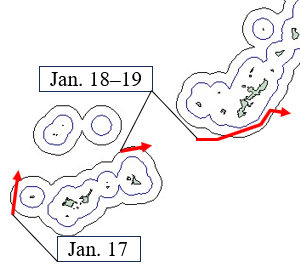 https://www.mod.go.jp/js/pdf/2026/p20260119_03.pdf |
| 1/20 |
On January 19, meeting between Japan’s senior deputy minister and Canadian assistant deputy minister was held. Japan’s senior deputy minister stated his intention to cooperate closely towards realizing a "Free and Open Indo-Pacific (FOIP)". The two sides concurred to further strengthen bilateral cooperation across various areas. They had a broad exchange of views on regional situations, including the Indo-Pacific. Japan’s senior deputy minister expressed his expectation to strengthen cooperation on priority issues in the Indo-Pacific region. Ministry of Foreign Affairs of Japanhttps://www.mofa.go.jp/press/release/pressite_000001_02013.html |
| 1/20 |
On January 20, the Chinese military said it had deployed naval and air forces to warn and drive away a Philippine government aircraft that "illegally intruded" into the airspace over Scarborough Shoal, a disputed atoll in the South China Sea. "We urge the Philippine side to immediately stop infringing on China's rights and cease provocations and irresponsible hype," a spokesperson for the military's Southern Theatre Command said. Reutershttps://www.reuters.com/world/china/china-says-it-drove-away-philippine-aircraft-over-disputed-shoal-2026-01-20/ |
| 1/21 |
The Japanese and South Korean governments have begun an arrangement allowing planes of the South Korean Air Force’s aerobatic team to be refueled at a JASDF base, according to government sources. At a summit on January 13, the two countries’ leaders agreed on the strategic importance of their relationship and on enhancing bilateral cooperation. In light of this, the two countries’ defense authorities began full-fledged moves to resume exchanges. A planned refueling service in November last year was canceled at the last minute after it was found that one of the Black Eagles planes had flown around the Takeshima islets (controlled by South Korea and claimed by Japan). This is the first time such a refueling plan for the South Korean military at a JASDF base has been made public, and if implemented, it is likely to strongly boost defense cooperation between Japan and South Korea. Yomiuri Shimbun Newshttps://japannews.yomiuri.co.jp/politics/defense-security/20260121-305710/ |
| 1/22 |
On January 21, the Japan Joint Staff confirmed two Russian Tu-95 bombers and two Russian fighters flying from the continent over the Sea of Japan. These aircraft then flew east over the Sea of Japan, turned off the coast of Shimane Prefecture, and flew north back toward the continent. On the same day, the Japan Joint Staff also confirmed two Russian Tu-95 bombers flew again from the continent. These aircraft flew northeast off the coast of Hokkaido Prefecture. Furthermore, the Japan Joint Staff confirmed two Russian Tu-95 bombers and two Russian fighters flew again from the continent over the Sea of Japan. These aircraft flew southeast over the Sea of Japan, then turned back off the coast of the Noto Peninsula in Ishikawa Prefecture and flew northwest back toward the continent. The JASDF scrambled fighter jets in response to these Russian aircraft. 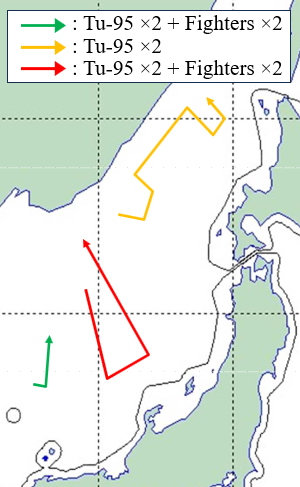 https://www.mod.go.jp/js/pdf/2026/p20260122_01.pdf |
| 1/22 |
On January 21, at a UN General Assembly meeting on Security Council reform, China criticized remarks by Prime Minister Sanae Takaichi on a Taiwan contingency and a December comment by a senior Japanese official on nuclear armament. It said the remarks “pose a new threat to regional and global peace and security” and that Japan “does not qualify to seek a permanent seat on the Security Council.” Japan rejected the claims as “baseless and regrettable,” stressing its contributions to international peace and prosperity as a peaceful nation. Jiji Press News (Japanese)https://www.jiji.com/jc/article?k=2026012200490&g=int |
| 1/22 |
On January 22, the Philippine foreign minister said that the Philippines, as ASEAN chair, will insist that a long-delayed Code of Conduct with China on the South China Sea explicitly reference the U.N. Convention on the Law of the Sea (UNCLOS) as it seeks to complete the document this year. The idea of a code for South China Sea tensions was raised over 20 years ago, but little progress has been made since 2017. The issue remains highly sensitive. Southeast Asian countries want the code grounded in international law, which Beijing is accused of ignoring. She reiterated Manila's position that the code must be legally binding, though she acknowledged it will require "further discussion" among ASEAN member states and China. Reutershttps://www.reuters.com/world/china/philippines-will-insist-south-china-sea-code-is-based-international-law-foreign-2026-01-22/ |
| 1/22 |
On January 22, the Philippine Coast Guard released its annual report on the South China Sea situation for 2025. The report noted a significant increase in activities by Chinese maritime forces, including the China Coast Guard and the Chinese Navy. These activities extend from the area around Scarborough Shoal, under effective Chinese control in the South China Sea, toward the waters near northern Luzon, where the Philippine capital Manila is located. The Philippines expressed strong concern over China’s accelerating maritime expansion. TBS News (Japanese)https://newsdig.tbs.co.jp/articles/withbloomberg/2418197?display=1 |
| 1/22 |
From January 20 to 21, Japan’s defense minister joined the World Economic Forum Annual Meeting in Davos. In a meeting with the Swiss defense minister, both ministers discussed regional affairs and confirmed that the security of the Euro-Atlantic and the Indo-Pacific is inseparable, agreeing to continue cooperation based on shared values such as a rules-based international order. In a separate meeting with the Dutch defense minister, both ministers agreed to further advance bilateral defense cooperation. In a meeting with the NATO Secretary General, they discussed regional affairs and Japan–NATO cooperation, confirmed the inseparability of Euro-Atlantic and Indo-Pacific security, and agreed to further advance defense cooperation in recognition of the strategic importance of Japan–NATO cooperation. Ministry of Defense of Japanhttps://www.mod.go.jp/en/article/2026/01/6f5510e500b8bf466ecdb5bc1c322ab76a5fb3ca.html |
| 1/22 |
On January 22, Japan’s Chief Cabinet Secretary said at a press conference that the post of consul general in Chongqing, China, remains vacant. While he did not specify the reason, it is believed to be due to the Chinese government’s refusal to grant agrément to Japan’s proposed successor. The vacancy may be part of China’s pressure on Japan over Prime Minister Sanae Takaichi’s remarks regarding a Taiwan contingency. Sankei Shimbun News (Japanese)https://www.sankei.com/article/20260122-JDZ6MJWN2VMYHA47NDQOZMWN2A/ |
| 1/23 |
On January 23, the Japan Joint Staff confirmed one Russian IL-20 intelligence gathering aircraft flying from the continent over the Sea of Japan. This aircraft flew southwest over the Sea of Japan, then turned northwest off the coast of Kyoto Prefecture and flew toward the continent. 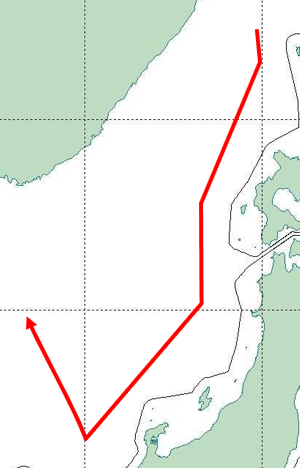 https://www.mod.go.jp/js/pdf/2026/p20260123_05.pdf |
| 1/26 |
On January 20, the JMSDF confirmed one Russian Vishnya class intelligence ship (hull number 535) sailing west in waters 70km east of Okinawajima Island. From January 20 to 23, this vessel loitered in waters including the contiguous zone from east to southeast of Okinawajima Island. From January 23 to 24, it sailed in waters including the contiguous zone from southeast of Okinawajima Island to northwest of Kumejima Island (Okinawa Prefecture). From January 25 to 26, it sailed northeast through the Tsushima Strait and navigated to the Sea of Japan. 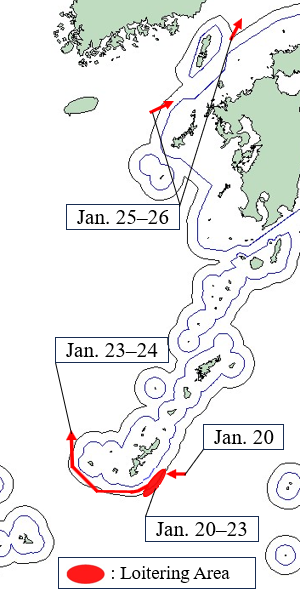 https://www.mod.go.jp/js/pdf/2026/p20260126_01.pdf |
| 1/26 |
On January 24, the JMSDF confirmed one Chinese Dongdiao class intelligence ship (hull number 791) sailing southeast in waters 120km northeast of Miyakojima Island (Okinawa Prefecture). This vessel sailed southeast through waters between Okinawajima Island and Miyakojima Island and navigated to the Pacific Ocean. 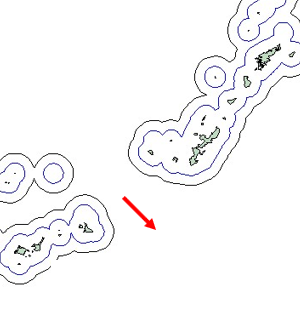 https://www.mod.go.jp/js/pdf/2026/p20260126_02.pdf |
| 1/26 |
On January 26, the Japan Joint Staff confirmed one Russian IL-20 intelligence gathering aircraft flying from the continent through the Sea of Okhotsk toward the Pacific Ocean. The aircraft flew south to the area off the coast of Fukushima Prefecture, then turned back and flew through the Sea of Okhotsk toward the Sea of Japan. 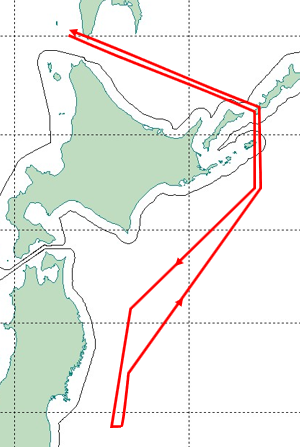 https://www.mod.go.jp/js/pdf/2026/p20260126_03.pdf |
| 1/26 |
NHK has found, based on AIS data, that Chinese oceanographic research vessels have conducted apparent research activities for extended periods within Japan’s EEZ in the East China Sea, and that such activity has intensified in recent years. NHK analyzed 98 Chinese oceanographic research vessels navigating the East China Sea and found that, from 2012 to March last year, they stopped, changed course, or made round trips within Japan's EEZ on a total of 956 days. Yearly breakdowns show nearly 100 days annually from 2014 to 2018, peaking at 143 days the year before last, indicating increased activity. NHK News (Japanese)https://news.web.nhk/newsweb/na/nb-5050033998 |
| 1/26 |
On January 26, the Philippine foreign ministry said it had made “firm representations” to China’s embassy and ambassador in Manila over what it described as an escalation of public exchanges related to disputes in the South China Sea. In recent weeks, the Chinese embassy in Manila has stepped up its public rhetoric, criticising the Philippines’ coast guard spokesperson and lawmakers. In a statement, the Philippine foreign ministry said it backed remarks by Philippine officials as part of their mandate to uphold the country’s sovereignty and sovereign rights, while calling for circumspection in language and actions and sober, professional and respectful public exchanges to avoid unnecessarily derailing diplomatic space to manage maritime tensions. Reutershttps://www.reuters.com/world/asia-pacific/philippines-lodges-firm-representations-chinese-embassy-over-escalating-war-2026-01-26/ |
| 1/27 |
On January 26, Japan-NATO high-level consultations were held. During the consultations, the two sides confirmed that the security of Euro-Atlantic and Indo-Pacific is closely linked and that they will continue to cooperate in strengthening the Japan-NATO relationship and NATO-IP4 relationships, and they discussed regional situations in East Asia and Europe. Ministry of Foreign Affairs of Japanhttps://www.mofa.go.jp/press/release/pressite_000001_02024.html |
| 1/27 |
Since late last year, some Japanese officials have quietly urged fishermen around the Senkaku Islands to avoid the waters to prevent escalating tensions with Beijing, according to the fishermen. Following Prime Minister Takaichi’s remarks on a Taiwan contingency, these requests began in November. Some fishermen and their supporters said they were asked by coast guard officials to cancel or alter planned voyages. On December 19, Finance Minister Satsuki Katayama told fishermen in Tokyo that "small incidents can grow bigger and lead to war," which they interpreted as a request to stay away. The requests mark a sudden shift after years in which Tokyo tacitly allowed such trips, which some fishermen used to assert Japan's control. Warnings illustrate a catch-22: fishing shows Japan’s control but risks a serious confrontation with Chinese vessels, according to fishermen, officials, and security analysts. Some experts noted that if Japan pulled back, China could respond more aggressively, such as by sending more ships, and emphasized the importance of maintaining Japan’s presence. Fishermen said they remained determined to return despite the risks. Reutershttps://www.reuters.com/world/china/fearing-china-clash-japan-asks-fishermen-avoid-flashpoint-islands-2026-01-27/ |
| 1/27 |
On January 27, Japanese government sources said that Russia, which had already announced military exercises around the Northern Territories starting January 1, added the area around Kunashiri Island to the drills, expanding their scale. Through diplomatic channels, Japan lodged a strong protest, saying that “Russia’s military buildup on the Northern Territories is incompatible with Japan’s position and unacceptable.” Tokyo is keeping a close watch, fearing the activity may intensify. Sankei Shimbun News (Japanese)https://www.sankei.com/article/20260127-34NU26FNOVPI5BL5L7BCST77RA/ |
| 1/27 |
On January 27, Manila's armed forces said the Philippines and U.S. militaries sailed together earlier this week at the Scarborough Shoal, a disputed area in the South China Sea claimed by the Philippines and China. The 11th such drill between the United States and the Philippines since November 2023 was held as a joint exercise aimed at easing cooperation between the treaty allies. The event showcased Philippine naval and coast guard vessels, two military planes, and a helicopter, while the U.S. deployed a destroyer and a helicopter. On the same day, China’s Southern Theater Command said it conducted a routine South China Sea patrol from January 25–26, without specifying the location, and accused the Philippines of involving outside countries in “joint patrols,” disrupting regional peace. Reutershttps://www.reuters.com/world/china/philippines-us-hold-joint-sail-disputed-south-china-sea-shoal-2026-01-27/ |
| 1/27 |
On January 26, China's permanent representative to the UN repeated his criticism of Prime Minister Takaichi's remarks on a Taiwan contingency at the Security Council meeting on international rule of law, saying they constitute a brazen intervention in China's internal affairs and an open breach of Japan's obligations as a country defeated in World War Two. His Japanese counterpart said it is regrettable that the Chinese delegation made groundless statements against Japan, adding, "Since the end of World War Two, Japan has followed the path of a peace-loving nation and contributed to international peace and prosperity based on the rule of law," and that China should engage in accurate discourse contributing to global stability. NHK Worldhttps://www3.nhk.or.jp/nhkworld/en/news/20260127_08/ |
| 1/28 |
On January 26, speaking on a TV program, Prime Minister Sanae Takaichi touched on a scenario in which Japan and the United States would coordinate the evacuation of their citizens during a Taiwan contingency, warning, “If the U.S. military, acting jointly [with Japan], comes under attack and Japan does nothing and runs away, the Japan-U.S. alliance will fall apart.” Her remarks were seen as hinting at a potential role for the Self-Defense Forces. Still, she also noted the government would “make a comprehensive decision within the legal framework,” underscoring that any action would depend on the situation. Yomiuri Shimbun Newshttps://japannews.yomiuri.co.jp/politics/election/20260128-307288/ |
| 1/28 |
On January 27, the JMSDF confirmed one Chinese Jangkai II class frigate (hull number 515) sailing southeast in waters 150km northeast of Miyakojima Island (Okinawa Prefecture). This vessel sailed southeast through waters between Okinawajima Island and Miyakojima Island and navigated to the Pacific Ocean. On January 28, the JMSDF confirmed one Chinese Luyang II class destroyer (hull number 153) sailing southeast in waters 130km northeast of Miyakojima Island. This vessel sailed southeast through waters between Okinawajima Island and Miyakojima Island and navigated to the Pacific Ocean. On the same day, the JMSDF confirmed one Chinese Luyang III class destroyer (hull number 156) and one Chinese Fuchi class replenishment ship (hull number 890) sailing southeast in waters 140km northeast of Miyakojima Island. These vessels sailed southeast through waters between Okinawajima Island and Miyakojima Island and navigated to the Pacific Ocean. 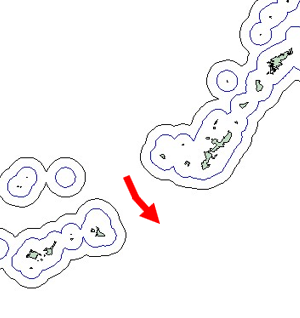 https://www.mod.go.jp/js/pdf/2026/p20260128_02.pdf |
| 1/28 |
On January 28, Japan’s vice foreign minister received a courtesy call from the U.S. under secretary of war for policy. Both sides exchanged views on the regional security environment as well as bilateral security and defense cooperation. They concurred on the critical role both countries play to reinforce the Japan-U.S. Alliance capabilities to deter and respond. Ministry of Foreign Affairs of Japanhttps://www.mofa.go.jp/press/release/pressite_000001_02031.html |
| 1/28 |
On January 28, Japan’s vice defense minister received a courtesy call from the U.S. under secretary of war for policy, and Japan’s vice defense minister for international affairs held a meeting with the under secretary. In the meetings, they discussed increasingly severe security situation in the Indo-Pacific region, and confirmed the critical role both countries play to reinforce the Japan-U.S. Alliance capabilities to deter and respond. Ministry of Defense of Japanhttps://www.mod.go.jp/en/article/2026/01/3016af49af7a5d06db31b6685dbd722e26180f4e.html |
| 1/28 |
On January 28, Southeast Asia’s top diplomats met under growing pressure to conclude this year’s negotiations with China on a so-called “code of conduct” to manage long-standing territorial disputes in the South China Sea, hoping to prevent the disputes, long seen as a potential flashpoint, from escalating into a major conflict. Negotiations on the proposed code of conduct have dragged on for more than two decades without major breakthroughs on the most contentious issues, including whether the accord should be legally binding. But the bloc resolved to conclude the negotiations by the end of 2026. The Associated Presshttps://apnews.com/article/asean-philippines-south-china-sea-myanmar-2fd4918d0b43280d408c21862ad15661 |
| 1/29 |
On January 29, senior officials from the foreign ministries of China and the Philippines met and exchanged views on maritime issues, focusing on the South China Sea. Both sides agreed to maintain communication through diplomatic channels, China’s foreign ministry said. Tensions over territorial claims in the South China Sea between the two countries have deepened. Nikkei Shimbun News (Japanese)https://www.nikkei.com/article/DGXZQOCB29C6X0Z20C26A1000000/ |
Newsletter Registration
What is happening in East Asian Maritime Security? The Research Institute for Peace and Security (RIPS) publishes the biweekly newsletter, “East Asian Maritime Security (EAMS)” and updates the information on maritime security relevant to East Asia and Japan's territory.